UK based AcademyAI Raises £1.65M pre-seed funding To Close The Workplace AI Skills Gap

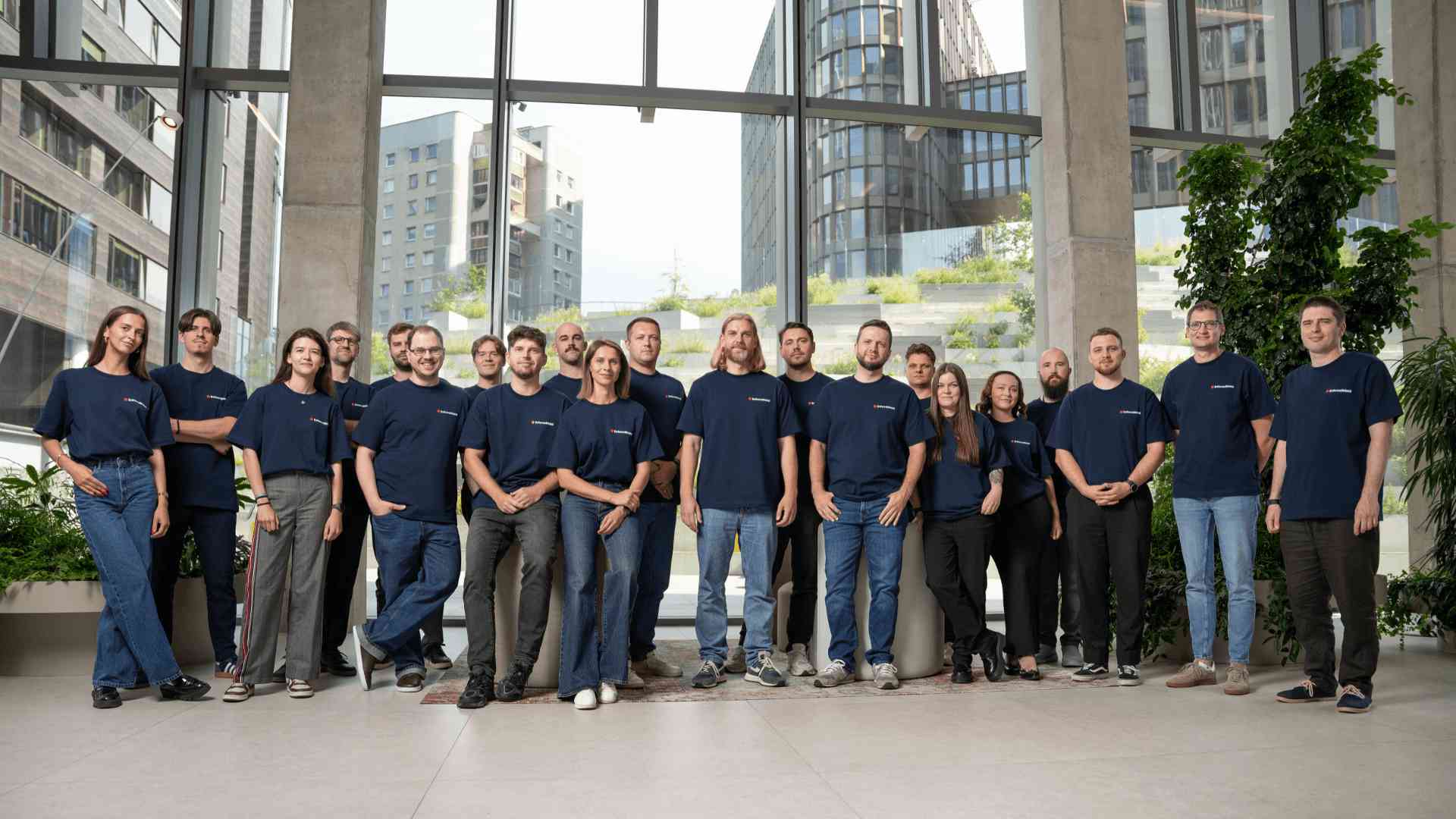
AcademyAI team
Image credit: AcademyAI
AcademyAI, a UK based workforce training startup, has raised 1.65 million pounds in an oversubscribed pre‑seed funding round to build out a platform that measures how well employees can actually use AI tools before prescribing training aimed at closing the gap.
The round drew backing from Nexus Family Office and Panthera Family Office. AcademyAI was co‑founded by Alex Packham and Andy Lambert, who previously built social media management platform ContentCal and sold it to Adobe in a deal reported at more than 100 million dollars, alongside Michael Walton and Rob Barnett, who were both earlier investors in ContentCal before joining AcademyAI as co‑founders.
The problem AcademyAI is built to address sits one step beyond the question most companies have already been asking about AI adoption. Most organisations have moved past deciding whether to buy AI tools and are now sitting on licenses for them, but far fewer have any structured way to tell whether their employees can actually use those tools well. According to the company, that gap is fundamentally a measurement problem before it is a training problem, since leaders who cannot see what their teams are currently capable of have no reliable way to close the distance between purchasing a tool and getting real value out of it.
AcademyAI's platform works through what the company describes as an assess, train, prove loop. The assessment stage evaluates employees against a six‑axis AI capability framework built using a methodology developed with the Alan Turing Institute, covering areas including critical thinking, judgement, prompting quality, and the ability to evaluate AI generated outputs rather than accept them uncritically. That assessment is designed to distinguish genuine capability from surface level confidence, a distinction the company argues matters because employees who sound comfortable with AI tools are not necessarily using them effectively or safely.
Once gaps are identified, the platform delivers targeted micro‑learning built around each person's actual role, rather than a generic curriculum applied uniformly across an organisation. Individual modules run around five minutes and are grounded in the specific tools, workflows and language of the organisation deploying them, an approach intended to make the training immediately applicable rather than abstract. For leadership, the platform produces dashboards tracking capability growth across individuals, teams and departments over time, giving management a way to demonstrate progress on AI adoption with evidence rather than anecdote. The final stage of the loop issues employees a capability score alongside AcademyAI certification, intended to function as an externally credible credential rather than an internal‑only badge.
The company has pointed to independent research to support the scale of the problem it is targeting. Citing Notion's 2026 Global AI Transformation Study, based on more than 6,000 respondents across ten markets, AcademyAI notes that the large majority of organisations remain at the earliest stages of AI adoption, and that more than half of AI decision makers say their organisation is investing in AI faster than its employees can actually learn to use it. The company has also referenced PwC's Global AI Jobs Barometer, based on more than a billion job advertisements, which found that the skills required for the most AI exposed roles are changing more than twice as fast as those for the least exposed roles, with that gap widening significantly within a single year.
Packham has framed AcademyAI's founding motivation around that widening measurement gap directly, arguing that most leadership teams have no clear picture of what their workforce can actually do with the AI tools already sitting inside their organisation, and that closing the distance between adoption and outcomes was the specific problem the company set out to solve. The founding team's earlier experience building and selling ContentCal gives that framing some added weight, since scaling a workplace software product to a successful acquisition required its own version of getting teams to actually adopt and use a new tool effectively rather than merely licensing it.
The new funding will go toward further developing AcademyAI's assessment and training platform, along with supporting the company's expansion as more organisations move further into AI adoption and encounter the same capability gap the company has built its product around. AcademyAI enters a workplace AI training market that has grown crowded quickly, with large platforms such as OpenAI's own Academy and General Assembly's AI Academy also competing for enterprise training budgets, alongside a wider field of smaller specialised entrants. What differentiates AcademyAI within that field is its emphasis on structured, framework based assessment as the starting point rather than training content alone, a bet that measurement, not just more course material, is the harder and more valuable problem to solve as AI tool adoption inside large organisations continues to outpace the workforce's ability to use those tools well.
Topics
Stay informed
Startup news in your inbox
Get important funding rounds, founder stories, and startup updates.
No spam - only important startup updates.