Eevi Lands Pre-Seed Cash To Fix Language Apps' Biggest Blind Spot: Talking

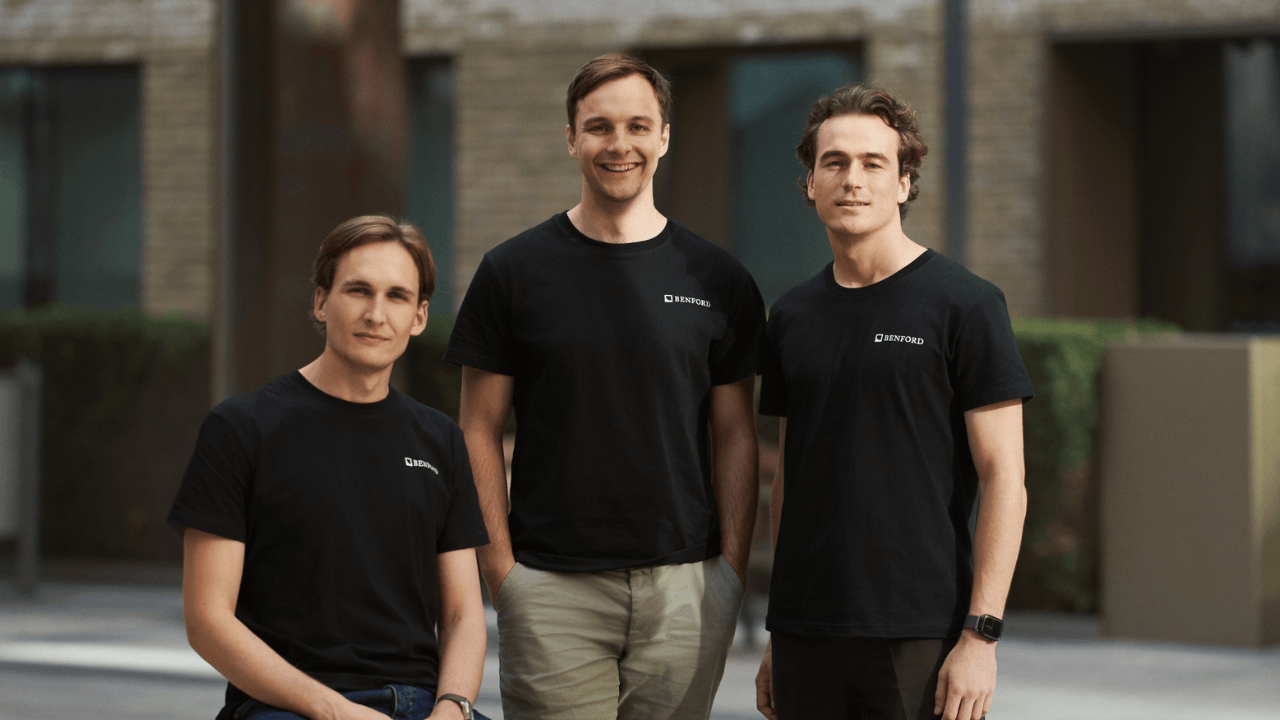
Eevi AI founder Filemon Schöffer (CEO, former co-founder of Hubs.com) and Jago Gazendam (CTO),
Image credit: Eevi AI
Eevi, an Amsterdam based voice‑first AI language tutor, has raised a pre‑seed funding round to scale a platform built around spoken conversation from a learner's very first lesson, rather than the tap‑and‑swipe exercises that have come to define most language learning apps.
The round was led by Rockstart, an early‑stage investor focused on helping founders scale technology companies. The amount raised was not disclosed. Eevi was founded in 2025 by chief executive Filemon Schöffer and chief technology officer Jago Gazendam. Schöffer previously co‑founded Hubs.com, an online manufacturing marketplace that was acquired by Protolabs in a transaction valued at up to 330 million dollars, and later served as chief commercial officer at OpenUp, a European mental health platform. He has also co‑authored The 3D Printing Handbook. Gazendam brings a background spanning education and health technology to the partnership, having started his career integrating technology at NIST International School in Bangkok before founding several health technology startups, with Eevi marking his return to education specifically.
The problem Eevi is built around is one Schöffer has given a name to directly, calling it the fluency illusion. Millions of people study a new language, build up long daily streaks, and steadily expand their recognition of vocabulary and grammar, only to freeze the moment an actual person starts speaking to them in that language. According to Schöffer, conversation, the single skill most learners actually want, remains the part of language learning that is least directly taught by most existing tools, leaving a persistent gap between recognising a language on a screen and being able to speak it out loud in a real exchange.
Schöffer has argued that this gap represents a significant waste of effort at scale, pointing out that hundreds of millions of people are actively trying to learn a second language at any given time, yet only a small proportion of them ultimately succeed in becoming genuinely conversational. Until recently, the primary alternative to gamified, self‑paced apps has been human tutors, who can address the conversation gap directly but come with meaningfully higher costs and limited availability, particularly for learners wanting flexible, on‑demand practice outside of scheduled lesson times.
Eevi's platform is designed to offer a third path, using real‑time voice AI to simulate that same kind of live, responsive conversation practice without the cost and scheduling constraints of a human tutor. The system holds spoken conversations with learners, gives instant feedback, and adapts dynamically to each person's level, interests and specific challenges as they progress, drawing on academic frameworks to structure its curriculum rather than relying purely on repetition and gamified streaks. The platform currently supports more than 80 languages and tracks a learner's expanding vocabulary over time, letting the curriculum shift as their conversational range grows.
According to the company, 96 percent of learners report feeling more confident after their first month using the platform, a figure Eevi points to as evidence that the conversational, voice‑first approach closes the fluency gap more effectively than tools centred on flashcards and matching exercises. User feedback featured on Eevi's own site echoes that framing, with people describing the platform as the first app that gets them speaking naturally, letting them practise ordering food, explaining ideas or making small talk rather than working through artificial drills that do not obviously transfer to real conversations.
For Schöffer, the interest behind Eevi traces back further than the company's 2025 founding. He has described being drawn to teaching from an early age, noting that his first business as a teenager was itself built around the same underlying instinct to help people learn something directly and practically rather than passively. That long‑standing interest in teaching, paired with his more recent commercial experience scaling Hubs.com and working inside a mental health platform focused on personalised, adaptive support, feeds into how Eevi frames its own product, less as a gamified habit‑building app in the mould of Duolingo and more as a substitute for the kind of responsive, one‑on‑one tutoring that has historically been out of reach for most learners on cost grounds alone.
The new funding will go toward accelerating Eevi's growth and product development, according to the company, allowing the team to scale operations while continuing to refine its dynamic curriculum in what remains a fast‑moving and increasingly AI‑driven corner of the language learning market. Eevi enters a category already reshaped by a wave of voice AI competitors targeting similar gaps, including Korea‑focused ElevTalk, which raised pre‑seed funding earlier in 2026 to build voice interfaces specifically for non‑native English speakers in professional settings, alongside the continued dominance of incumbents such as Duolingo, now a publicly traded company built primarily around gamified, habit‑forming mechanics rather than live conversation.
Whether voice‑first, conversation‑centred platforms like Eevi can meaningfully outperform incumbents on the metric that actually matters to most learners, real spoken fluency rather than app engagement or streak length, will likely become the central test as the category matures and more well‑funded competitors chase the same fluency illusion problem. For now, Eevi's early confidence figures and founder‑market fit give it a reasonable starting position in a market where genuine differentiation has historically been harder to sustain than initial user enthusiasm might suggest.
Topics
Stay informed
Startup news in your inbox
Get important funding rounds, founder stories, and startup updates.
No spam - only important startup updates.