F13 Closes 5 Million Dollar Round In Three Weeks For Its Vector Graphics AI
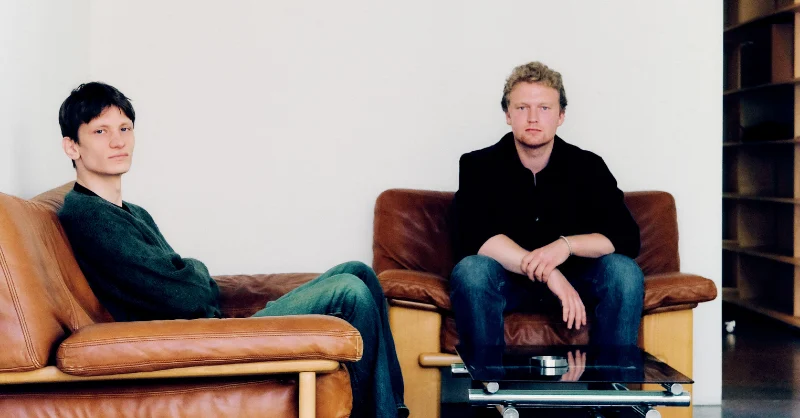
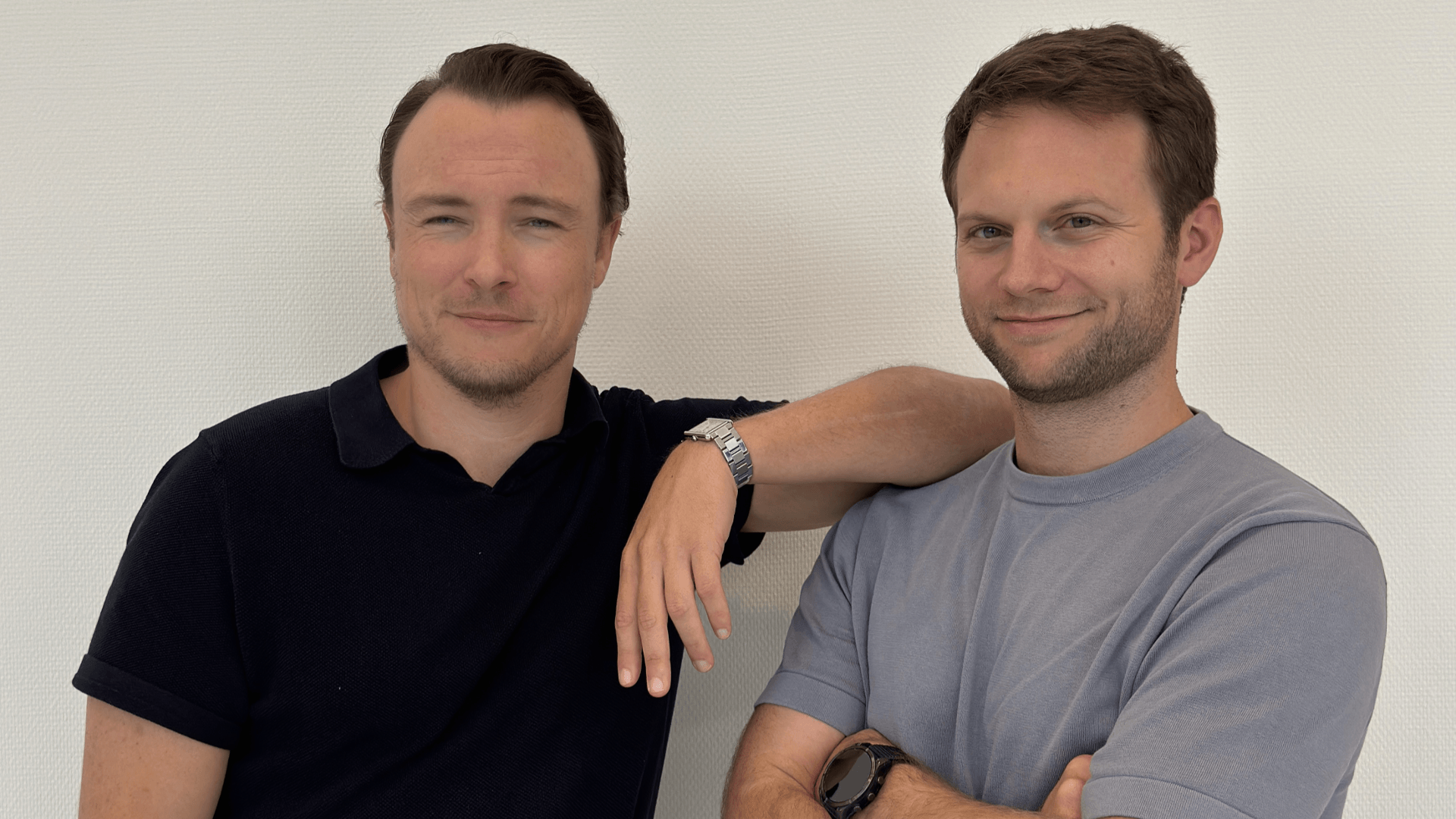
F13 Founder Gregory Janik and Ingimar Tomasson
Image credit: F13
F13, a Berlin based startup training AI models to generate precise vector graphics, has come out of stealth with 5 million dollars in pre seed funding, a round its founders say closed in roughly three weeks without a single pitch deck.
The round was led by Credo Ventures and Point Nine Capital, with angel participation from Carles Reina of Baobab Ventures and Jack Richardson of Mainframe. Chief executive Gregory Janik has said the company's first check came out of a chance conversation with an investor in San Francisco, back when F13 was still just an idea, and that the rest of the round came together the same way. He has described the experience as something that fundamentally does not happen in Europe, where a stranger hears the idea, says it sounds interesting, and writes a check on the spot.
Vector graphics differ from standard images in that they are built from shapes and mathematical coordinates rather than fixed pixels, which means they can be resized without any loss of quality and individual elements within them can be edited after the fact. The format underpins the charts, diagrams, maps, and brand assets that designers and engineers rely on whenever accurate proportions matter more than a visually striking image. F13 argues that existing general purpose image generation models, and even many AI coding tools, struggle to produce charts or diagrams that are actually correct, frequently getting proportions, axes, or labels wrong even when the resulting image looks polished, and that these models are often slow to render as a result.
F13's models are designed to accept text prompts, existing images, or prior graphics as input, and to output fully editable SVG files rather than static images. According to the company, internal testing has shown its models outperforming both general purpose image generators and code focused models on tasks requiring strict accuracy, such as scientific diagrams, labeled anatomical illustrations, or dashboards where a number has to match the underlying data precisely. Editability alone does not guarantee correctness, since a mislabeled chart can remain just as wrong after being converted into a clean, resizable format. F13's central claim is that its models can follow the specifics of a brief, whether that means matching a dataset, a layout convention, or a brand's design specifications, while still producing something a designer can use without starting over.
Janik brings a background in applied, consequence heavy software rather than pure design tooling. He previously co founded SaaS financing company Vitt, led engineering at education startup Knowunity, and is listed as a co founder and engineering lead at Brickwise AI. He also built flight control software for a drone company later acquired by Helsing and ran credit risk models at an FCA regulated bank, an unusually varied path for a founder now building creative tooling. His co founder, ML researcher Ingimar Tomasson, rounds out a founding team that also includes former researchers from Meta and Porsche, plus designers who have previously worked with fashion and luxury brands including Versace, Gucci, and Nike.
Pawel Chudzinski, a partner at Point Nine Capital, said software engineers have already handed a large share of their work to AI agents while designers largely still work by hand, and that he expects F13 to help close that gap.
With the new capital, F13 plans to bring its first model to market through early access via an API and a web application, with a broader public launch planned later this year, while investing in additional compute, data, and headcount to extend its models toward more complex design and diagramming tasks. The company enters a crowded field of AI image and design tools, but its bet is that precision focused vector graphics for professional use cases, rather than general purpose image generation, represents a large enough and distinct enough market to support a dedicated foundation model built around it.
Topics
Stay informed
Startup news in your inbox
Get important funding rounds, founder stories, and startup updates.
No spam - only important startup updates.