Jack & Jill Raises $40M Series A to Scale Its Two-Sided AI Hiring Platform

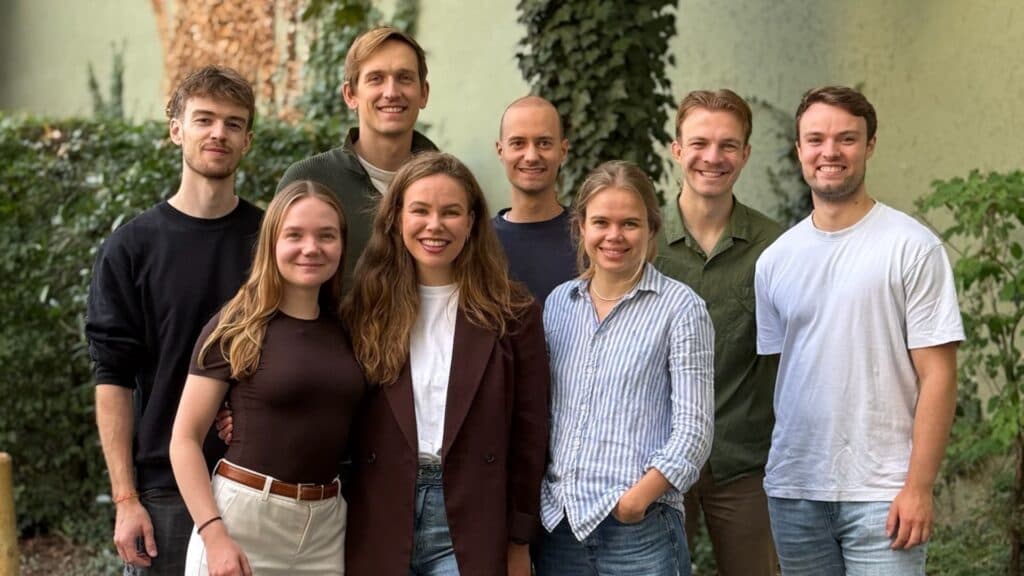
Jack & Jill founder Matt Wilson (CEO) and Saaras Mehan (CTO)
Image credit: Jack & Jill
Jack & Jill, a hiring startup built around two AI agents that negotiate directly with each other on behalf of a candidate and an employer, has raised 40 million dollars in a Series A round to scale that model across the United States.
The round was led by Air Street Capital, with new investors Madrona and Antler joining. Existing backers Creandum, Ada Ventures, Entrepreneurs First, Expedite Capital and Repeat.vc all returned. The raise brings Jack & Jill's total funding to 60 million dollars, arriving less than a year after the company closed a 20 million dollar seed round backed by Creandum, Dig Ventures and Ada Ventures, along with angel investors including former Formula One driver Nico Rosberg and backing from companies such as Lovable, Anthropic and ElevenLabs.
Jack & Jill was founded in March 2025 by Matthew Wilson, who previously built Omnipresent to a 600 million dollar valuation, and Saaras Mehan, a Y Combinator backed founder. The company is headquartered across London and San Francisco and employs around 25 people, a notably large share of them, 15, former startup founders themselves.
The product sits apart from most AI recruiting tools by putting an agent on each side of the hiring process rather than automating only one side of it. Jack works on behalf of job seekers, building an understanding of what a candidate actually wants through voice calls, email and WhatsApp conversations rather than a static resume or profile. Jill works on behalf of employers, reading through a job description and pressing further on what success in the role genuinely looks like, beyond the bullet points typically listed in a posting. The two agents then work through whether a given candidate and role are a strong match, and an introduction between the candidate and the hiring manager only happens once both agents conclude the match is worth making, at which point the candidate is introduced directly rather than submitting a conventional application.
Nathan Benaich, the Air Street Capital general partner who led the round, has framed the investment around a specific view of where hiring technology needs to go next, arguing that the next real improvement in hiring will not come from better search over the same pool of resumes or from more automated outreach layered on top of existing recruiting workflows, but from a genuinely different structure to how candidates and employers find and evaluate each other in the first place.
Jack & Jill has reported strong early usage figures alongside the raise, citing 350,000 people in Jack's candidate network, 5,000 employer clients, and 25,000 interviews arranged in total, running at roughly 5,000 a month. The company has not disclosed how many of those arranged interviews have converted into actual hires, nor detailed the revenue base behind a claimed fortyfold increase since its seed round, figures that would give a clearer picture of how much of that usage growth has translated into the outcomes both candidates and employers are ultimately looking for.
The company's dual agent model also sits inside a regulatory environment that has been tightening around AI use in hiring. The EU AI Act's Article 50 transparency requirement, in effect since August 2026, requires that anyone interacting with an AI system, including an automated phone call, be told clearly that they are doing so at first contact. The broader high risk obligations that would apply specifically to recruitment and candidate evaluation systems under the Act's Annex III have been deferred under the EU's Digital Omnibus process, though that deferral is a delay rather than an exemption, and provisions such as GDPR's Article 22 restrictions on fully automated decision making remain relevant to how a system built around AI agents making match decisions is allowed to operate.
Jack & Jill is not alone in building AI systems aimed at replacing parts of the traditional hiring funnel. Ethos, a competitor focused on the employer side of AI candidate evaluation, has raised 22.75 million dollars pursuing a related thesis, and a wider field of AI recruiting startups has emerged over the past two years targeting different pieces of the same broken process, from sourcing to screening to interview scheduling. What distinguishes Jack & Jill within that field is the fully two sided structure of its product, an agent representing each party rather than a single AI layer sitting on top of one side of the transaction, a structure the company is betting will produce better matches precisely because neither side has to trust a system built primarily to serve the other.
With its funding now at 60 million dollars in under a year and interview volume already running at meaningful scale, the more difficult question for Jack & Jill going forward is less about growth and more about proof, whether the matches its two agents are producing actually lead to hires that stick, and whether that conversion rate holds up as the company pushes further into new US markets following its earlier launches in San Francisco and New York.
Topics
Stay informed
Startup news in your inbox
Get important funding rounds, founder stories, and startup updates.
No spam - only important startup updates.