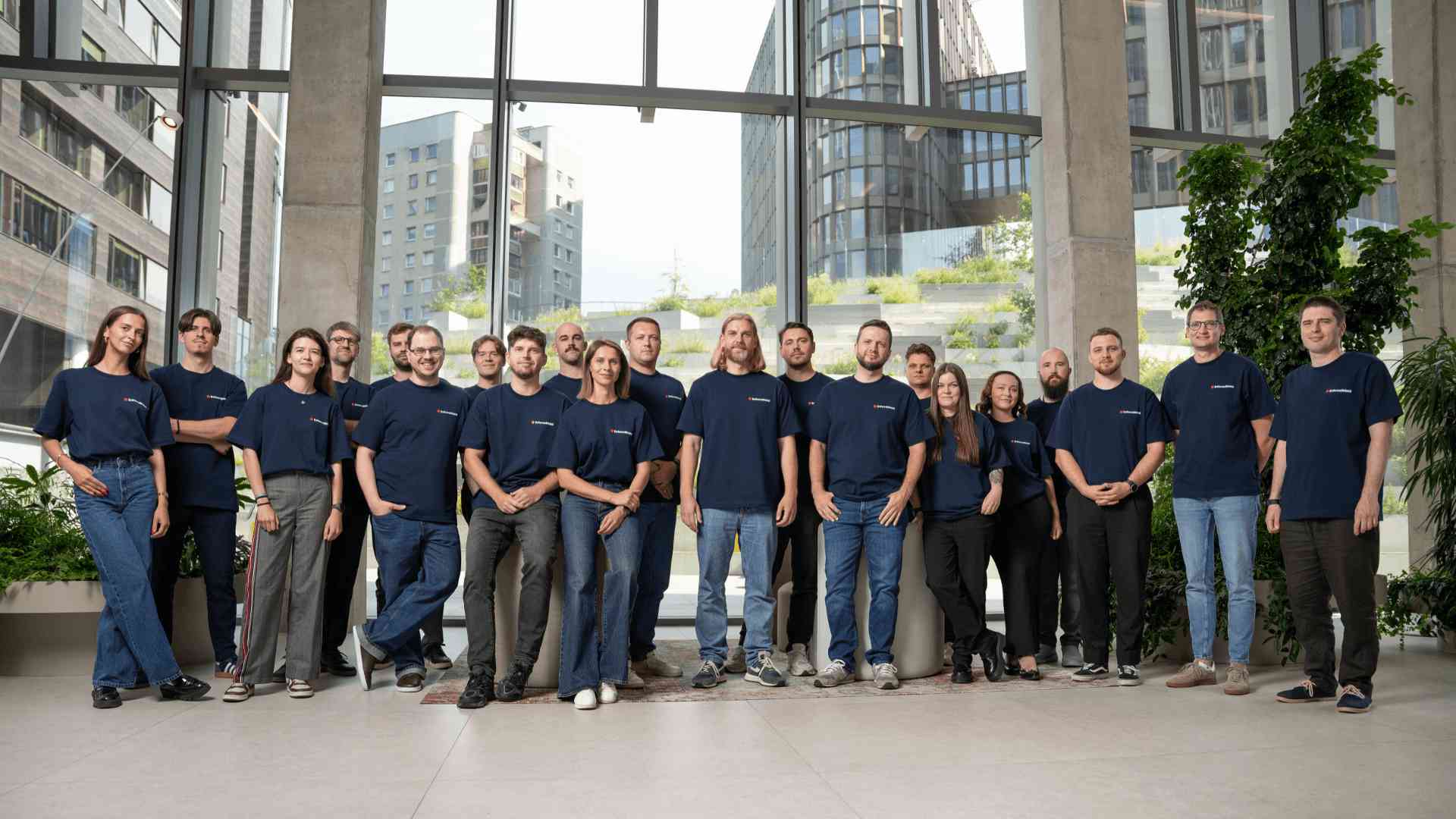
Logibot Raises €1.4M To Rent Out Warehouse Robots Like Temp Staff
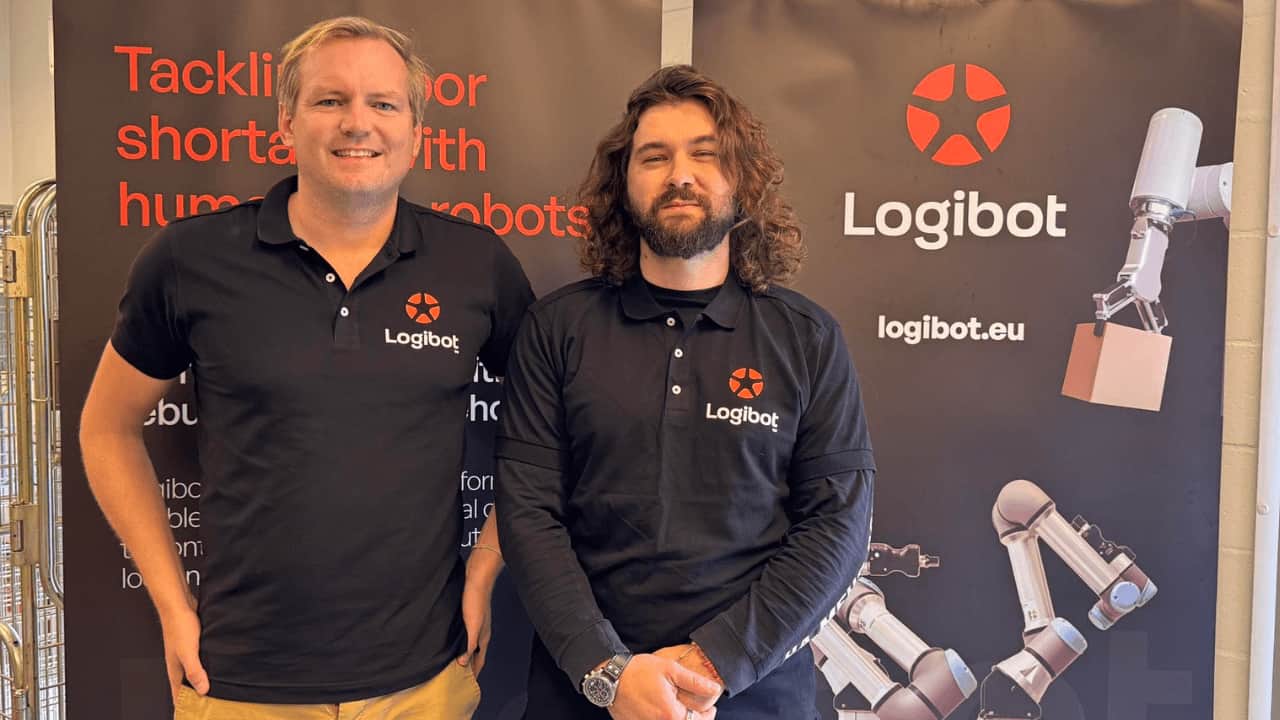
Logibot CEO Louis Verspreeuwen and CTO Salimzhan Gafurov
Image credit: Logibot
Logibot, a Belgian software company building what it calls a temp agency for robots, has raised 1.4 million euros to scale a platform that lets warehouse operators bring in human‑like robotic labour without committing to a single robot manufacturer or rebuilding their existing facility around it.
The round was led by BeamBerlin, the startup studio run by German industrial family group BEUMER, with additional participation from RDY Ventures, PMV and the BAN Business Angels network. Logibot does not manufacture its own robots. Instead, the company builds a software layer that can select, configure, train and manage roughly 95 percent of the human‑like robot hardware already available on the market, letting an operator choose whichever machine best fits a given task rather than being steered toward one vendor's proprietary equipment.
The problem Logibot is targeting sits squarely inside a labour shortage that has become chronic across European logistics. Roughly 2.5 million people across Europe still do manual groundwork inside logistics operations, sorting parcels, moving cages and filling loading docks, much of it physically demanding work at sites often located well outside major labour markets. Chief executive and co‑founder Louis Verspreeuwen, who has spent 12 years working in logistics and consumer goods including stints in China and Hong Kong, has said that directors at large logistics groups consistently run into the same four obstacles when they consider robotising a warehouse, not knowing where to start, not wanting to be locked into a contract with a single robot supplier, needing a solution that fits existing operations without a wholesale redesign, and wanting variable, predictable costs rather than tying up capital in heavy equipment they own outright.
Logibot's answer to those four obstacles is a platform organised around a deliberately staged process rather than a single hardware sale. Logibot.Data starts by analysing a facility's existing manual workflows to quantify how much of that work is genuinely automatable and score the feasibility of doing so. Logibot.Simulate then runs split tests across multiple candidate robot configurations inside a digital twin of the facility, letting an operator compare options and validate expected performance before any physical hardware decision is made. Logibot.Train prepares a general vision‑language model for the specific logistics task at hand through a five‑stage process, and once a robot is deployed, the platform continues to monitor performance and supports remote teleoperation so a human operator can step in for edge cases or more complex situations the robot cannot yet handle on its own.
Central to the company's philosophy is matching the simplicity of the machine to the simplicity of the task. Verspreeuwen has pointed out that a robot arm alone is more than sufficient for most warehouse work, since sorting parcels does not require the ten fingers and two arms of a full humanoid robot, and Logibot deliberately picks the least complex, and typically least expensive, hardware on the market capable of doing a given job, then layers its own AI software on top rather than defaulting to more elaborate humanoid systems regardless of whether a task actually needs one.
That approach has already found traction with sizeable logistics operators. Logibot's early customers include logistics companies employing between 8,000 and 21,000 people, alongside a large Nordic logistics and postal group that already has a Logibot‑managed robot running inside a facility in Denmark. Those deployments give the company a working reference base considerably larger than the typical early customer profile for a startup at this funding stage, a factor likely to have shaped BeamBerlin's decision to lead the round given BEUMER's own position as an established manufacturer of logistics and material handling systems with a direct interest in how automation software layers are evolving across the sector it already serves.
Commercially, Logibot has built its pricing around the same variable‑cost, no‑lock‑in principle that shapes its technical approach, combining SaaS subscriptions, proof‑of‑concept engagements and a robot‑as‑a‑service model, an arrangement intended to let an operator try automation on a defined task without the heavy upfront capital expenditure that has traditionally made warehouse robotics a slow, high‑risk investment decision for logistics companies to commit to. The company also tracks and reports on productivity, uptime, task completion and realised cost savings in real time, giving operators an ongoing basis to judge whether a deployment is delivering the return that justified bringing a robot in to begin with.
The new capital will support wider deployment of Logibot's platform across additional customer sites and continued development of the training and simulation tools that sit at the centre of its process. The company enters a logistics robotics market that includes a range of other players pursuing different strategies, from hardware manufacturers building proprietary robotic systems to software platforms like Smart Robotics that pair their own AI directly with specific robotic hardware lines. What differentiates Logibot within that field is its explicit refusal to build or favour any one piece of hardware, betting instead that the harder and more durable problem to solve is the software layer that lets an operator choose, deploy and reconfigure robotic labour flexibly as their needs change, rather than the robots themselves. Whether that hardware‑agnostic positioning holds up as robot manufacturers increasingly bundle their own software and AI capabilities directly into their machines will likely shape how much room remains for an independent orchestration layer like Logibot's as the broader warehouse automation market matures.
Topics
Stay informed
Startup news in your inbox
Get important funding rounds, founder stories, and startup updates.
No spam - only important startup updates.