Open Cosmos Raises €300M To Scale Satellite Manufacturing Across Europe

Open Cosmos Rafel Jorda Siquier (CEO)
Image credit: Open Cosmos
Open Cosmos, a satellite infrastructure company based at Harwell in Oxfordshire, has raised 300 million euros to expand its satellite manufacturing capacity across Europe and grow the connectivity and data services it operates on top of its own satellite constellations.
The round was led by Lightrock, with participation from ETF Partners, Institut Català de Finances, Entrepreneurs First, Trill Impact and two international pension funds. Convex Group, the UK's National Security Strategic Investment Fund, Phoenix Court, Claret Capital Partners and British Columbia Investment Management Corporation also took part. The company did not disclose a valuation alongside the announcement. The new capital is roughly six times the 50 million dollar Series B round Open Cosmos closed in September 2023, its most recent previous funding round.
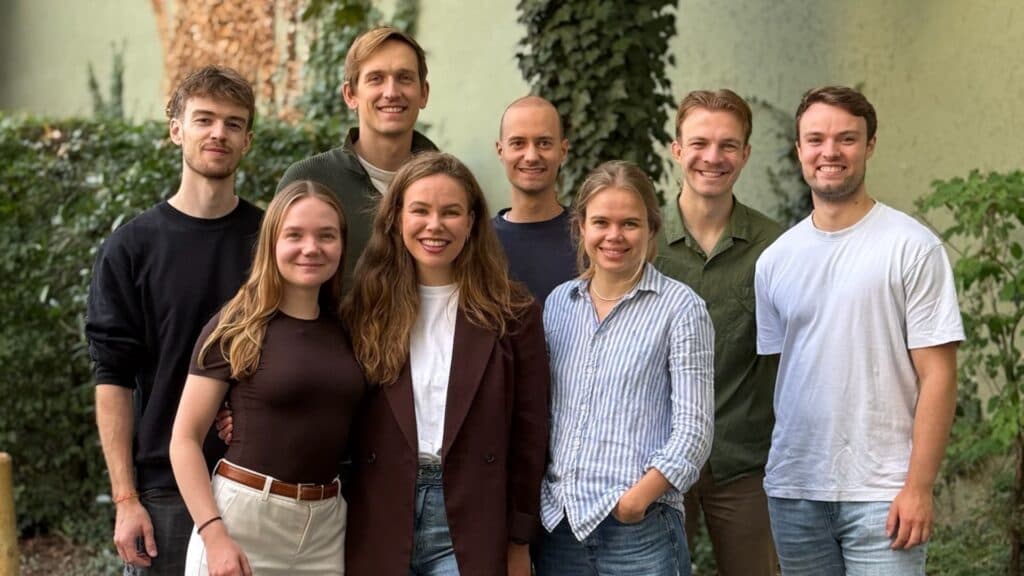
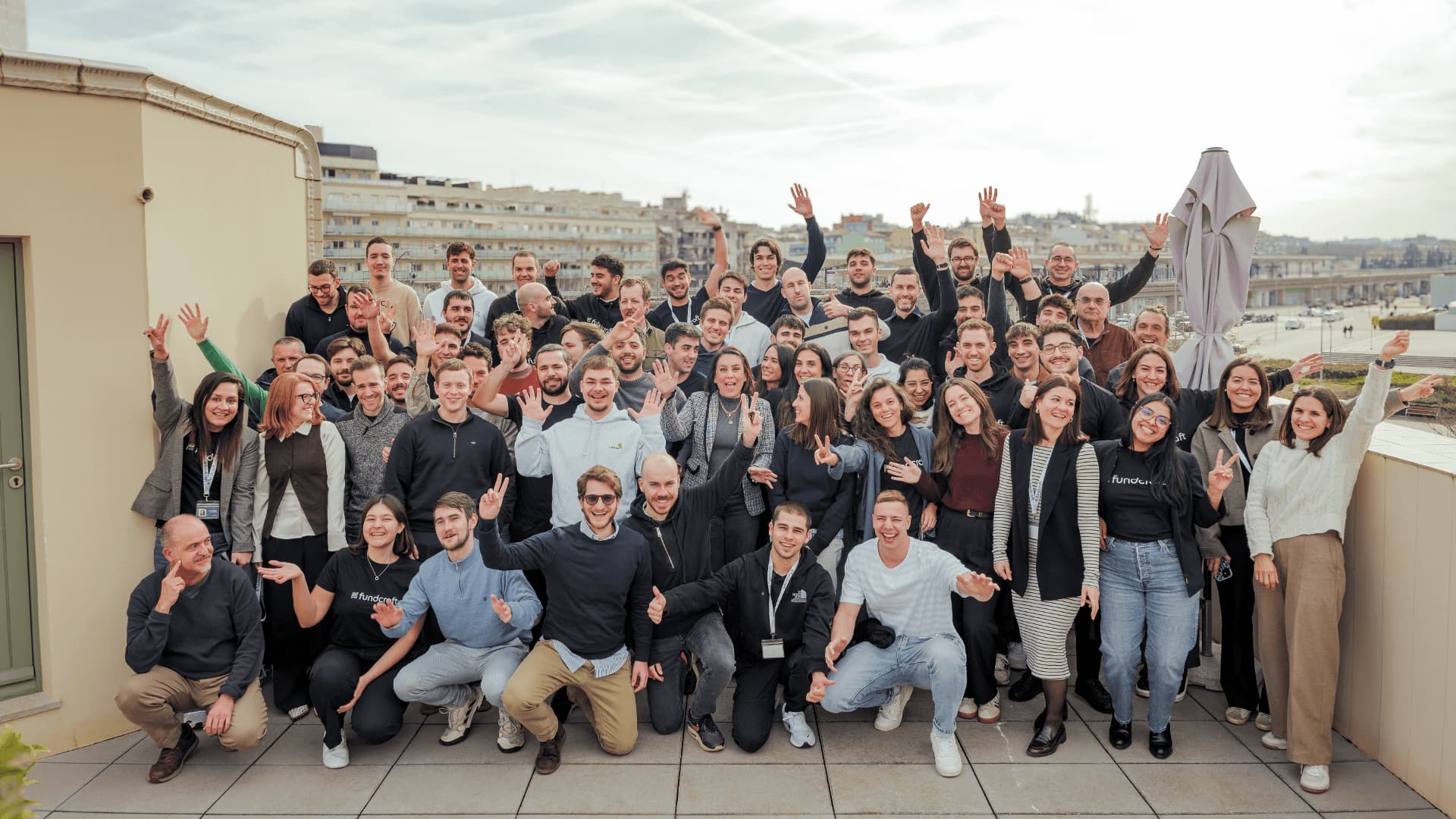
Open Cosmos was founded in 2015 by chief executive Rafel Jorda Siquier alongside Aleix Megias Homar and Jordi Barrera Ars. Jorda Siquier studied aerospace engineering at the Polytechnic University of Catalonia before completing an MBA and working at Airbus Defence and Space and at Barcelona based startup zero2infinity ahead of founding Open Cosmos. The company completed its first satellite mission just eight months after it was set up, and now employs close to 400 people across the UK, Spain, Portugal and Greece, the four countries where it operates production facilities.
Those four factories give Open Cosmos combined capacity to manufacture roughly one satellite a day, a figure that describes production capacity rather than current output. The company has also reported a 100 percent mission success rate across satellites launched to date and says it has delivered five consecutive years of profitable growth, though it has not disclosed specific revenue or profit figures alongside those claims. Over the past three and a half years, Open Cosmos says it has signed more than 370 million dollars in customer contracts, a base that includes European governments, space agencies and large energy and infrastructure companies.
The business Open Cosmos has built extends beyond building satellites and putting them into orbit. The company organises its work across four main platforms. OpenOrbit designs and builds full satellite missions for customers from start to finish. ConnectedCosmos is a secure communications constellation operating in low Earth orbit. OpenConstellation is a shared Earth observation satellite network, where multiple organisations pool access to a common constellation rather than each building and operating their own. DataCosmos turns the raw data collected across those systems into information customers can act on. The company's newest generation of OpenConstellation satellites has cut the time needed to deliver Earth observation intelligence from as long as 48 hours down to as little as 30 minutes, a improvement achieved through onboard AI processing and satellite‑to‑satellite links that avoid the delay of waiting for a single ground station pass.
That shared constellation model is central to where Open Cosmos wants to take the business next. Rather than only manufacturing individual satellites to order, the company wants to use its factory capacity to build and launch large groups of satellites into orbit as constellations, then sell Earth observation, connectivity and communications services from that shared infrastructure directly to governments and enterprise customers. Scaling that model requires exactly the kind of manufacturing capacity this funding round is intended to expand, alongside continued development of the constellations and data platforms built on top of it.
Jorda Siquier has linked the investment to a broader shift in how governments and large organisations think about space infrastructure, arguing that secure, resilient satellite systems for communications and operational data are becoming as important to national and organisational security as more traditional infrastructure. That view is backed by wider industry figures cited by the company, with global venture capital investment in space reaching 11.3 billion dollars in the first half of 2026 alone, already ahead of the 10.1 billion dollars invested across the whole of 2025.
Open Cosmos raised its round in a period of heavy investment activity across European space technology. The Exploration Company raised a 450 million dollar Series C the same week, one of the largest fundraises in European space industry history, while satellite manufacturer Isar Aerospace has also recently closed a large round of its own. In the broader satellite manufacturing market, Open Cosmos faces competition from companies pursuing different strategies at different scales, including New York listed Spire Global, which is scaling its own production toward 300 to 400 satellites a year across facilities in the UK, the US and Germany, and Finland based ICEYE, which has prioritised faster growth over the profitability focus Open Cosmos has emphasised in its own results.
What differentiates Open Cosmos within that competitive field is less any single technical capability than the combination it is pursuing across manufacturing, shared constellation infrastructure, connectivity and data services under one company, rather than specialising narrowly in one layer of the stack the way many competitors do. Whether that broader combination proves more durable than a narrower, more specialised approach will likely become clearer as the company puts its new capital to work expanding factory output and constellation capacity at the same time, a scaling exercise that carries real execution risk even for a company that says it has already found a profitable path through five years of growth.
Topics
Stay informed
Startup news in your inbox
Get important funding rounds, founder stories, and startup updates.
No spam - only important startup updates.