The DeepMind Duo Behind a Landmark Nature Paper Raise $3.7M to Standardize Fusion's Plasma Control Software
Editorial Team

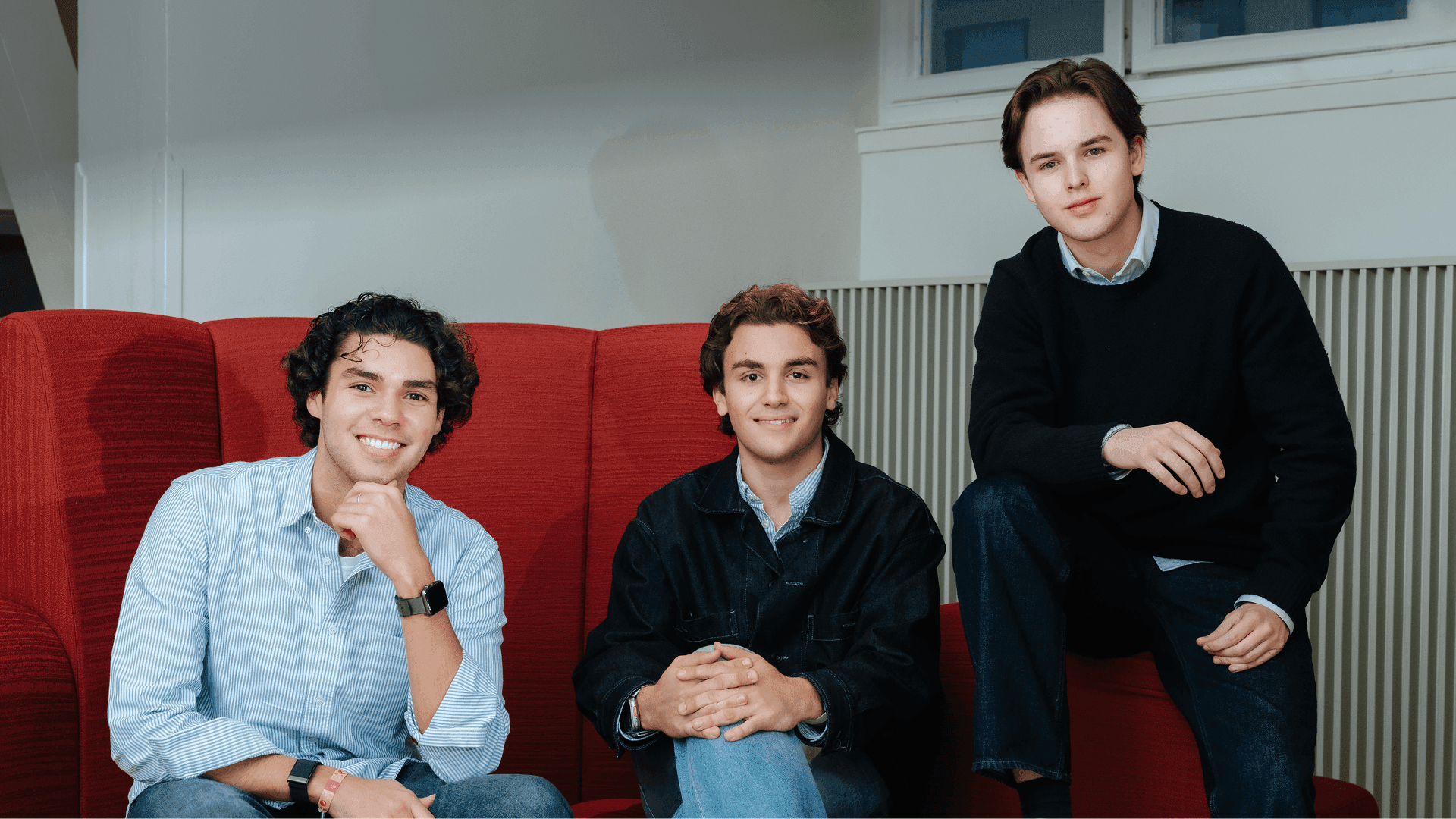
Fusionality founder Federico Felici (CEO) and Jonas Buchli
Image credit: Fusionality
Fusionality, a Lausanne based startup building measurement, simulation, and control software for fusion energy companies, has raised CHF 3 million, roughly 3.7 million dollars, in pre‑seed funding led by Founderful and Playfair.
The company was founded by Federico Felici and Jonas Buchli, who spent years developing the AI systems used to prevent a plasma cloud burning at 100 million degrees from ever touching the walls of a fusion reactor, work they now want to make available to the broader industry rather than keeping locked inside a single research institution. "We have spent most of our careers making plasmas in real fusion devices behave as we wanted," said Felici, Fusionality's co‑founder and chief executive. "Now we founded Fusionality to bring that expertise to our customers and partners, helping them tackle some of the hardest bottlenecks in fusion operations."
Felici and Buchli met at EPFL's Swiss Plasma Center in Lausanne. Felici, a control engineer with a PhD in plasma physics, worked on the TCV tokamak before spending two and a half years at Google DeepMind. Buchli, an electrical engineer trained at ETH Zürich, led DeepMind's robotics and reinforcement learning teams. Together with colleagues, they applied deep reinforcement learning to control the magnets that shape plasma inside the TCV reactor, publishing the results in a widely cited 2022 Nature paper, a landmark demonstration that AI could successfully manage one of fusion's hardest real‑time control problems.
The specific technical challenge Fusionality addresses is converting raw plasma measurements into control signals for a reactor's heating, fuelling, and magnetic systems within milliseconds, a real‑time processing problem that has to run continuously and reliably for a fusion device to function at all. Buchli, now Fusionality's chief technology officer, said operating a fusion device means working with multiple simultaneous data sources, different time scales, and complex plasma behaviour all at once, which is why the company built a multi‑disciplinary approach spanning measurement, software, control, and data engineering rather than treating any one of those as a standalone problem.
More than 30 private fusion companies and government‑backed projects currently face this same underlying challenge, and according to Fusionality, the overwhelming majority of them design their own control systems entirely from scratch rather than buying a shared, reusable solution. That fragmentation exists despite the scale of capital now flowing into the sector: private fusion investment reached a record 4.48 billion dollars over the twelve months ending July 2026, according to the Fusion Industry Association, and the sector has drawn more than 14 billion dollars in total funding across 56 companies since 2021. Yet most of that money has gone toward each company's own reactor hardware and physics research rather than toward reusable operational infrastructure, leaving exactly the kind of gap Fusionality is now positioning itself to fill.
Playfair's Felix Neubeck framed the firm's investment around the scarcity of people who can credibly build that shared infrastructure. "The fusion industry is scaling faster than its supply chain, and the operations infrastructure is the clearest gap," Neubeck said. "Federico and Jonas are among a very small number of people in the world who have worked across the range of technologies needed for fusion control and operations, on various devices. That combination of academic standing and commercial instinct is rare, and it is why we backed them." Paolo Ricci, director of the Swiss Plasma Center, welcomed the spin‑out as validation of the institution's broader research legacy, saying it was "a great development for the field, and for the Swiss fusion ecosystem, to witness the creation of startups like Fusionality, benefiting from this knowledge and serving the emerging fusion industry worldwide."
Fusionality's basic software layer is designed to require minimal customer‑side adaptation, an approach intended to reduce onboarding costs for fusion companies adopting it. That positions the company in direct competition with Next Step Fusion, an established supply‑chain player that already supplies plasma modelling, diagnostics, and control software to tokamak builders. Fusionality faces a second, more unusual competitive threat as well: Google itself. In October 2025, DeepMind partnered directly with Commonwealth Fusion Systems, open‑sourcing its TORAX plasma simulator and applying reinforcement learning to CFS's SPARC reactor. Since the best‑funded company in the industry can access DeepMind's expertise essentially for free, that arrangement could meaningfully shrink the addressable market for a paid, third‑party alternative like Fusionality, particularly among the largest, most well‑capitalized fusion developers who might otherwise be Fusionality's most lucrative customers.
With the new funding, Fusionality plans to hire control engineers, computational physicists, plasma measurement specialists, and software engineers in Lausanne, while working to secure its first paying customers. Founderful has previously backed fellow EPFL spin‑out Isospec Analytics, while Playfair has invested in UK fusion‑isotope startup Astral Systems, giving both firms existing exposure to the broader fusion and deep‑tech ecosystem Fusionality now enters.
Whether Fusionality becomes the common infrastructure layer adopted across an industry of 56 competing companies, or is instead displaced by reactor builders who choose to build their own systems in‑house, supported by a well‑funded research lab in London willing to give equivalent tools away for free, will likely reveal more about how the commercial fusion industry actually organizes itself than any single reactor achieving net energy gain. For a sector still working out whether shared infrastructure or vertical integration wins the day, Fusionality's early traction, or lack of it, may prove to be one of the more telling signals to watch.
Topics
Stay informed
Startup news in your inbox
Get important funding rounds, founder stories, and startup updates.
No spam - only important startup updates.