Italian Startup ORiS Raises €5 Million to Build Laser-Powered Energy Infrastructure for Satellites
Editorial Team

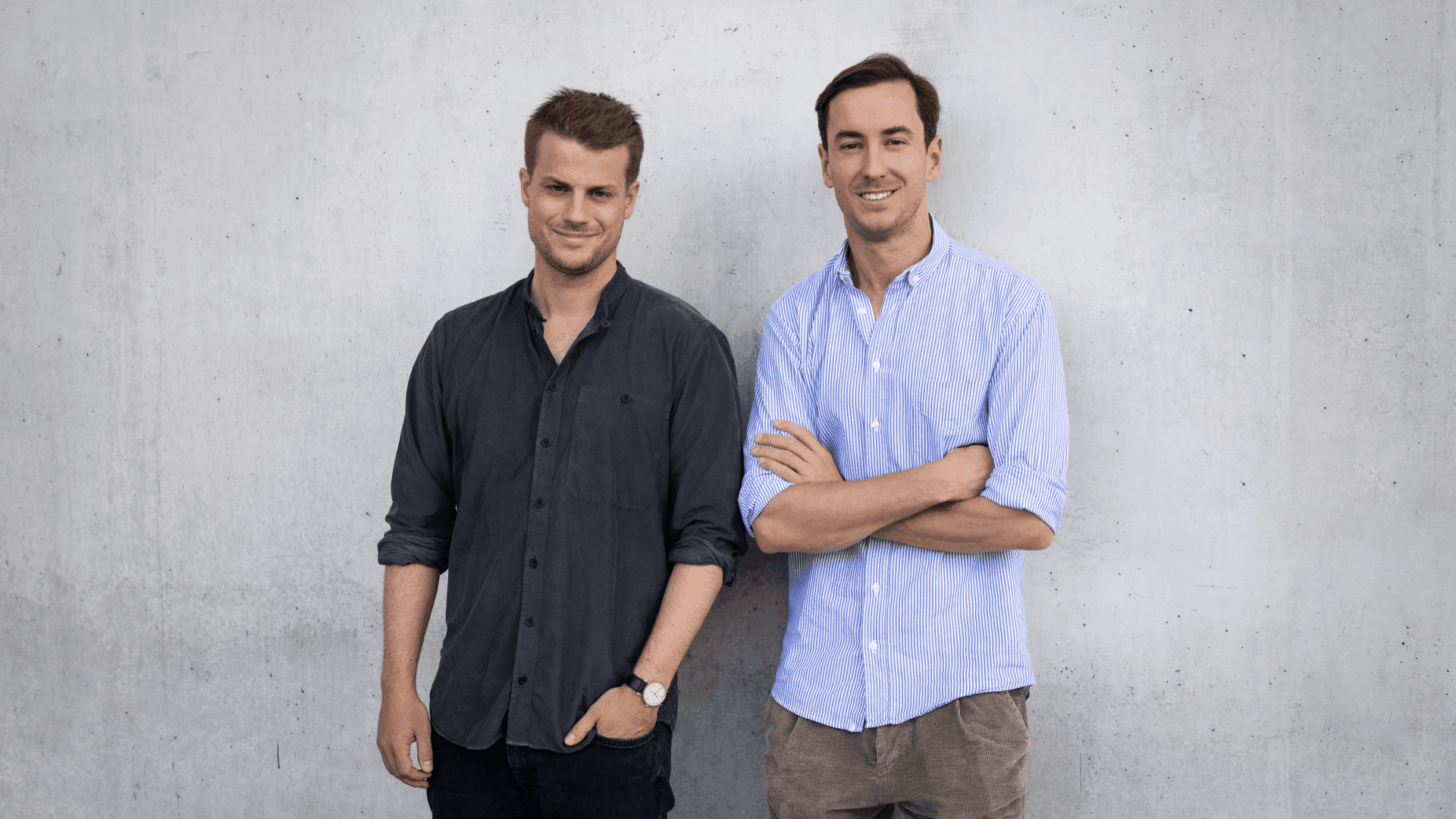
Andrea Villa (CEO), Anna Mauro (CTO), Domenico Edoardo Sfasciamuro (CCO) and Francesco Lopez (COO)
Image credit: ORiS
Turin‑based deep tech startup ORiS has closed a €5 million funding round to advance laser‑based wireless power transmission technology designed to let satellites recharge one another in orbit, using beams of light instead of traditional solar panels.
The round consists of a €4.5 million pre‑seed investment led by Earlybird and co‑led by Pitchdrive, along with participation from Galaxia, Vento and Piemonte Next Fund. An additional €500,000 came through a grant tied to the Piedmont Region's startup consolidation and growth programme, bringing the company's total secured funding to €5 million.
Building an Orbital Power Grid
ORiS was founded in 2024 as a spin‑off from the Politecnico di Torino, started by four students, and specializes in laser power beaming for space and defense applications. Its core idea is to treat energy in orbit as a commodity, something satellite operators can access on demand rather than relying solely on onboard solar arrays that face limitations around size, positioning and sunlight availability.
The company's system works by using one spacecraft equipped with a laser to transmit power to another spacecraft, which receives that power through its existing solar arrays without requiring any hardware modifications. According to co‑founder and chief executive Andrea Villa, the team engineered a combination of multiple lasers specifically so the system would remain compatible with a wide range of existing satellites and solar panel types already in orbit.
The fresh capital will go toward hiring additional technical staff, funding research and development on subsystems, expanding lab and cleanroom space, and building a flight model intended for satellite‑to‑satellite power transmission. That flight model is expected to be ready by the end of July, ahead of a planned in‑orbit demonstration set for the first quarter of 2027.
A Ground‑Based Demonstration Ahead of the Real Test
So far, ORiS's most advanced public demonstration has not taken place in space at all. The company has tested its laser system on the ground, transmitting power to a hovering drone developed through NATO's DIANA innovation program, delivering electricity across a distance of around 100 meters.
The in‑orbit test will look considerably different in scale. ORiS plans to work with mission partner Dcubed to demonstrate laser power transmission across a much shorter distance of 10 meters in orbit, a deliberately conservative first step meant to validate the core physics of the system before attempting longer‑range transmission.
Competing Against Much Larger Rivals
The space power‑beaming category is not without competition, and ORiS is notably outgunned on capital. In May 2026, US‑based rival Star Catcher raised $65 million for a similar orbital power grid concept, more than ten times what ORiS has secured to date. Despite the funding gap, ORiS argues that its dual‑use strategy, spanning terrestrial defense applications, low Earth orbit and eventually lunar infrastructure, gives it a broader set of near‑term revenue opportunities to lean on while it builds toward the bigger orbital vision.
Investors backing the round pointed to that dual‑use roadmap as a key part of the appeal. Earlybird venture partner Frédéric du Bois‑Reymond noted that space innovation increasingly depends not just on better satellites but on the infrastructure that supports them, calling ORiS's work foundational for the future space economy. Pitchdrive managing partner Koen Christiaens added that near‑term terrestrial validation gives the company a faster path to proving out its core technology while it works toward the longer‑term orbital vision.
Looking Toward the Moon
Beyond satellites, ORiS has ambitions to eventually apply its laser power‑beaming technology to lunar missions, where it could help spacecraft and rovers manage the challenge of the 14‑day lunar night, a stretch when solar power is unavailable entirely. The company has already explored this use case through a feasibility study conducted with Thales Alenia Space, though executives describe the lunar application as a long‑term goal rather than a near‑term priority.
With a 15‑person team and a roadmap that stretches from ground‑based defense applications to orbital power transmission and eventually lunar infrastructure, ORiS is positioning itself as one of Europe's early entrants into a power‑beaming category that could become increasingly important as satellite constellations, and eventually space‑based data centers, drive up energy demand in orbit.
Topics
Stay informed
Startup news in your inbox
Get important funding rounds, founder stories, and startup updates.
No spam - only important startup updates.