Anthropic Merges Claude Cowork Into Chat, Adds Docs, Slides And Design
Anthropic
Image credit: Anthropic
Anthropic is folding Claude Cowork, its separate workspace for longer running tasks, back into the main Claude chat experience, ending a split that had required people to decide upfront whether a piece of work belonged in one place or the other.
The change began rolling out on Pro and Max plans, with Anthropic saying Team and Free plans will follow in the coming weeks and Enterprise administrators will be notified at least 30 days before anything changes for their organisations. There is nothing for existing users to turn on manually, and anyone who has been working inside Cowork keeps everything they had there, including chats, projects, artifacts, connectors and skills, once the update reaches their account.
The change addresses a specific piece of user feedback Anthropic has pointed to directly, that people found it frustrating to decide in advance whether a task belonged in a quick chat or in Cowork's dedicated space for bigger work, and that work started in one of those two places did not carry over cleanly into the other. Rather than continuing to maintain that split, Anthropic says Claude can now judge what a given task actually needs and pull in the appropriate capabilities, including the tools, skills and connectors a person already has set up, from inside any single conversation.
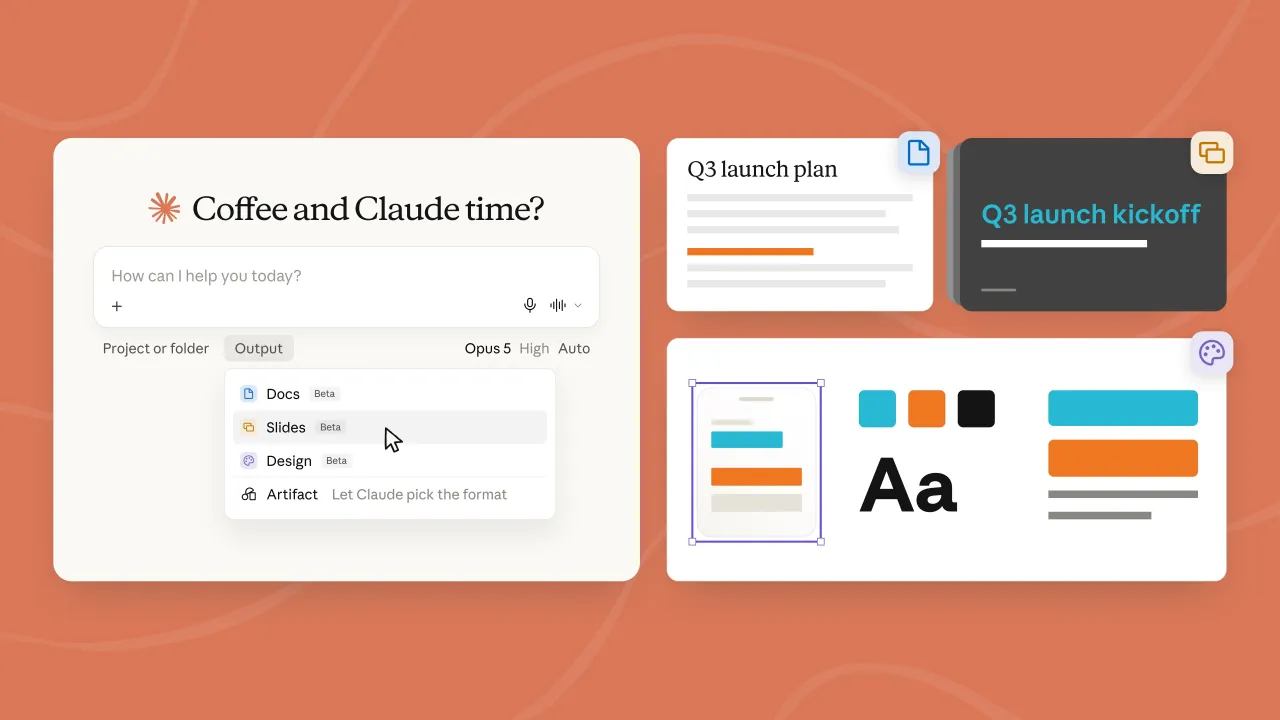
Alongside the merge, Anthropic launched two new products, Claude Docs and Claude Slides, and extended Claude Design so that it now works directly inside ordinary conversations rather than existing only as a separate, standalone tool. In practice, that means a person can ask Claude for a document and write it collaboratively inside the conversation, or ask for a presentation and have Claude draft the slides directly, without switching to a different interface to do either. Work produced this way can be edited directly inside Claude, presented straight from the conversation, or downloaded as a PowerPoint file or PDF depending on the format needed. All three products, Docs, Slides and Design, are currently in beta on paid plans, and Enterprise administrators retain control over when their organisation gets access to them. Claude Design also continues to function on its own for anyone who prefers to use it as a standalone tool rather than inside a chat.
Anthropic's own description of how this is meant to work in practice centres on a fairly specific everyday scenario, someone with a weekly report due at noon asking Claude, before leaving for the day, what moved in a particular pipeline over the past week, then asking Claude to write it in the format the team normally uses, flag anything that slipped, and turn the highlights into five slides for a leadership meeting. If any part of that request is ambiguous, Claude asks a clarifying question rather than guessing. The person can check progress from a phone on the way into the office, and by the time they sit down at their desk, the finished report is waiting as a document, complete with a teammate's notes if the document was shared, and a matching slide deck ready to open, adjust and download, generated from the same underlying conversation so the two pieces of work stay consistent with each other. From there, a person can fix a line in the document directly, leave a comment for Claude on a specific slide, or select and move an individual design element, and once everything is finished, share the whole set of outputs through a single link that opens on a phone as easily as a laptop. The same workflow can also be scheduled to repeat automatically, so a recurring report gets started by Claude on its own each week without needing to be manually requested again.
Anthropic has also given users direct control over how much autonomy Claude exercises while carrying out a longer task. By default, Claude checks in and asks before taking an action rather than proceeding unprompted. People who would rather let Claude keep working through a task uninterrupted, checking in only when something genuinely needs closer human review, can turn that behaviour on instead, while retaining final say over anything Claude ultimately does or produces.
For most users, the practical change amounts to removing a decision they previously had to make upfront, since anyone who primarily uses Claude for quick chat interactions does not need to change how they work at all, and can simply try handing over a larger report or presentation they would normally have built manually the next time one comes up. The full list of specific capabilities included in the rollout is documented in Anthropic's Help Center for users who want a more granular breakdown before relying on the new workflow for something time sensitive.
The move reflects a broader pattern across AI assistant products this year, as providers increasingly move away from separating quick conversational use from longer, more autonomous task execution, instead building a single interface capable of scaling from a simple question to a multi‑step piece of work spanning documents, presentations and design without forcing the user to choose a different tool depending on the size of the job. Whether merging Cowork's more autonomous task handling directly into everyday chat changes how heavily people actually rely on Claude for larger, multi‑step work, rather than continuing to treat it primarily as a conversational tool for smaller requests, will likely become clearer as the rollout reaches the wider Team, Free and Enterprise user base over the following weeks.
Topics
Stay informed
Startup news in your inbox
Get important funding rounds, founder stories, and startup updates.
No spam - only important startup updates.