Nvidia-Backed SiFive: Reached $3.65B valuation for its open-source (RISC-V) AI chips.
Editorial Team
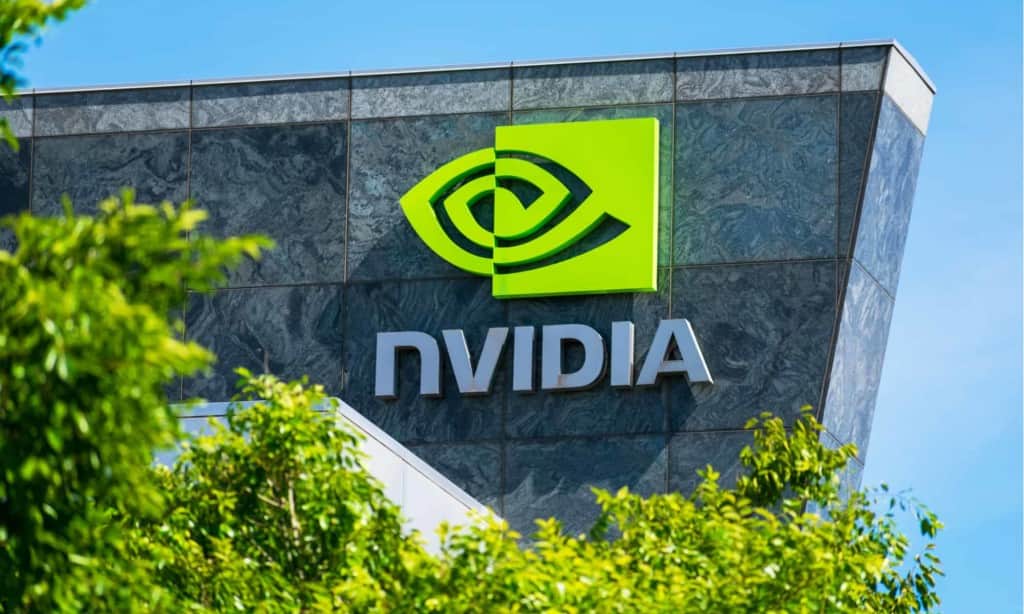
The most interesting thing about Nvidia investing in SiFive is that SiFive builds the alternative to the CPU architecture that has historically fed Nvidia's GPU empire.
On April 9, 2026, SiFive, the Santa Clara chip design company founded in 2015 by the UC Berkeley engineers who created the RISC‑V open‑source processor architecture, announced a $400 million oversubscribed Series G at a $3.65 billion valuation. The round was led by Atreides Management, the investment firm founded by Gavin Baker, the former Fidelity portfolio manager who also led the Cerebras $1 billion round. Other investors include Apollo Global Management, Nvidia, D1 Capital Partners, Point72 Turion, T. Rowe Price Investment Management, Capital Group, Prosperity7 Ventures, and Sutter Hill Ventures.
Nvidia's participation is the headline. Most CPUs connected to Nvidia GPUs today are based on Intel's x86 architecture or ARM's proprietary designs. RISC‑V is an open‑source alternative: free to implement, free to customize, free to manufacture without per‑unit royalties. By investing in SiFive, Nvidia is not betting against its existing ecosystem. It is placing capital on an open‑standard CPU that its own GPU infrastructure can work with, via NVLink Fusion, the interconnect system that lets different CPUs plug directly into Nvidia's AI server architecture.
SiFive CEO Patrick Little was direct about what hyperscalers are asking for: "Hyperscale customers have made it very clear that it is time to accelerate the availability of open standard alternatives for the data center. Their consistent ask is for customizable CPU solutions in IP form, that will enable them to meaningfully differentiate their data center compute solutions."
The commercial validation behind this round is substantial. SiFive has shipped more than 10 billion RISC‑V cores to date across consumer electronics, automotive systems, and data center applications. Its IP appears in more than 500 semiconductor designs. In 2025, Nvidia committed to porting CUDA to SiFive's RISC‑V platform, Red Hat ported Red Hat Enterprise Linux 10, and Canonical optimized Ubuntu for out‑of‑box RISC‑V support. These software maturity milestones are the critical enablers for data center adoption: enterprises do not deploy architectures that their operating systems and developer tools do not support.
Key technical advantages driving data center interest in RISC‑V include:
- Lower power: SiFive's data center CPUs target approximately 200 watts versus 250 watts for comparable x86 chips, a meaningful efficiency difference at hyperscale data center density.
- Zero licensing fees: Unlike ARM's royalty model, RISC‑V eliminates per‑unit licensing costs, which compound significantly at the millions‑of‑units scale of major data center deployments.
- Open customizability: Hyperscalers can add domain‑specific instruction extensions for AI workloads without waiting for Intel or ARM's roadmap to accommodate their requirements.
The adoption signals from major technology companies validate the momentum. Meta, Qualcomm, and Google are each deploying RISC‑V internally. The automotive industry formalized a RISC‑V standard through the Quintauris joint venture in early 2026, involving Bosch, BMW, Infineon, NXP, and Qualcomm.
SiFive CEO Patrick Little confirmed in comments to Reuters that the April 2026 Series G is the company's final private funding round before an IPO. No exchange or timeline has been formally confirmed. At $3.65 billion with a roster of institutional investors that includes Nvidia, Apollo, and T. Rowe Price, the company has the investor quality and commercial scale to support a public market entry.
More at sifive.com
Stay informed
Startup news in your inbox
Get important funding rounds, founder stories, and startup updates.
No spam - only important startup updates.