SpaceX Is Going Public on June 12. The Largest IPO in History Has a Ticker, a Date, and a $75 Billion Ask.

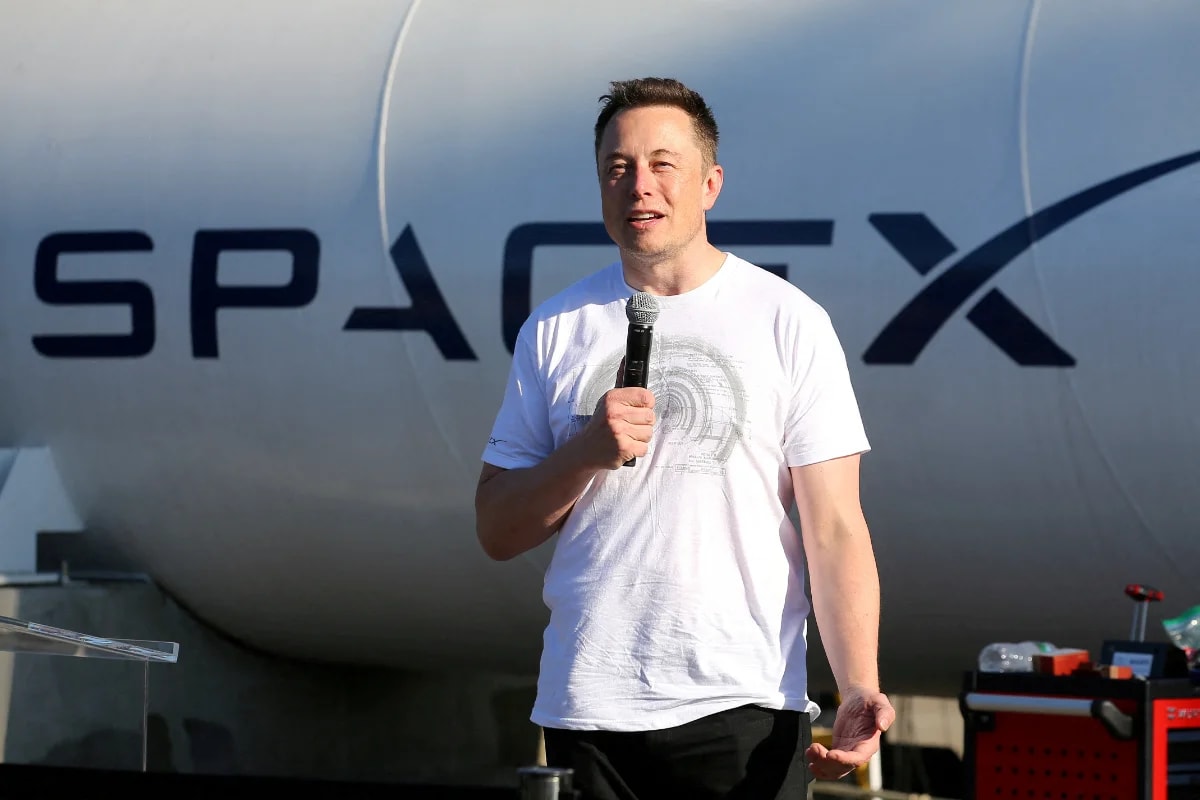
The most anticipated stock market debut since at least 2019 has a firm date. SpaceX is preparing to publicly file its prospectus as early as Wednesday, begin investor roadshows on June 4, price shares on June 11, and begin trading on the Nasdaq Global Select Market under the ticker SPCX on June 12, according to Reuters, Bloomberg, and multiple sources familiar with the timeline. A faster‑than‑expected SEC review helped pull the entire calendar forward from an initially planned late‑June listing.
The numbers attached to this IPO require a moment to absorb. SpaceX is targeting a valuation between $1.75 trillion and $2 trillion. At the high end, that would make it more valuable than Walmart, Samsung, Meta, and Tesla simultaneously. The company is seeking to raise approximately $75 billion in gross proceeds, which would make it the largest IPO in history by a significant margin, surpassing Alibaba's $25 billion in 2014, Saudi Aramco's $29.4 billion in 2019, and Ant Group's failed $37 billion offering in 2020.
The pre‑IPO investor enthusiasm is visible. Brookfield Corp., the Canadian alternative asset manager with over $1 trillion in assets under management, disclosed it has built a $2 billion position in SpaceX shares ahead of the listing, with approximately $1 billion held on Brookfield's parent company balance sheet and the remainder held by affiliated entities. Prediction markets confirmed the momentum: on Kalshi, the probability of SpaceX announcing a public listing before July 1 reached 96 percent.
Why Nasdaq and Why Now
SpaceX chose Nasdaq with a specific strategic calculation that goes beyond exchange preference. Nasdaq implemented a new Fast Entry rule on May 1, 2026, allowing companies whose market capitalization ranks in the top 40 of the Nasdaq‑100 to join the index within just 15 trading days of listing, bypassing the traditional liquidity and seasoning requirements that typically delay index inclusion for a year or more.
At $1.75 to $2 trillion in market capitalization, SpaceX would immediately rank among the largest companies in any major index. Nasdaq‑100 inclusion would trigger mandatory buying from the vast universe of index‑tracking funds, exchange‑traded funds, and pension funds that benchmark against the index. Hundreds of billions of dollars in passive capital would flow into SPCX shares automatically within three weeks of the first day of trading, creating a structural demand floor that reduces the post‑IPO volatility risk typically associated with massive new listings.
Jay Ritter, a University of Florida professor who closely follows IPO markets, told Reuters: "When the number is that big, lots of things have to go right." Revenue has to climb quickly while costs cannot keep up. That is the bet investors are being asked to take.
What SpaceX Actually Is in 2026
The investment narrative has three distinct components, each independently large enough to anchor an IPO at a fraction of the overall valuation.
The rockets business is the foundation. SpaceX has dramatically reduced the cost of reaching orbit through the development and deployment of the Falcon 9, which has now completed hundreds of successful launches including dozens of reused booster flights. The Falcon 9 is the world's most frequently launched rocket by a significant margin. Government contracts from NASA, the Department of Defense, and international agencies generate predictable, multi‑year revenue. The Starship program, which remains in development but has completed multiple high‑altitude test flights and successfully demonstrated full‑stack reusability in late 2025, promises further reductions in launch cost that could open new orbital markets.
Starlink is the revenue engine. The satellite internet constellation passed 10 million subscribers globally in early 2026 and is forecast to generate over $20 billion in revenue in 2026. The subscriber base spans maritime, aviation, military, and consumer users across markets where terrestrial internet infrastructure is unreliable or unavailable. Starlink's growth rate has been consistent and the competitive moat, a constellation of thousands of satellites already in orbit, is extraordinarily expensive to replicate.
xAI is the speculative multiplier. SpaceX merged with xAI in February 2026, folding Elon Musk's AI company into the combined entity in a transaction valued at approximately $1.25 trillion. The combined company's S‑1, while still confidential, is understood to present SpaceX and xAI as an integrated space, AI, and data infrastructure platform. The AI narrative adds a growth story that the rockets and satellites businesses alone would not support at a $2 trillion valuation.
The financial profile that the prospectus will need to defend is not uniformly positive. Sources familiar with the company's financials told The Information that SpaceX posted a loss of approximately $5 billion on more than $18.5 billion of revenue in 2025, following the xAI merger and the capital‑intensive Starship development program. A company losing $5 billion annually at $2 trillion in valuation implies a price‑to‑sales multiple exceeding 100 times 2025 revenue, a figure that has historically required extraordinary subsequent growth to justify.
The Governance Structure That Will Test Investor Patience
Reuters obtained excerpts from SpaceX's IPO registration statement describing a governance structure that concentrates decision‑making power with Elon Musk and insiders to a degree that has drawn pointed criticism from governance advocates.
The structure includes supervoting shares, which give Musk and certain insiders votes that outweigh those of ordinary shareholders, mandatory arbitration clauses that restrict investor lawsuits, and stricter rules on shareholder proposals that limit the mechanisms investors typically use to push back against management. Bruce Herbert, CEO of Newground Social Investment, told Reuters the structure "closes the voting door, the courthouse door and the proposal door." Ann Lipton, a law professor at the University of Colorado, noted that despite the governance restrictions, fund managers could still find it "very difficult not to buy" SpaceX if it reaches index‑level scale.
That last observation captures the dynamic that makes SpaceX's governance structure less commercially limiting than it might initially appear. An investor who disagrees with Musk's governance approach but manages a fund that benchmarks against the Nasdaq‑100 will, within weeks of the June 12 listing, hold SpaceX shares whether they want to or not. The structure prioritizes long‑term insider control over near‑term investor leverage, a trade that Musk has consistently made across every company he controls.
For retail investors deciding whether to participate in the IPO, the pricing conversation is the most important one. At $75 billion in gross proceeds at a $1.75 to $2 trillion valuation, the shares being offered represent roughly 3.75 to 4.3 percent of the post‑money company. Whether the stock price on June 12 makes that a good purchase depends entirely on assumptions about how fast Starlink grows, whether Starship achieves commercial viability, and how much of xAI's value accrues to the combined entity rather than evaporating in the merger accounting.
More at spacex.com
Stay informed
Startup news in your inbox
Get important funding rounds, founder stories, and startup updates.
No spam - only important startup updates.
Comments
Text only. No links or images.
No comments yet.