HiddenLayer Raises $100M as AI Security Moves From Academic Curiosity to Board-Level Budget Line
HiddenLayer
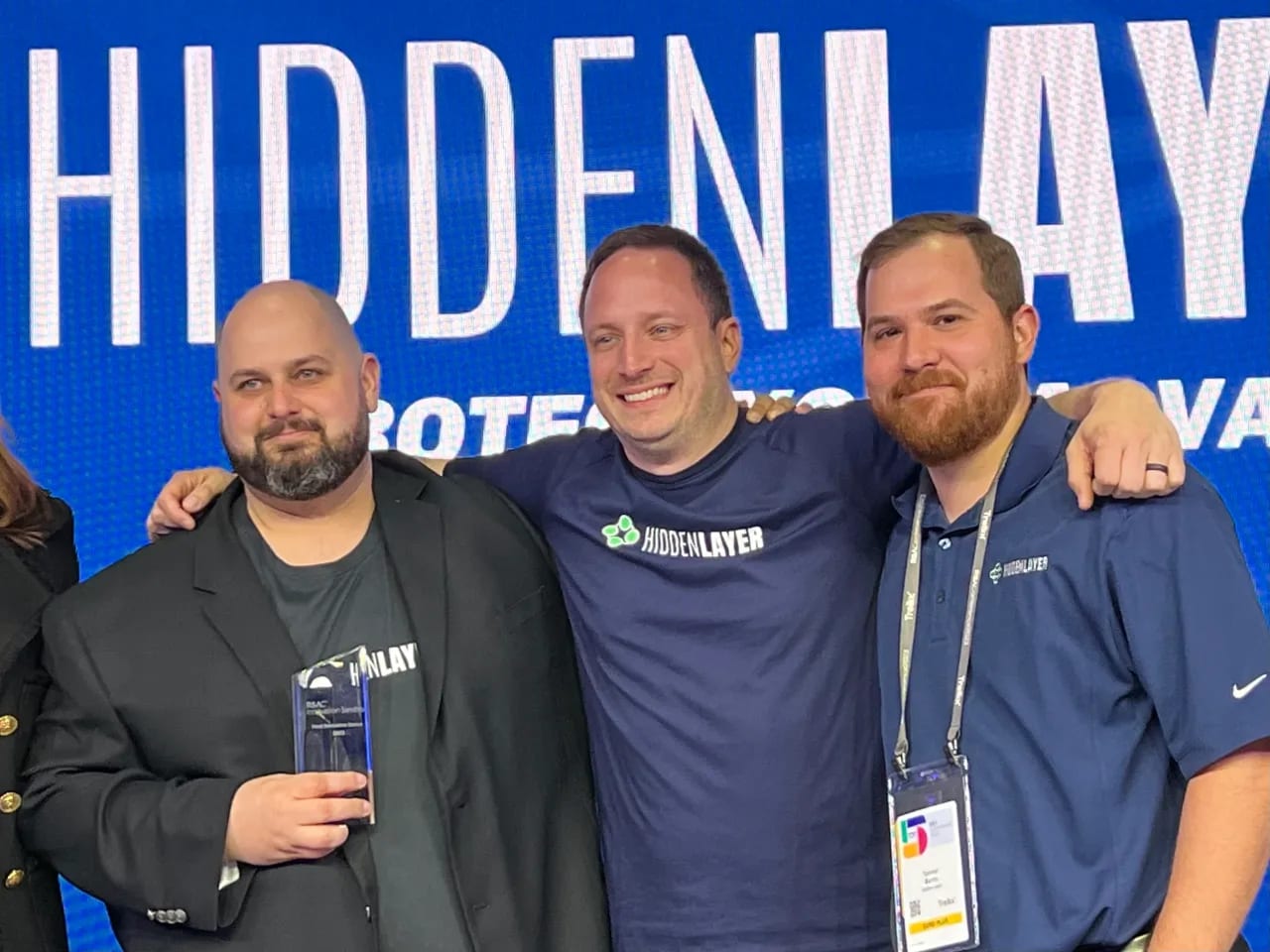
Image credit: HiddenLayer
HiddenLayer, the Austin based AI security company, has raised 100 million dollars in a Series B funding round led by Delta‑v Capital, with participation from Ten Eleven Ventures, Morgan Stanley, Microsoft's venture fund M12, and Booz Allen Ventures.
The round marks a striking shift in how quickly the market for AI‑specific security tools has matured. When HiddenLayer raised its 50 million dollar Series A three years ago, skeptics still questioned whether attacks against machine learning systems would ever materialize outside of academic research papers, at a scale meaningful enough to justify a standalone security category. That question has now been decisively answered by enterprise demand itself. HiddenLayer's annual recurring revenue has grown more than tenfold over the past year to tens of millions of dollars, with more than 90 percent of that growth coming from entirely new customers rather than expansion within its existing base, according to co‑founder and chief executive Chris Sestito.
The company was co‑founded by Sestito and continues to sell largely what it sold in 2023, built around four core capabilities: discovery, runtime protection, attack simulation, and supply chain security. What has changed, Sestito told TechCrunch, is the scope of threats those existing products now need to address. As enterprises have moved from experimenting with AI to deploying it in production, HiddenLayer has had to extend its platform to cover prompt injection, agent manipulation, and malicious tool use, threats that barely existed as practical concerns when the company built its original product line, but that have become central risks as autonomous AI agents take on increasingly consequential tasks inside enterprise environments.
Sestito has drawn a direct parallel between HiddenLayer's runtime security approach and a category security teams already understand well. "Inference is still inference," he said, framing AI runtime protection as analogous to endpoint threat detection and response, but purpose‑built for the unique behavior patterns and attack surfaces of AI models and agents rather than traditional computing endpoints. As part of that runtime focus, HiddenLayer analyzes and scans roughly 50 different AI file frameworks, checking open and open‑weight models for discrepancies between their stated contents and any hidden or embedded components, a form of supply chain verification specific to the AI ecosystem that has few direct analogs in traditional software security.
The new funding also introduces Agent Harness Security, a solution that extends HiddenLayer's existing Runtime Security module specifically to autonomous AI coding agents, tools that can now write, review, and ship software with limited human oversight. That capability addresses a rapidly emerging risk category: as coding agents take on more end‑to‑end development work inside enterprise environments, the potential blast radius of a compromised or manipulated agent grows considerably, since the agent's output is often code that gets deployed directly into production systems with minimal human review.
HiddenLayer's existing customer base already spans several highly regulated industries, including banking, insurance, pharmaceuticals, and government, and the company has disclosed that one leading frontier AI model provider serving more than 700 million weekly users relies on its technology, a customer relationship that underscores the scale and criticality of the systems HiddenLayer's tools are now protecting. Booz Allen Ventures' participation in the round is particularly notable given the consultancy's position as one of the largest technology providers to the US federal government, reinforcing HiddenLayer's existing presence within US defense and intelligence community customers.
The company plans to direct the new capital primarily toward sales and distribution, while continuing to expand its engineering and research teams, and toward international expansion into Europe and the broader EMEA region. Sestito acknowledged a genuine strategic tension the company will need to navigate going forward: some elements of the AI security products HiddenLayer offers could eventually be absorbed into the platforms built by companies including Microsoft, OpenAI, and AWS, as those infrastructure providers build out their own governance features covering discovery, identity, and policy controls. Sestito's view is that this kind of infrastructure‑level governance is where the major AI platforms are more likely to expand, rather than the specific kind of active threat detection, runtime protection, and attack simulation tooling that sits at the core of what HiddenLayer builds, a distinction he is betting keeps the company relevant even as platform providers deepen their own native security offerings.
HiddenLayer's raise also lands within an increasingly well capitalized and competitive AI security landscape. Startups Noma and Zenity have each raised more than 100 million dollars pursuing adjacent or overlapping approaches to securing AI agents, tools, and infrastructure, while large established cybersecurity vendors including Cisco, Palo Alto Networks, and Check Point have historically shown a preference for acquiring this kind of specialized technology rather than building it internally from scratch, a dynamic that could position HiddenLayer and its better‑funded peers as eventual acquisition targets even as they continue raising and scaling independently in the near term. With a war chest now standing at 100 million dollars in fresh capital and revenue growth that has outpaced even its own founders' expectations, HiddenLayer's bet is that the market for dedicated, purpose‑built AI security tooling is still in its early innings, expanding in step with how quickly enterprises are handing genuine operational authority to AI models and the autonomous agents built on top of them.
Topics
Stay informed
Startup news in your inbox
Get important funding rounds, founder stories, and startup updates.
No spam - only important startup updates.
Comments
Text only. No links or images.
No comments yet.