Rogo Raises $160 Million Series D Led by Kleiner Perkins to Scale Its AI Platform Across Global Investment Banking


Investment banking is one of the most knowledge‑intensive, deadline‑driven, and high‑stakes professions in the world. The idea that artificial intelligence could take on meaningful chunks of the work that junior and mid‑level bankers perform, and do it faster and more accurately, has been discussed for years. Rogo is one of the companies actually building that future, and on April 29, 2026, it announced a $160 million Series D funding round that confirms it has built something the industry's most demanding institutions are willing to trust.
Rogo, the AI platform purpose‑built for finance, today announced it has raised $160 million in Series D funding led by Kleiner Perkins, with participation from Sequoia, Thrive Capital, Khosla Ventures, J.P. Morgan Growth Equity Partners, BoxGroup, Mantis VC, Jack Altman, Evantic and Positive Sum. The Series D brings Rogo's total funding to more than $300 million and positions Rogo to accelerate the company's global expansion, deepen its partnerships with the world's leading financial institutions, and scale its AI agent, Felix.
Who Is Using Rogo
The scale of Rogo's enterprise adoption is one of the most striking facts about the company. More than 35,000 financial professionals at over 250 institutions, including Rothschild and Co, Jefferies, Lazard, Moelis, Nomura, and others, leverage Rogo in their daily workflows across origination, execution, advisory, and portfolio intelligence.
These are not pilot programs or experimental deployments. These are active, daily workflows at firms where the margin for error is essentially zero and where the stakes on any given transaction can run into the hundreds of millions of dollars. The fact that institutions of this caliber have integrated Rogo into their core operations is a strong endorsement of the platform's reliability, accuracy, and domain expertise.
Rogo is built for finance from the ground up. Its agents execute full workflows: running comps, building models, drafting memos, preparing pitchbooks, screening deals. Every output meets the auditability and citation standards institutional clients demand, formatted in the firm's own templates and house style, delivered in Excel, PowerPoint, and Word.
The Felix Agent: From Task Automation to Full Workflow Execution
The most significant product development Rogo has made in recent months is the launch of Felix, its agentic AI system designed to handle complex, multi‑step financial workflows without human intervention at each step.
Felix is an agentic AI capable of autonomously performing multi‑step financial tasks such as deal screening, CIM drafting, buyer outreach, and data room diligence, a level of critical workflow integration that Kleiner Perkins describes as akin to becoming an industry operating system.
With Felix, Rogo's newest agent, bankers can delegate tasks by email the way they would to a junior analyst and get back finished work around the clock. This is not a chatbot that answers questions. It is a system that takes an assignment, understands the context, accesses the relevant data sources, produces the required outputs in the right formats, and does so continuously, without needing sleep.
The Founding Story and Strategic Trajectory
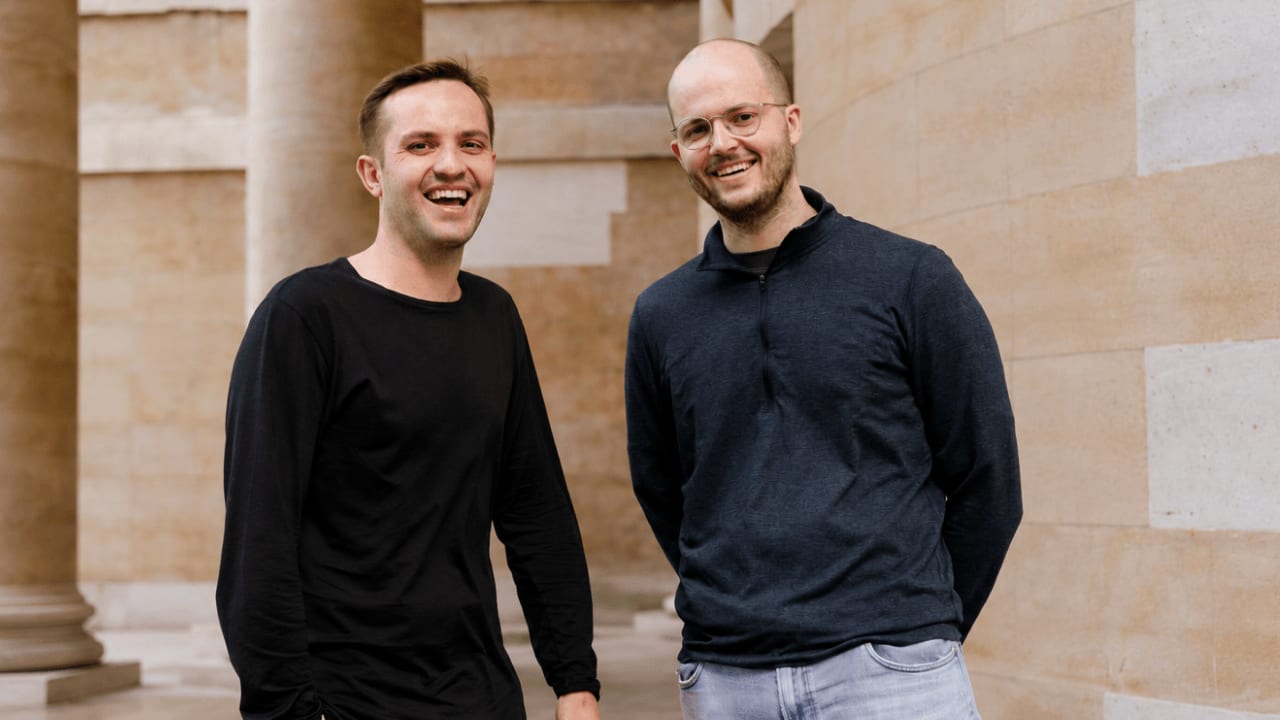
Gabriel Stengel, John Willett, and Tumas Rackaitis, who met as classmates at Princeton and worked at J.P. Morgan and Lazard, founded Rogo in January 2022. They were inspired by the release of GPT‑3 for developers and decided to leave their finance jobs to expand on their senior thesis, which focused on building a chatbot for econometrics.
That origin story matters because domain expertise is genuinely rare in AI, and Rogo was built by people who had actually worked on trading floors and in investment banks. They understood not just the technical requirements but the professional culture, the workflows, the way decisions are actually made, and the standards that outputs must meet.
Rogo's competitors include Harvey, which has taken a similar professional‑focused approach in legal services and raised $300 million at a $3 billion valuation in late 2025. Other competitors are Visible Alpha, Tegus, and Bloomberg's AI‑based financial data tools. But Rogo's combination of deep institutional relationships, finance‑specific reasoning models, and agentic execution capabilities has carved out a defensible position.
European Expansion and What the Funding Buys
Rogo has grown its presence in Europe through strategic acquisitions. The company bought Plux AI, a UK firm that tracks complex financial market developments. The London office, opened in January 2026, is now led by co‑founder John Willett, who is on the ground building relationships with European financial institutions.
Mamoon Hamid, Partner at Kleiner Perkins, framed the investment opportunity in generational terms. Their combination of technical depth, proprietary data integrations, and genuine domain expertise is why Rogo is pulling away from the field. When a platform becomes the operating system for an entire industry, the opportunity is generational.
The new capital will fund global expansion, deepen institutional partnerships, and continue to develop Felix and the broader platform. For the financial services industry, Rogo is no longer a startup to watch. It is infrastructure.
Stay informed
Startup news in your inbox
Get important funding rounds, founder stories, and startup updates.
No spam - only important startup updates.
Comments
Text only. No links or images.
No comments yet.