Cohere and Aleph Alpha Just Built the Most Credible Challenger to OpenAI's European Dominance
Editorial Team
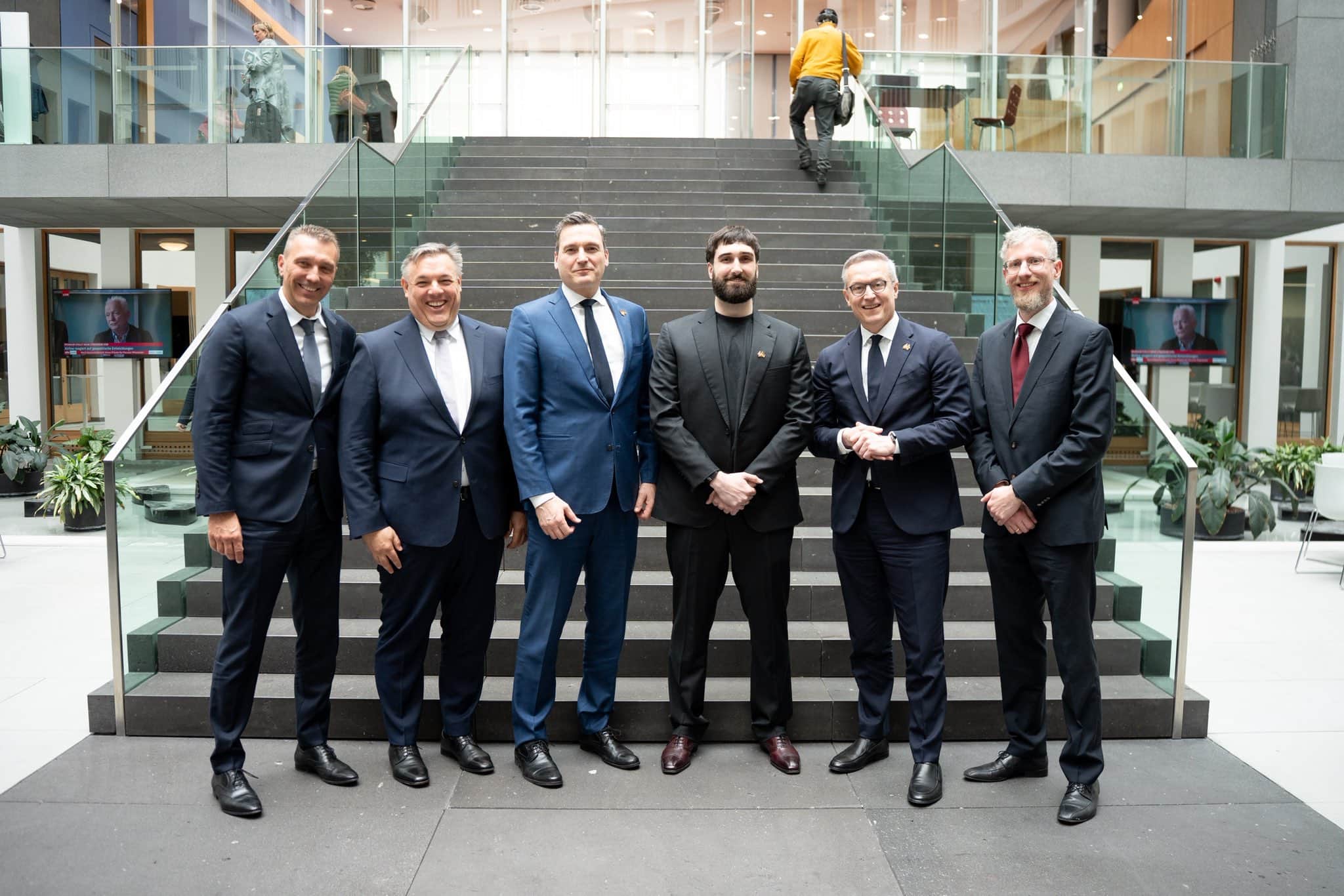
On Friday, April 24, 2026, two things happened at once in the global enterprise AI market. The first was an announcement that Canada's Cohere and Germany's Aleph Alpha had agreed to merge, creating a combined entity valued at approximately $20 billion that will trade under the Cohere name with headquarters in both Toronto and Germany. The second was the simultaneous commitment from Schwarz Group, the German retail conglomerate that owns Lidl and backs Aleph Alpha, to invest €500 million as the lead investor in Cohere's upcoming Series E round. Both together describe something more significant than a single corporate transaction: the creation of the most credible institutional challenger to US AI dominance in the regulated enterprise and government market.
Cohere was founded in 2019 by Aidan Gomez, Ivan Zhang, and Nick Frosst, three researchers who worked at Google Brain before leaving to build enterprise AI outside the shadow of the hyperscalers. Aleph Alpha was founded in 2019 in Heidelberg by Jonas Andrulis with a specific focus on building large language models for European governments and enterprises under European data sovereignty requirements. Both companies, independently, made the same commercial bet: that a significant portion of the global AI market would ultimately refuse to outsource its intelligence to San Francisco.
That bet is now being combined into a single platform.
The deal has not yet closed and remains subject to the approval of Aleph Alpha shareholders and regulators, including the German government and potentially the European Union. Once it does, the merged company's profile is specific and commercially distinct:
- Cohere brings global AI scale, having raised $1.6 billion from investors including Nvidia and AMD, reporting $240 million in annualized recurring revenue in 2025, and targeting profitability by 2029.
- Aleph Alpha brings deep institutional relationships with European governments, a track record of deploying AI within European regulatory frameworks, and models hosted entirely on European infrastructure with no dependency on US cloud providers.
- Schwarz Group brings capital, infrastructure through its STACKIT cloud service, and the political weight of one of Europe's largest private companies in conversations with regulators and government procurement offices.
- The combined company will partner with Schwarz Digits, the IT and digital division of Schwarz Group, to host Cohere's AI solutions on STACKIT, creating a European sovereign cloud deployment path that no US‑based competitor can meaningfully replicate.
Gomez was direct about the strategic rationale: "Combining the strengths of Cohere and Aleph Alpha accelerates our global expansion and advances our mission to deliver sovereign AI to nations around the world. This transatlantic partnership unlocks the massive scale, robust infrastructure, and world‑class R&D talent required to meet that demand." His framing of the deal as built on "the bedrock of shared Canadian and German values" of privacy, security, and responsible innovation was deliberate. It positions the merged company not merely as a commercial alternative to OpenAI, but as an ideologically distinct option for governments and enterprises that have concluded that American AI infrastructure comes with geopolitical dependencies they are not willing to accept.
Aleph Alpha's co‑CEO Ilhan Scheer was equally direct: "Together with Cohere, we are building a real counterweight for organizations that refuse to outsource control over their AI to a single provider or jurisdiction, giving European institutions and enterprises access to powerful, yet controllable AI they can truly own."
The sectors the merged company is specifically targeting are the ones where this positioning matters most and where US vendors have the hardest time winning competitive procurement:
- Finance and banking, where data residency and regulatory compliance are non‑negotiable.
- Defense and intelligence, where foreign ownership of AI infrastructure creates security concerns.
- Healthcare, where patient data sovereignty is both legally and ethically required.
- Energy and telecommunications, which are classified as critical infrastructure in most jurisdictions.
- Government and public sector, where political mandates for domestic technology are increasingly explicit.
Thomas Hutton, VP principal analyst at Forrester Research, offered the most precise external characterization of what the deal creates: "a unique transatlantic player designed to challenge the dominance of US giants." Hutton noted that while the transaction is technically an acquisition by the larger Canadian firm, "the real power is likely to be shared," with Cohere providing engineering and global commercial leadership while Schwarz Group and German partners provide the capital and political backing.
Canada's minister of AI Evan Solomon called the merger "a big moment for Canadian AI," noting that Cohere is Canadian‑founded, Canadian‑headquartered, and built on Canadian research excellence. The Canadian government has previously signed a memorandum of understanding with Cohere to deploy its AI tools across the public service and committed $240 million CAD toward Cohere's Canadian AI data center project.
The combined company will maintain Cohere's existing Paris office alongside its new German European headquarters, creating a three‑city anchor across Toronto, Paris, and Germany. Gomez will lead as CEO of the merged entity.
For enterprises evaluating AI vendors in 2026, the Cohere‑Aleph Alpha merger changes the competitive calculus in regulated markets specifically. For the past three years, the choice has been between US frontier models with powerful capabilities and significant sovereignty concerns, and European alternatives with stronger compliance profiles but weaker technical performance. The merged company's thesis is that it can now offer both simultaneously, combining Cohere's model performance and commercial scale with Aleph Alpha's institutional trust, European infrastructure, and government relationships.
More at cohere.com | Aleph Alpha at aleph‑alpha.com
Stay informed
Startup news in your inbox
Get important funding rounds, founder stories, and startup updates.
No spam - only important startup updates.