Two Yale Seniors Built a Social Network That Lives Inside iMessage. They Just Raised $5.1 Million.
Editorial Team

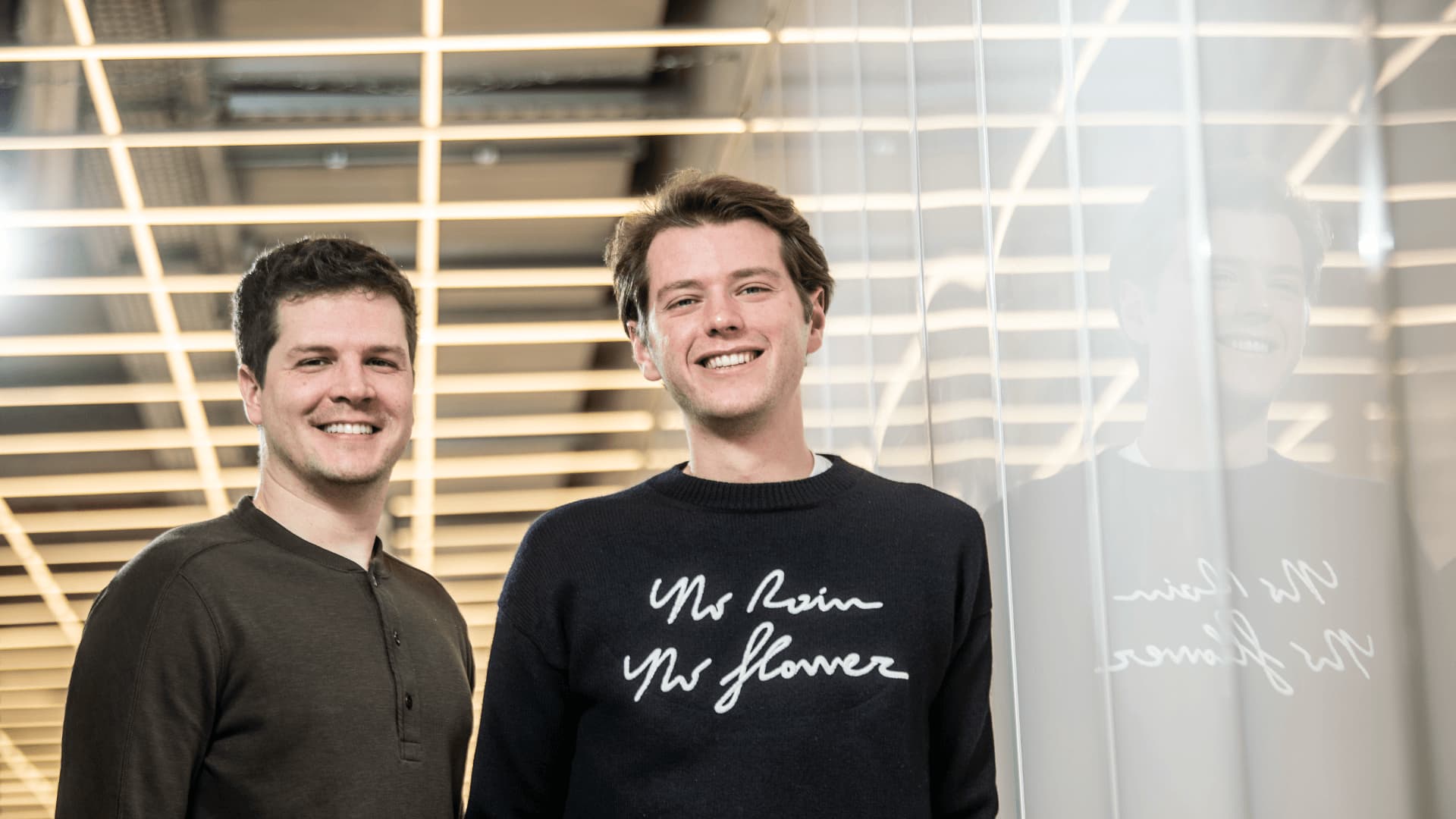
Every generation gets one story of two college students who built a social network that changed how people connect. Mark Zuckerberg built Facebook in his Harvard dorm room in 2004. Nathaneo Johnson and Sean Hargrow built Series at Yale in 2025. The comparison may feel premature, but the investors backing the company's $5.1 million pre‑seed round announced today are not a group prone to premature enthusiasm: Reddit CEO Steve Huffman, Venmo co‑founder Iqram Magdon‑Ismail, Pear VC, and GPTZero founder Edward Tian.
Series, which positions itself explicitly as a next‑generation social networking platform rather than an AI app, operates entirely through iMessage. Users text a phone number called Series AI, explain who they are and what kind of person they want to connect with, and the platform responds with what it calls shares: a carousel of ten images from other users with compatible interests and goals. Each card shows a photo and that person's stated ask. Pressing and holding a card opens a private conversation with that person inside the Series AI chat, without either party sharing their personal phone number.
The mechanics matter because they solve a problem that existing social products have never adequately addressed: how to make warm introductions at scale without the awkwardness of cold outreach, the bias of follower counts, or the privacy exposure of sharing contact details with strangers. Series creates double opt‑in connections where both parties have expressed compatible goals before any direct contact is initiated.
Johnson, who is studying computer science and economics at Yale and serves as CEO, described the product's core thesis to TechCrunch: the industry is undergoing a shift from user interfaces to conversational interfaces, from Google Search to ChatGPT, where instead of scrolling through libraries and clicking through sites, you talk with AI to quickly find what you need. Series applies that same shift to social discovery.
The product's engagement numbers are striking for a platform at this stage:
- 82 percent 30‑day retention among active users, a figure that most consumer social apps would envy at any stage of development.
- Presence on more than 750 college campuses across the United States.
- An eight‑person team, split between New Haven, Connecticut, where Yale is located, and a Chelsea, New York City office.
- A prior $3.1 million pre‑seed round closed in 14 days in early 2025, with that round led by Parable, the venture fund founded by former Andreessen Horowitz partner Anne Lee Skates.
Hargrow, who studied neuroscience at Yale, and Johnson met while producing a podcast called The Founder Series during their freshman year through the Yale Entrepreneurial Society. The podcast accumulated over 500,000 views and gave the founders direct access to the entrepreneurs and investors they would later fundraise from. Gary Tan, CEO of Y Combinator, was reached through a Series user's warm network introduction during the company's earliest days, a proof‑of‑concept for the product's own functionality.
The $5.1 million announced today brings the company's total raised to approximately $8.2 million. The additional capital from Huffman and Magdon‑Ismail is not passive. Huffman scaled Reddit into a platform with hundreds of millions of users after years of slow early growth. Magdon‑Ismail built Venmo into the dominant peer‑to‑peer payment app before its acquisition by Braintree. Both bring direct experience in consumer social platforms where network effects determine everything.
Johnson described the company's long‑term vision without understatement: to establish Series as the primary operating system for warm introductions across all aspects of life, starting with college campuses and expanding into professional networking, dating, education, and healthcare. The specific ambition of scaling to one billion AI Friends over the next decade is not a conservative projection, but the retention rate and campus penetration at this stage suggest the product has found a genuine behavioral hook in a category where most attempts at reinvention fail within months.
The product's reliance on Apple's iMessage is simultaneously its largest distribution advantage and its greatest limitation. iMessage is the most‑used messaging app among US college students by a significant margin, and building natively into an interface users already live in dramatically lowers the activation barrier compared to asking someone to download a new app. The limitation is the Apple ecosystem constraint: the product currently serves iPhone users only, leaving Android users and international markets structurally excluded.
Johnson's response to the question of what comes after college campuses reflects the founders' ambition beyond student networking: Series plans to attract Gen Z and professionals alike. The Chelsea office is the geographic signal that the company is not planning to stay in New Haven.
More at series.so
Stay informed
Startup news in your inbox
Get important funding rounds, founder stories, and startup updates.
No spam - only important startup updates.