SpaceX Blew Up Cursor's $2 Billion Funding Round With a $60 Billion Buyout Option. Here Is What Actually Happened.
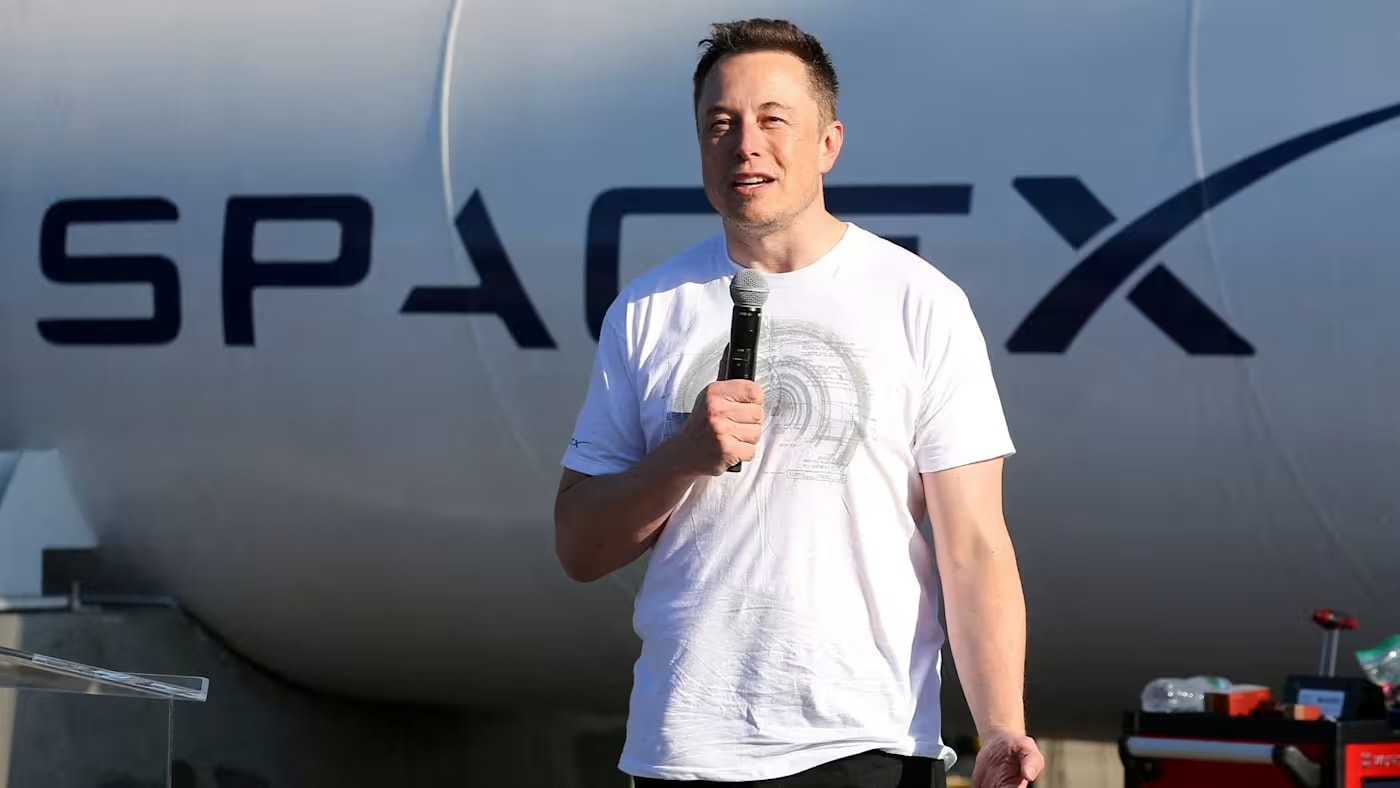
On Tuesday morning, April 22, 2026, Cursor was hours away from closing a $2 billion private funding round that would have valued the company at $50 billion. The investors were ready. Andreessen Horowitz, Thrive Capital, Nvidia, and Battery Ventures had all committed. The paperwork was being finalized. Then Elon Musk's SpaceX posted on X, and everything changed.
The post announced that SpaceX had struck a deal with Cursor giving it two options: pay Cursor $10 billion for their work together developing "the world's best coding and knowledge work AI," or exercise an acquisition option to buy the company outright for $60 billion later this year. Until a few hours before SpaceX announced its deal, Cursor was on track to close a $2 billion funding round later this week, according to a person familiar with the matter. That round is now in a fundamentally different position, and the venture capital community is still working out what exactly it means.
Cursor CEO Michael Truell wrote in a post on X that he is "excited to partner with the SpaceX team to scale up Composer," referring to his company's AI model. The statement is short and deliberately restrained. Truell has built one of the fastest‑growing software companies in history and is now contemplating an outcome at a scale that nobody in the industry saw coming when Cursor was founded three years ago.
Why SpaceX Wants This, and Why Now
Understanding this deal requires understanding what each company needs from the other.
SpaceX merged with xAI in February, and has been aiming to beef up its AI capabilities to better compete with leaders like Anthropic and OpenAI. Acquiring Cursor gives Elon Musk's company a better chance of challenging rivals in AI coding, currently the most lucrative application of the technology.
Last week, it was reported that xAI would begin renting computing power from its data centers to Cursor, with the coding startup using tens of thousands of xAI chips to train its latest AI model. The collaboration was already happening at the chip level before the deal announcement formalized it commercially.
The compute angle matters enormously for Cursor's business. Today, Cursor pays retail prices to Anthropic and OpenAI for the model inference that powers its product. Those are the same companies competing directly against Cursor with Claude Code and OpenAI Codex. Every dollar of Cursor's revenue partially funds its own competition. With SpaceX bringing computational infrastructure to the Cursor platform, that could reduce Cursor's dependence on OpenAI and Anthropic's Claude AI. SpaceX, which operates the Colossus supercomputer with GPU capacity equivalent to one million H100s across facilities in Mississippi and Tennessee, has the compute infrastructure Cursor needs to train proprietary models and reduce its reliance on third‑party API providers.
For SpaceX, the strategic logic connects directly to its upcoming IPO. The SpaceX IPO, targeted for June, is aiming for a $1.75 trillion valuation, potentially making it the largest in history. Adding Cursor to the portfolio before that roadshow gives IPO investors a concrete enterprise software revenue story to price in, alongside rockets and satellite internet. A $60 billion enterprise software asset delivering $2 billion in annualized revenue, growing at triple‑digit rates, changes the narrative of what investors are buying when they purchase SpaceX stock.
The Structure That Changed Everything
The deal structure itself is unusual enough to warrant specific attention. SpaceX is not acquiring Cursor today. It is acquiring the option to acquire Cursor, payable in one of two ways:
- A $10 billion collaboration payment, made over time, for joint AI development work. This alone is larger than everything Cursor has raised across its entire existence combined.
- A $60 billion acquisition price, exercisable later this year, which SpaceX would likely fund using publicly traded stock following its June IPO rather than cash.
SpaceX is delaying the potential acquisition of Cursor until after its IPO this summer. This is largely because the company wants to avoid updating its confidential financial filings before the listing, and it will be easier to finance the $60 billion purchase using its new, publicly traded stock.
The original $2 billion funding round did not disappear. Even if SpaceX doesn't go through with the acquisition, Cursor is receiving a $10 billion capital injection paid out over time from Elon Musk's company. The venture investors who were preparing to write checks in that round must now decide whether to participate in a company that has a conditional acquisition agreement with the company that may become the world's largest public listing, or hold their capital for a scenario where the acquisition does not proceed and Cursor raises a more conventional late‑stage round instead.
Unlike Google's purchase of Windsurf, which was structured as an acqui‑hire of key individuals, SpaceX currently lacks a meaningful AI workforce and is widely seen as not having a significant AI business. SpaceX will likely keep the entire Cursor team intact. That is a meaningful distinction. This is not a talent grab. It is a product acquisition, and Cursor's engineering team, which built the fastest‑scaling enterprise software company in history, would remain intact inside whatever combined entity emerges.
For the AI coding market, the implications extend well beyond Cursor. A $60 billion valuation from a buyer that is not a hyperscaler or a foundation model lab raises the ceiling for every company in the category. It also signals that the era of AI coding tools as venture‑scale software bets may be transitioning into the era of strategic acquisitions by companies who need AI capability quickly and have the capital to buy it at any price.
More at cursor.com | SpaceX statement at x.com/SpaceX
Stay informed
Startup news in your inbox
Get important funding rounds, founder stories, and startup updates.
No spam - only important startup updates.
Comments
Text only. No links or images.
No comments yet.