An Ohio State Professor Resisted Every VC for Years. Then He Built One of the Biggest AI Seed Rounds of 2026.
Editorial Team
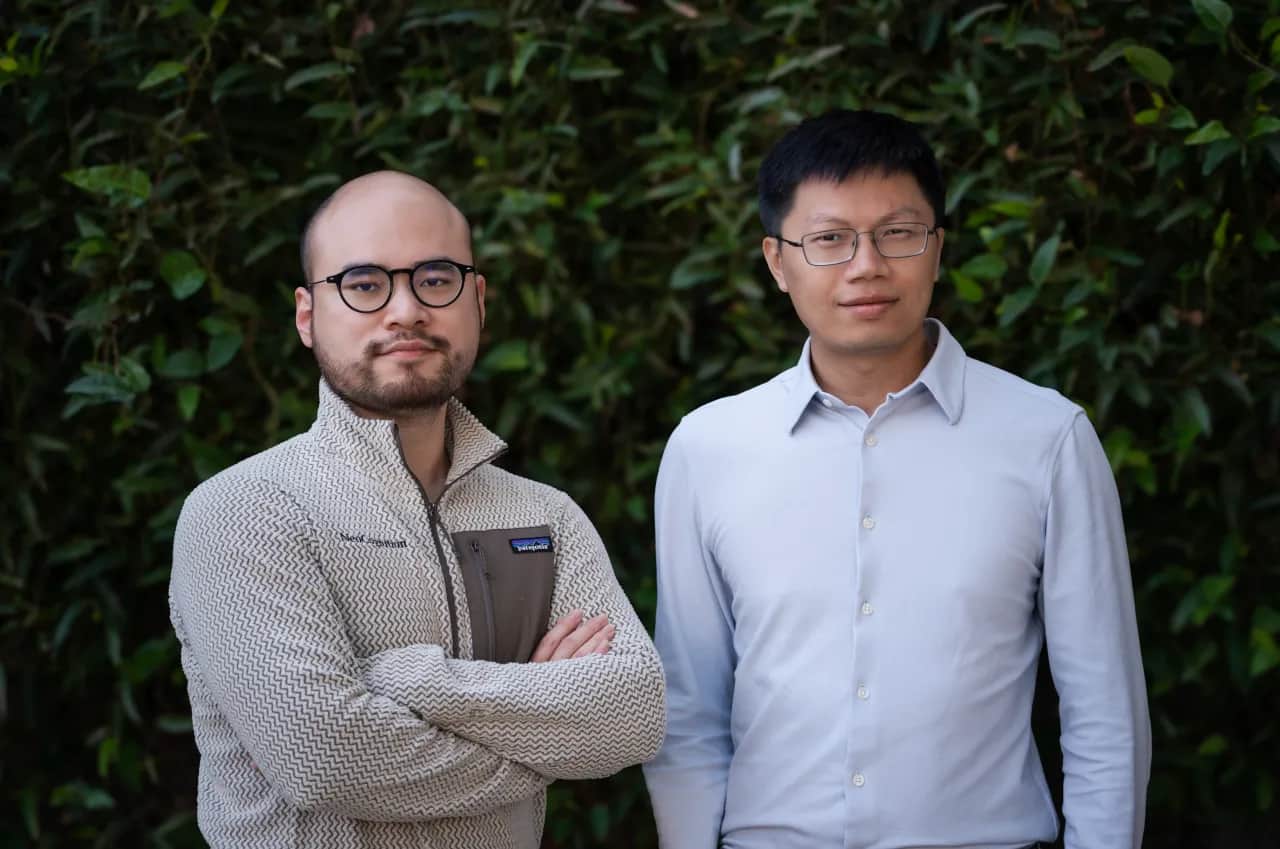
Yu Su spent years saying no.
The Ohio State University professor who leads one of the most established AI agent labs in the country told investors, politely but clearly, that he was not interested in turning his research into a startup. He had watched colleagues commercialize too early, before the underlying science was ready, and he had seen what happened: products built on shaky foundations that could not keep the promises made to enterprise customers. His research would stay in the lab until the moment was right.
Then, sometime in 2025, Su decided the moment had arrived.
The catalyst was specific. Foundational model advances had reached a point where agents built on top of them could credibly begin to specialize, to learn the idiosyncratic rules, relationships, and workflows of specific professional environments in a way that was genuinely new. Not just search‑and‑retrieve. Not just task automation scripted in advance. Actual learning, the kind that makes a new employee useful after their first month rather than requiring years of supervised hand‑holding.
Su spun out his research into NeoCognition, and on April 21, 2026, the Palo Alto‑based company emerged from stealth with $40 million in seed funding. The round was oversubscribed and co‑led by Cambium Capital and Walden Catalyst Ventures, with participation from Vista Equity Partners. The angel roster is as credible as any in recent AI startup memory: Lip‑Bu Tan, CEO of Intel; Ion Stoica, co‑founder and executive chairman of Databricks; and leading AI researchers including Dawn Song from UC Berkeley, Ruslan Salakhutdinov from Carnegie Mellon and Apple, and Luke Zettlemoyer from the University of Washington and Meta's FAIR lab.
NeoCognition was co‑founded by Su alongside two co‑authors of the lab's most significant research: Xiang Deng and Yu Gu, both researchers whose work on agent perception, memory, planning, evaluation, and safety formed the technical foundation of what the company is building.
The 50 Percent Problem
The investment thesis begins with a number that Su stated plainly to TechCrunch: current AI agents, whether from Claude Code, OpenClaw, or Perplexity's computer tools, successfully complete tasks as intended approximately 50 percent of the time. Half the time, an agent asked to do something does something else, fails partway through, or produces output that requires significant human correction to be usable.
That success rate is the reason why enterprise AI agent adoption has been slower than the venture capital enthusiasm around agentic AI would suggest. Enterprises do not deploy systems they cannot trust. A junior employee who completes tasks correctly 50 percent of the time is not a trusted, independent worker. They are a liability. And the current state of AI agents is structurally equivalent to that situation.
Su's explanation for why this happens is precise. Today's agents are generalists. Every time you ask them to do a task, you take a leap of faith, because the agent has no specific model of the environment it is operating in. It does not know the internal naming conventions your company uses. It does not know which approval workflows are required for specific actions. It does not know the unwritten rules of how work actually gets done in your organization, as opposed to how the documentation says it should get done. When an agent lacks this environmental model, it improvises. And improvisation at 50 percent reliability is not useful in a production enterprise context.
Su has argued consistently that this is not a model capability problem. Making models larger and training them on more data will not solve it. The missing capability is domain‑specific learning: the ability of an agent to enter a new professional environment and, over time, build an accurate internal model of how that environment works, who the key actors are, what constraints apply, and what the consequences of different actions are likely to be.
How NeoCognition's Agents Are Different
NeoCognition's core research direction is building agent systems that can autonomously develop world models for specific professional environments and then use those models to become reliable, specialized workers in those environments.
The human analogy that Su returns to repeatedly is the experience of entering a new job. A competent new employee is a generalist when they arrive: they know how to write emails, how to structure a spreadsheet, how to run a meeting. But within their first weeks, they become specialists. They learn that approval for expenses over $5,000 requires a specific sign‑off. They learn that the legal team responds fastest to requests framed in a particular way. They learn the informal power structures, the preferred communication channels, the shortcuts and the landmines. They build a world model for that specific professional environment, and that world model is what makes them trustworthy.
NeoCognition's agents are designed to do the same thing. Rather than being custom‑engineered for a specific vertical through expensive, bespoke development, they are designed to be generalists capable of rapid specialization. When deployed in a new environment, they observe, build a world model, and become progressively more reliable in that specific context, without requiring the level of human oversight that current agents demand.
The technical architecture spans what Su describes as every piece of the agent puzzle: perception (how the agent observes its environment), memory (how it stores and updates its world model), planning (how it sequences actions toward a goal), evaluation (how it assesses whether its actions are achieving the intended outcome), and safety (how it avoids harmful or irreversible actions in high‑stakes settings). Building across all five layers from a single research program is ambitious and is the reason the round attracted researchers of the caliber of Dawn Song, whose work on adversarial machine learning and AI safety at UC Berkeley represents exactly the safety dimension of the architecture.
The Vista Equity Angle
Among the investors in the round, Vista Equity Partners' participation is strategically significant in a way that goes beyond balance sheet. Vista is one of the largest private equity firms focused exclusively on software businesses, with a portfolio of more than 85 enterprise software companies across virtually every vertical. Su explicitly highlighted this when discussing the round: Vista provides NeoCognition with direct access to a vast portfolio of companies looking to modernize their products with AI.
The implication is a distribution channel that a typical enterprise software startup would spend years building from scratch. If NeoCognition's agent systems can be integrated into Vista portfolio companies as product enhancements, the company can demonstrate value across dozens of enterprise contexts simultaneously, generating the training data, the case studies, and the commercial relationships that build a durable enterprise AI platform.
Lip‑Bu Tan's summary of the investment rationale captured the technical specificity that the team brings: "Dr. Su and his team have already developed research that spans every piece of the agent puzzle, ranging from perception to memory, planning, evaluation, and safety. We are confident NeoCognition is uniquely positioned to tackle the hardest challenges in agentic AI."
NeoCognition currently has approximately 15 employees, the majority holding PhDs. For a company emerging from stealth with $40 million in committed capital, a research‑first founding team, and a distribution partnership with one of the largest enterprise software investors in the world, that headcount reflects deliberate restraint: the company intends to solve the hard technical problems before scaling the commercial organization.
Stay informed
Startup news in your inbox
Get important funding rounds, founder stories, and startup updates.
No spam - only important startup updates.