Antioch Raises $8.5 Million to Build the Missing Infrastructure Layer for the Age of Physical AI
Editorial Team
Tesla, Anduril, and Waymo each spend hundreds of millions of dollars every year on end‑to‑end simulation and testing infrastructure for their autonomous systems. For the thousands of smaller robotics companies that cannot afford that kind of internal investment, the choice has historically been to build mock warehouses, rent Airbnbs to test household robots, or skip rigorous simulation altogether and accept the higher failure rate that follows. Antioch, the New York‑based startup that emerged from stealth on April 16, 2026, was built specifically to close that access gap.
The company announced an $8.5 million seed round at a $60 million valuation, led by venture firm A* and Category Ventures, with additional participation from MaC Venture Capital, Abstract, Box Group, and Icehouse Ventures. The capital arrives as the robotics and physical AI sector enters a period of accelerating investment, with Eclipse Ventures raising a $1.3 billion fund specifically for embodied AI and the global robotics simulation market projected to more than triple to approximately $3.2 billion by 2030.
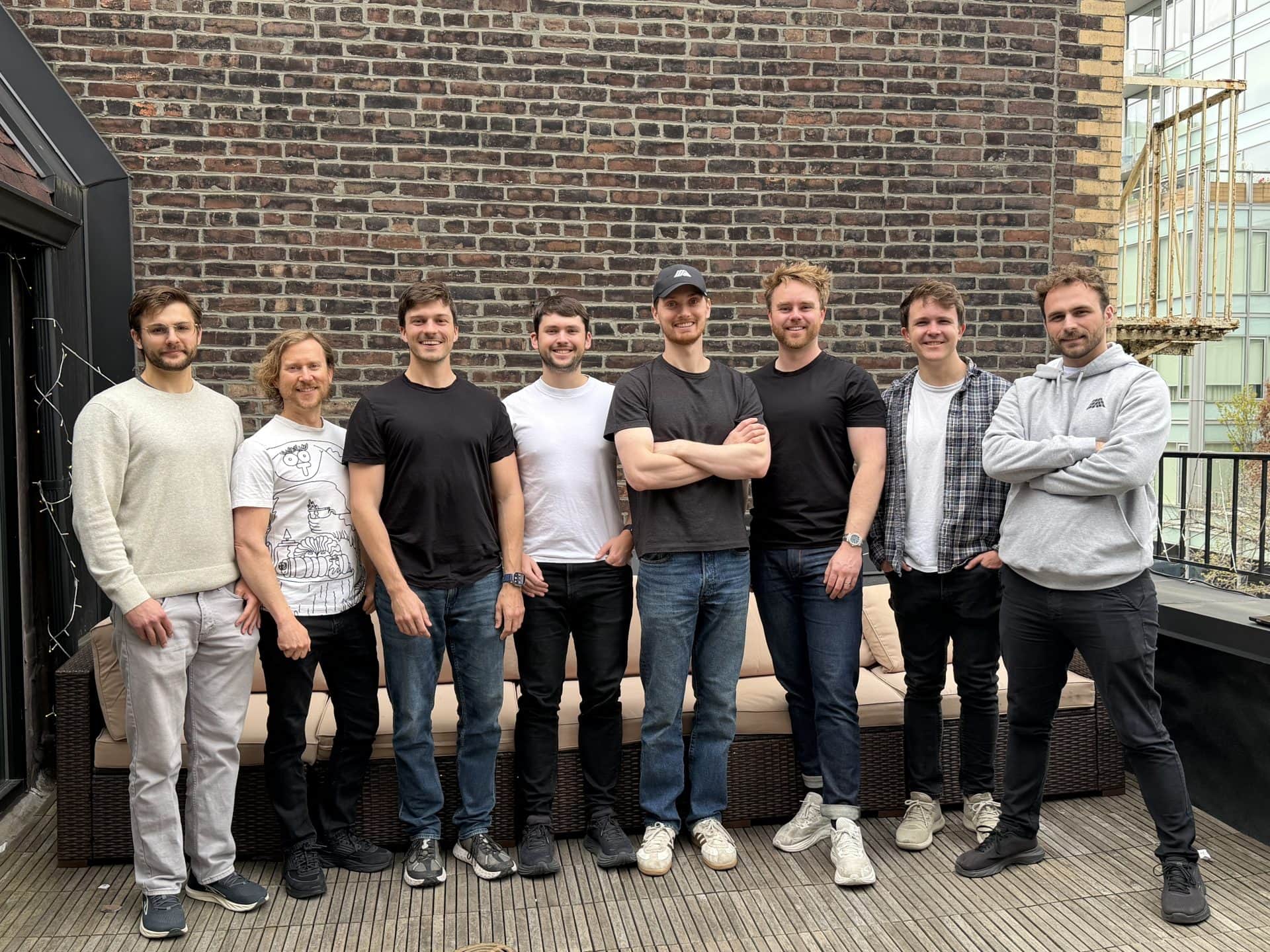
Antioch's founding team combines exactly the backgrounds required to build what the company is attempting. Harry Mellsop worked on Tesla's Autopilot vision team, where he experienced firsthand how simulation infrastructure enabled rapid iteration on autonomous driving systems at a speed that physical testing simply cannot match. Alex Langshur previously served as head of product at Deep Grey Research. Colton Swingle led large‑scale model validation projects at Google's DeepMind unit. Collin Schlager was a foundational researcher at Meta Reality Labs, where he developed simulation and testing infrastructure for the Neural Band wearable device. Mellsop and Langshur also previously co‑founded Transpose, a security and intelligence startup they sold to Chainalysis, the US national security contractor, in 2023.
What Antioch builds is a cloud simulation platform that enables robotics teams to:
- Spin up multiple virtual instances of their hardware simultaneously, running thousands of test scenarios in parallel rather than sequentially.
- Connect those virtual robots to simulated sensors that replicate the exact data streams the robot's software would receive from physical hardware.
- Build, test, and deploy autonomous systems entirely in software before committing to costly physical validation cycles.
- Integrate with CI/CD pipelines, enabling continuous validation as code changes are pushed rather than batch testing at intervals.
The core technical challenge is physics fidelity. A simulation is only useful if the physics it models, contact forces, material friction, sensor noise, lighting conditions, and object geometry, are accurate enough that behaviors learned in the virtual environment transfer reliably to physical hardware. Antioch starts with foundation models from Nvidia and World Labs, then builds domain‑specific libraries that make those models both easier to use and more accurate for specific robotics contexts, such as construction robotics, warehouse automation, and smart security systems.
Mellsop's framing of the product's competitive positioning is memorable: "What happened with software engineering and LLMs is just starting to happen with physical AI." The analogy to Cursor, the AI‑powered coding tool that has become the default for many software developers by sitting between the programmer and the codebase, is intentional. Antioch is trying to sit between the robotics engineer and the physical testing environment, handling the complexity of simulation setup while the engineer focuses on the algorithm being validated.
Category Ventures partner Çağla Kaymaz noted the structural difference between software and physical AI development risk: with software, bad tools mean suboptimal code, and the risk is largely contained. With physical AI, a simulation that fails to capture real‑world physics accurately means robots that fail in the real world, with consequences ranging from operational inefficiency to safety incidents.
The $8.5 million funds engineering expansion and deepens Antioch's domain‑specific simulation libraries across the verticals where it already has early enterprise customers, including Fortune 500 companies in construction robotics and industrial automation.
More at antioch.com
Stay informed
Startup news in your inbox
Get important funding rounds, founder stories, and startup updates.
No spam - only important startup updates.