German Defence Unicorn Stark Seeks €300 Million Raise at €2.5 Billion Valuation as Peter Thiel Doubles Down on Europe's Drone Arms Race

Europe's defence technology sector has spent the last two years producing unicorns at a pace that would have seemed implausible before the war in Ukraine reshaped how governments and investors think about autonomous military systems. The latest and most closely watched of these companies is Berlin‑based Stark, a drone maker founded in 2024 that is now reportedly in discussions to raise at least €300 million in fresh funding at a valuation of approximately €2.5 billion.
According to reporting by the Financial Times, the new round would more than double the company's valuation from its €1 billion mark reached in February 2026, when Founders Fund, the venture capital firm founded by Peter Thiel, contributed a double‑digit million‑euro sum alongside several European investors in a round that lifted the company to unicorn status. If the latest fundraise closes on the terms being discussed, Stark would rank among the fastest valuation trajectories in European startup history.
From Zero to Billion in Under Two Years
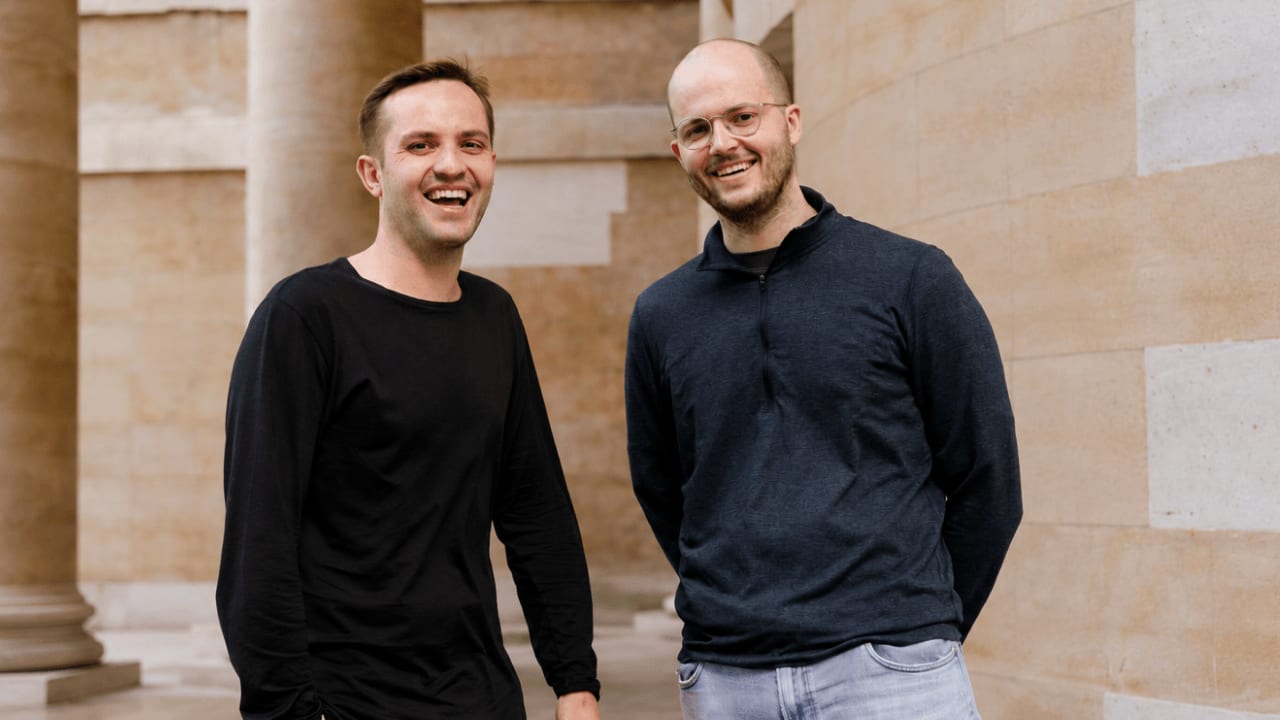
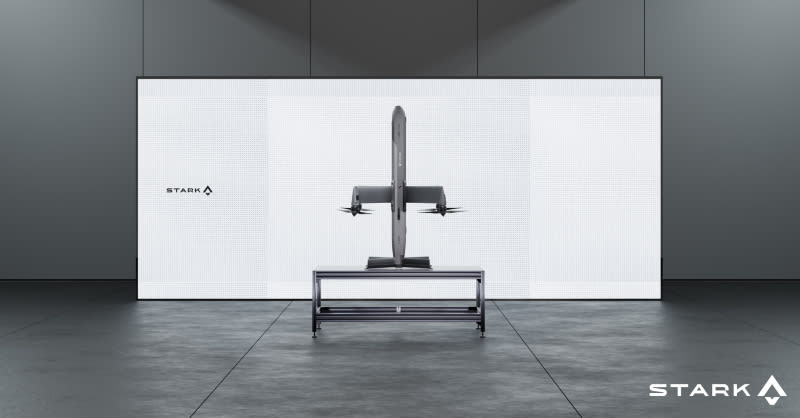
Stark was founded in 2024 by Florian Seibel, the co‑founder of German autonomous drone startup Quantum Systems, alongside Johannes Schaback. The company specialises in autonomous strike systems, particularly loitering munitions, sometimes called kamikaze drones, that are designed to autonomously identify and engage targets before self‑destructing on impact. Its flagship system, Virtus, reflects the broader shift in modern warfare toward low‑cost, software‑defined autonomous weapons that can be produced at volume and deployed across contested environments.
The company's early funding history charts a steep ascent. Stark raised an initial Series A before closing a Series B in August 2025 that valued the company at around €500 million, with Sequoia Capital leading and Thiel Capital, the NATO Innovation Fund, In‑Q‑Tel, Project A, and Döpfner Capital participating. In‑Q‑Tel's involvement, the CIA‑affiliated technology investment firm, is a notable signal of the transatlantic security community's interest in Stark's capabilities.
By February 2026, a Series B extension led by Founders Fund had pushed the valuation above €1 billion, and the company had grown to approximately 450 employees with ambitions to double its workforce through 2026. Stark has since opened offices in Stockholm and entered the UK market, extending its footprint beyond Germany and positioning itself to compete for procurement across NATO allies.
The Bundeswehr Contract That Changed Everything
The commercial catalyst behind Stark's valuation acceleration was a decision by Germany's parliamentary budget committee in February 2026 to approve contracts worth €268 million each for Stark and Helsing to supply loitering munitions to the Bundeswehr. Stark's Virtus and Helsing's HX‑2 systems were selected in a procurement process that reflects Germany's shift from historical reluctance around autonomous weapons toward aggressive capability building.
Beyond the approved contract, reports from earlier this year indicated that Stark is expected to sign a broader framework agreement with the German armed forces potentially worth €2.4 billion, with an initial €280 million committed for 2026 and the full programme designed to equip an entire brigade stationed in Lithuania by the end of the year. Separately, documents reported by Manager Magazin indicated that the German government is reviewing procurement plans that could see Stark and Helsing together receive contracts worth approximately €536 million from a combined drone programme.
The scale of these commitments has given investors a degree of revenue visibility that is unusual for a startup of Stark's age, underpinning the confidence behind the new funding round discussions.
Peter Thiel and the European Defence Bet
Thiel's involvement in Stark carries layers of significance beyond the financial. Through Founders Fund, he holds a single‑digit percentage stake in the company, a position the German government and Defence Minister Boris Pistorius accepted as non‑material to the company's operational independence after initially raising political concerns about a US investor holding equity in a recipient of Bundeswehr contracts. Pistorius ultimately received written commitments from Stark confirming that Thiel's position gives him no access to the company's operative business.
Thiel's European defence portfolio is broader than Stark alone. His backing extends to Quantum Systems, the Munich‑based drone maker founded by Florian Seibel before Stark, which raised €340 million in 2025 across two rounds and surpassed a €3 billion valuation in November 2025 following a Balderton Capital‑led Series C extension. Together, the Stark and Quantum Systems positions reflect a deliberate thesis that the European defence industrial base is undergoing structural transformation and that private capital entering the sector now will benefit from multi‑decade procurement tailwinds.
A New Category of Defence Capital
Stark is not operating in isolation. The broader European defence tech ecosystem is attracting capital at a scale and pace that was not conceivable five years ago. Anduril, the US defence technology company, raised $5 billion in 2025 at a $61 billion valuation as investors backed autonomous defence systems, surveillance platforms and military AI infrastructure at the large‑cap level. In Europe, companies including Helsing, ARX Robotics, and EpiSci are building adjacent capabilities across AI software for defence, ground autonomy, and electronic warfare.
The war in Ukraine has served as a persistent, real‑world demonstration environment for these technologies. Autonomous drones have proven decisive in ways that have accelerated procurement timelines across NATO countries, compressed the usual decades‑long defence acquisition cycle to a matter of months for high‑priority unmanned systems. That compression is what makes the financial trajectory of companies like Stark possible.
For the new €300 million raise, the strategic question is what the capital is for. At a €2.5 billion valuation, Stark would be raising at a level that implies meaningful production scale, international contract wins beyond Germany, and continued product development across its autonomous systems portfolio. The company's expansion into the UK and Nordics, its partnership with IBM, and its growing workforce all point to a business preparing for that next phase.
Whether the round closes on these terms and at this valuation remains to be confirmed. But the direction of travel for European defence tech, and for Stark specifically, is now well established. The question is no longer whether private capital belongs in European autonomous defence systems. It is how much, and at what pace.
Stark's official website is available at stark.de.
Stay informed
Startup news in your inbox
Get important funding rounds, founder stories, and startup updates.
No spam - only important startup updates.
Comments
Text only. No links or images.
No comments yet.