OpenAI Ships GPT-5.6 With Three New Models as It Takes Aim at Anthropic
Editorial Team
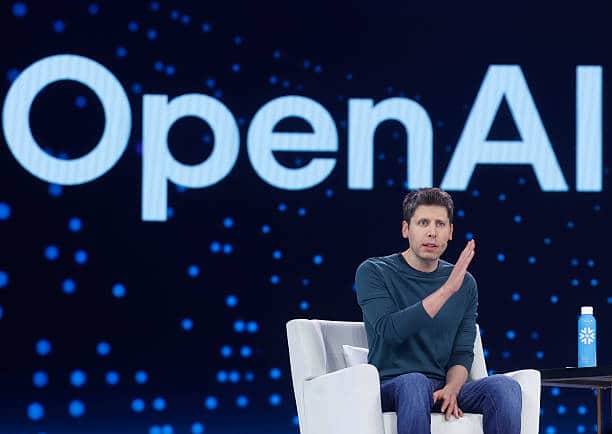
OpenAI has rolled out its newest family of AI models, arriving with a pointed message aimed at its biggest rival in the enterprise AI race.
The company introduced GPT‑5.6 in three separate variants built for different budgets and workloads. Sol sits at the top as the flagship, positioned as the workhorse model for demanding tasks. Terra occupies the middle tier, and Luna is the lightweight, budget‑friendly option meant for simpler jobs. Each is priced differently, with Sol running at five dollars per million input tokens and thirty dollars per million output tokens, Terra priced at two‑fifty and fifteen, and Luna coming in at one dollar and six dollars respectively.
Chief executive Sam Altman has framed the release around efficiency gains rather than raw capability alone, telling media outlets that Sol delivers over fifty percent better token efficiency on coding tasks compared to earlier versions. The company is also calling GPT‑5.6 its strongest model yet for cybersecurity work, saying it can handle defensive tasks like threat modeling, code review, patching, and blue team simulations where a system tests its own defenses before real attackers can exploit them.
The rollout follows a delay earlier this year. The launch had reportedly been pushed back after the US government requested additional national security testing on the model family's more advanced capabilities, particularly around cyber applications. That review appears to have cleared the way for the broader release now underway across ChatGPT, the Codex coding environment, and the OpenAI API.
Alongside the models, OpenAI introduced a new product called ChatGPT Work, built specifically for enterprise teams. The tool is designed to handle everyday office tasks such as drafting documents, building spreadsheets, and putting together presentations, and it runs across desktop, web, and mobile. It can also interact with workplace tools including Slack, Gmail, Google Drive, and customer relationship management software, aiming to carry out longer, multi‑step tasks with less hand‑holding than a typical chatbot interaction.
The competitive subtext of the release is hard to miss. OpenAI has directly compared Sol's coding performance to Anthropic's Fable 5 model, citing the Artificial Analysis Coding Agent Index to claim its top model scores several points higher while using roughly half the tokens and taking less time to complete tasks. The company extended the comparison across its whole lineup, saying Terra edges out Fable 5 and that even its budget Luna model outperforms Anthropic's Opus 4.8.
That kind of head‑to‑head positioning reflects how central the rivalry between OpenAI and Anthropic has become to the broader AI industry narrative. Anthropic has built a reputation as the more cautious, enterprise‑focused player in the space, and OpenAI's marketing around GPT‑5.6 appears designed to challenge that positioning directly rather than simply outline new features.
ChatGPT Work also puts OpenAI on a collision course with Anthropic's own workplace product, Claude Cowork, which recently expanded to mobile and web platforms. Both companies are chasing the same idea, that the next phase of competition will not be decided purely by benchmark scores but by whose AI assistant becomes embedded into daily office workflows across email, documents, and internal tools.
OpenAI says the release also includes two new reasoning modes, one that allocates extra computing power for particularly difficult problems, and another that coordinates multiple models working in parallel on demanding tasks. The company has also folded its standalone Codex coding tool into a rebuilt ChatGPT desktop client, consolidating what had been a fragmented product lineup under one roof.
Availability is rolling out in stages. Paying subscribers on Plus, Pro, Business, and Enterprise tiers get access to Sol first, while free and lower‑tier users are being routed to Terra, with OpenAI saying the full rollout could take about a day to reach everyone. The release lands at a moment when nearly every major AI lab, from Meta to a newly merged SpaceXAI, has pushed out its own updates within the same week, underscoring just how compressed the release cycle in frontier AI has become.
Stay informed
Startup news in your inbox
Get important funding rounds, founder stories, and startup updates.
No spam - only important startup updates.