The VC Who Backed Spotify, Revolut and Airbnb Just Closed a $300M Defence Fund
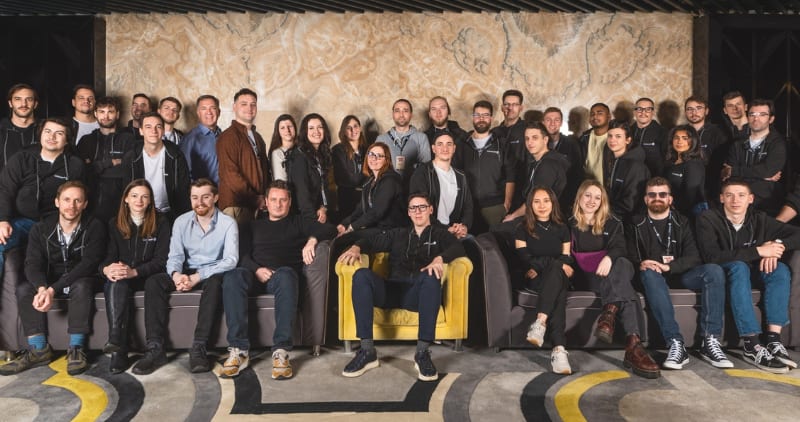
Lakestar team group photo
Image credit: Lakestar
For most of the last two decades, Zurich‑based venture firm Lakestar built its reputation by spotting consumer technology winners before almost anyone else. It invested in Spotify before streaming reshaped the music industry, backed Airbnb while home‑sharing still looked like a fringe idea, and recognized Revolut's potential long before digital banking became mainstream.
Now the firm founded by Klaus Hommels has closed its largest and most unconventional bet yet. Lakestar has announced the final close of Lakestar Resilience I, a 300 million dollar fund dedicated entirely to defence, security, and critical technologies. The vehicle was oversubscribed, with investor demand comfortably exceeding its original target, and it now stands as the largest privately backed institutional venture fund in Europe focused specifically on defence and resilience.
The fund's portfolio already includes companies such as Helsing, TEKEVER, ARX Robotics, Auterion, Isar Aerospace, and Kraken Technology Group, alongside several startups still operating in stealth mode. Collectively, those companies have raised more than 5 billion dollars, generate several billion dollars in combined revenue, and employ over 5,000 engineers, researchers, and defence specialists across Europe.
Lakestar has also built an advisory board to match the fund's ambitions, bringing together former NATO military leaders Sir Nicholas Carter and General Volker Wieker, former US Secretary of State Mike Pompeo, and technology entrepreneur Baroness Martha Lane Fox.
What stands out about the companies in Lakestar's defence portfolio is how differently their founders arrived at the sector compared to a traditional defence contractor's executive bench. Torsten Reil, co‑founder and co‑chief executive of Helsing, started his career studying computational biology at Oxford before building NaturalMotion, an AI‑powered animation company whose software ended up in blockbuster video games and Hollywood films. When Zynga acquired that business for 527 million dollars in 2014, Reil had little obvious reason to start another company. Seven years later, he co‑founded Helsing on the conviction that artificial intelligence would become as central to defence as aircraft or tanks once were. The company's first 8.5 million euros came largely from wealthy private families rather than institutional investors, who were not yet convinced defence software was investable. Helsing is now valued at around 18 billion dollars, making it Europe's most valuable defence AI startup.
A similarly unconventional path shows up in Portugal, where Ricardo Mendes founded TEKEVER in 2001 while studying computer engineering at Lisbon's Instituto Superior Técnico. The company spent nearly a decade building enterprise software before pivoting into surveillance drones in 2010, years ahead of the moment Russia's invasion of Ukraine turned defence technology into one of venture capital's fastest‑growing sectors. TEKEVER's drones now patrol the English Channel, support Ukrainian military operations, and work alongside organizations including the Royal Air Force and the European Maritime Safety Agency. The company has quietly become Portugal's seventh unicorn without attracting anywhere near the public profile of a comparable Silicon Valley startup.
Lakestar's pivot mirrors a broader change across European venture capital as a whole. Only a few years ago, many institutional investors avoided defence entirely, citing ESG concerns or discomfort with military‑linked applications. That hesitation has largely evaporated. Russia's full‑scale invasion of Ukraine, rising geopolitical tension, and Europe's push toward greater strategic autonomy have transformed defence from a niche investment category most funds avoided into one of the continent's largest emerging technology opportunities.
Lakestar is not alone in placing this bet. The NATO Innovation Fund has launched its own 1 billion euro vehicle to support dual‑use technologies across allied nations, while firms including General Catalyst, Plural, Project A, and HV Capital have all increased their investments in defence and resilience startups as geopolitical priorities reshape where European venture capital flows. Rather than placing scattered, isolated bets across the sector, Lakestar appears to be deliberately assembling an ecosystem of companies that each address a different layer of Europe's defence infrastructure, from military AI software and autonomous ground vehicles to drone operating systems and expanded launch capabilities for European aerospace.
Lakestar's first generation of investments reflected an era when venture capital was largely focused on changing how people listened to music, booked a place to stay, or managed their money. Its newest fund reflects a distinctly different moment, one where the defining conversation has shifted toward supply chains, autonomous systems, satellites, and national resilience. That does not make consumer technology any less important as a category, but it does suggest where a growing number of serious investors believe the next decade's most consequential companies are likely to emerge. Fifteen years ago, backing Spotify or Airbnb looked like an unconventional wager. With Lakestar Resilience I, Hommels is making another contrarian move, betting that Europe's biggest technology success stories of the 2030s may be built not around convenience, but around security, sovereignty, and resilience.
Topics
Sources
Stay informed
Startup news in your inbox
Get important funding rounds, founder stories, and startup updates.
No spam - only important startup updates.
Comments
Text only. No links or images.
No comments yet.