Mira Murati's Thinking Machines Chases a $40B Price Tag, Down From the $50B It Wanted Last Year
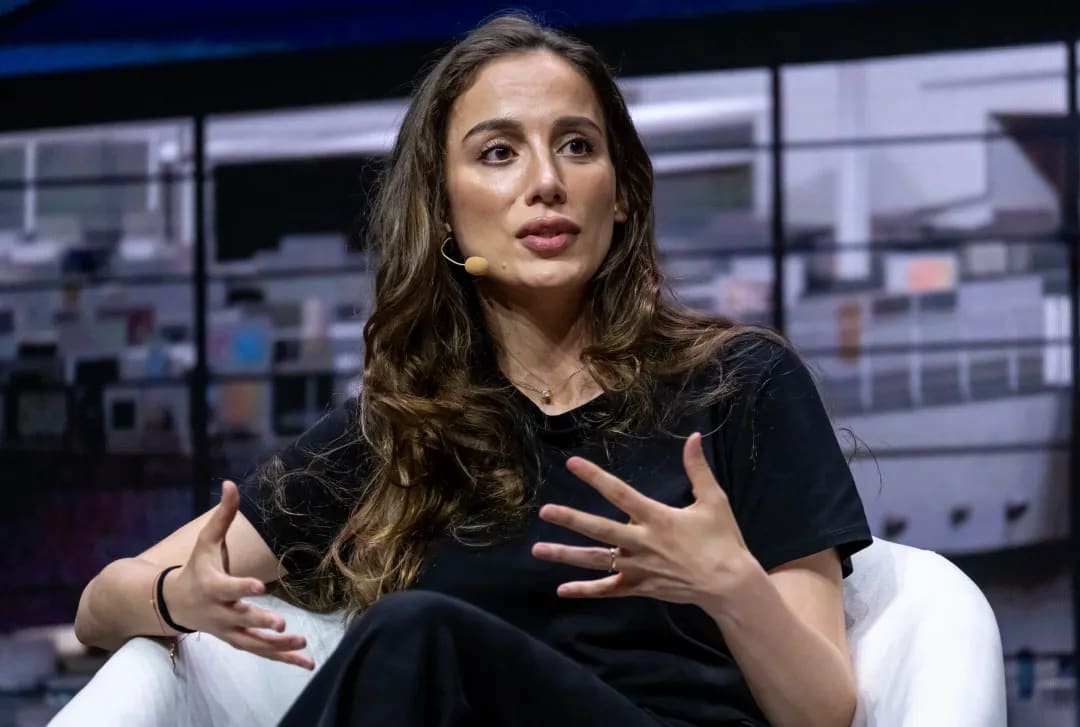
Mira Murati
Image credit: Thinking Machine lab
Thinking Machines Lab, the AI startup founded by former OpenAI chief technology officer Mira Murati, is in talks to raise at least 1 billion dollars at a valuation of at least 40 billion dollars, according to The Information, with existing investor Accel discussing a lead role in the round.
Nvidia, which invested in Thinking Machines' seed round, has also discussed participating in this new financing, according to the report. The talks have not been finalized, and the round's ultimate size, valuation, and investor lineup could still change before closing.
The proposed 40 billion dollar figure would represent more than a threefold increase from the 12 billion dollar post‑money valuation Thinking Machines reached in July 2025, when it closed a 2 billion dollar seed round described at the time as the largest seed financing in AI history. That round was led by Andreessen Horowitz, with Nvidia, GV, Lightspeed, and Conviction Partners also participating, alongside an eclectic mix of backers that reportedly included a small investment from the Albanian government, a detail tied to Murati's own Albanian heritage. Tech Funding News reported at the time that investors were largely paying for the pedigree of Murati and the roughly two dozen OpenAI veterans who followed her to the new venture, rather than for any existing product.
That pedigree‑driven valuation later ran into a ceiling. By November 2025, Bloomberg reported Thinking Machines was in talks at a valuation as high as 50 to 60 billion dollars, but those discussions ultimately did not close, and the company's newest target of 40 billion dollars sits well below that earlier ambition. What has changed in the roughly eight months since, according to Tech Funding News, is a product rather than a balance sheet: in July, Thinking Machines shipped Inkling, an open‑weight model that generates revenue through usage‑based compute fees customers pay to adapt it to their own data via a platform called Tinker. That commercial foundation has pushed Thinking Machines' annualized revenue run rate above 100 million dollars, according to a source with knowledge of the company's financials cited by both TechCrunch and PYMNTS.
At a 40 billion dollar valuation against that revenue figure, the implied multiple exceeds 400 times annualized revenue, an extraordinarily high multiple with little recent precedent even within the current AI funding cycle, as TechCrunch has noted directly. That gap between revenue and valuation underscores that investors interested in this round are still betting heavily on Thinking Machines' long‑term research trajectory and its founding team's track record, rather than on current financial performance alone.
Accel's willingness to potentially lead the round, rather than simply follow alongside new entrants, suggests the firm's conviction in Thinking Machines has not meaningfully dimmed since its earlier involvement in the company. According to Tech Funding News, Accel has committed roughly 8.5 billion dollars across new funds this year, and Thinking Machines remains one of the firm's highest‑profile bets within that broader deployment of capital.
Nvidia's potential participation in this round would deepen a relationship that already extends well beyond a typical financial investment. In March, Nvidia announced a direct investment in and multiyear partnership with Thinking Machines that included plans for the startup to deploy at least 1 gigawatt of Nvidia chips for AI training and inference, a commitment that ties Nvidia's own infrastructure business directly to Thinking Machines' research and product roadmap regardless of how this specific funding round resolves.
Thinking Machines was founded in February 2025, shortly after Murati's departure from OpenAI, where she had served as chief technology officer for six and a half years before announcing her resignation in September 2024. The company has positioned itself as a public benefit corporation focused on building AI architectures designed specifically for real‑time human interaction, rather than models adapted after the fact from text‑based systems originally built for other purposes. That research‑first framing has not been without turbulence: The Wall Street Journal reported last year that Thinking Machines co‑founder Andrew Tulloch left the company to join Meta, and other co‑founders, including Lilian Weng and Luke Metz, have since returned to OpenAI, departures that have tested how durable the original OpenAI‑alumni team assembled around Murati actually is.
If the round closes at or near the reported 40 billion dollar figure, Thinking Machines would rank among the most valuable private AI companies in the world, trailing only a small handful of frontier labs including OpenAI and Anthropic. That a company barely 18 months old, with a single commercial product and revenue in the low hundreds of millions, could command that valuation reflects both the extraordinary premium investors continue to place on elite AI research talent and the extent to which Murati's own reputation, and the group of OpenAI veterans she assembled, remain the central asset underpinning investor enthusiasm even as the company works to build a durable, revenue‑generating business to match. Whether Thinking Machines can convert that continued capital access into a research and product roadmap that justifies a valuation running several hundred times its current revenue will likely be the central test of the company's next phase, regardless of how this particular round is ultimately priced and finalized.
Topics
Sources
Stay informed
Startup news in your inbox
Get important funding rounds, founder stories, and startup updates.
No spam - only important startup updates.
Comments
Text only. No links or images.
No comments yet.