Build Raises €7.4 Million to Bring AI Agents to Real Estate and Infrastructure Development
Editorial Team

There is a particular kind of frustration that sits at the heart of large infrastructure projects, where critical decisions get buried under months of consultant reports, fragmented data, and slow‑moving workflows. Build, an AI‑native infrastructure company operating across the UK and the United States, was founded to fix exactly that. The startup has now closed a 7.4 million euro seed round to expand the platform and push its vision of what it calls agentic real estate further into global markets.
The round was led by Index Ventures, with Pebblebed, Puzzle Ventures, and Tiny Supercomputer Investment Company also participating. The angel investor list includes OpenAI chief financial officer Sarah Friar, Blackstone chief technology officer John Stecher, and senior figures from Meta AI Research and Google Maps. Build will use the capital to grow its engineering and infrastructure teams, accelerate research and development, and deepen its presence across North America and Europe.
The Problem Build Was Built to Solve
Infrastructure projects at scale, whether data centers, energy facilities, or mixed‑use developments, routinely depend on a long chain of outside consultants for tasks like site sourcing, power assessments, environmental analysis, risk planning, and zoning review. Each task tends to be handled by a different firm, on a different timeline, producing documentation that rarely arrives in a format that makes the next decision faster. The cumulative result is that due diligence processes that could theoretically take hours instead consume weeks.
Build's answer to that is Dougie, its AI platform, which pulls from more than 1,600 data sources and runs assessments in parallel rather than sequentially. The company says this approach cuts due diligence timelines by more than 95 percent. Work that typically occupied several weeks of consultant time now resolves in hours, with every output traceable back to a primary source so the findings can be presented with confidence to investment committees and regulators.
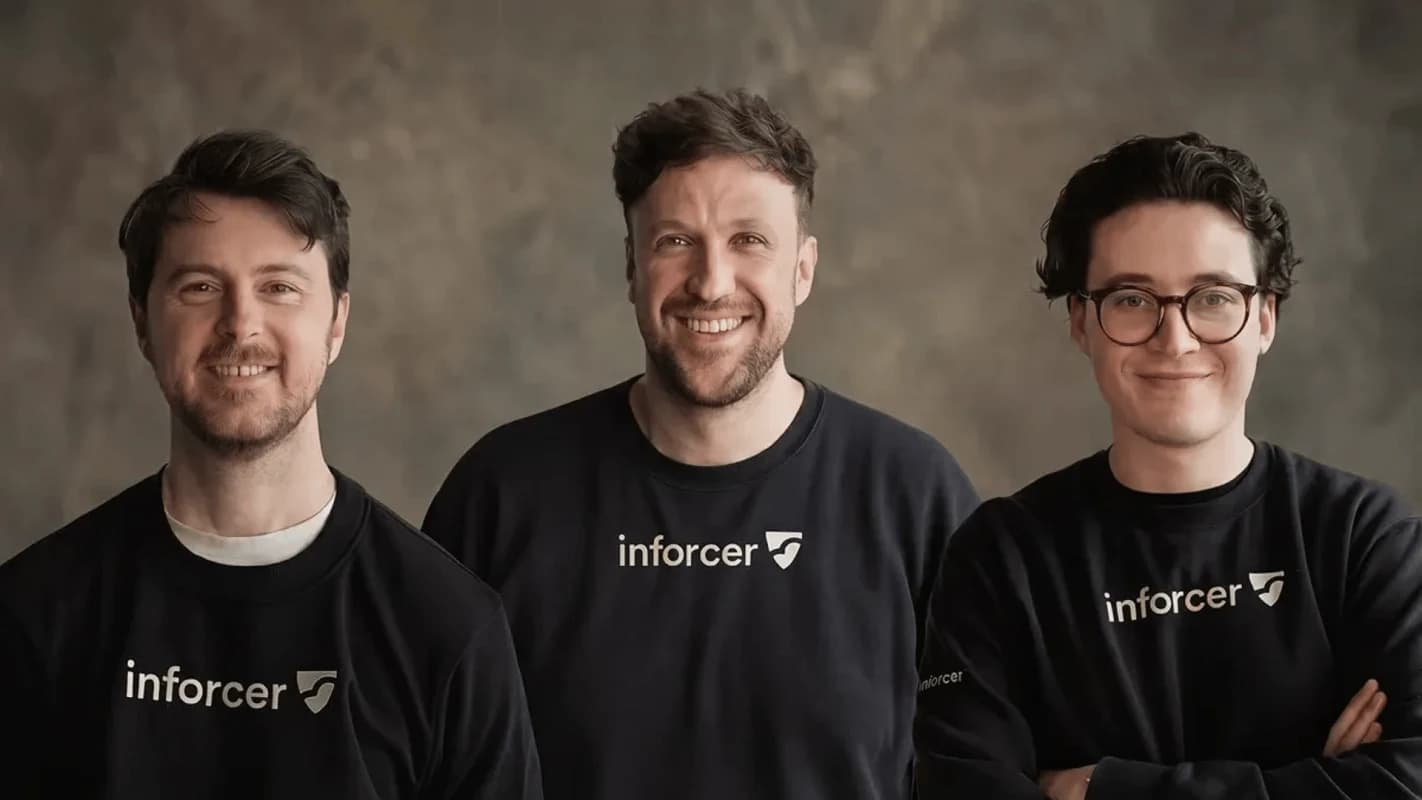
Co‑founder and CEO James Stirrat‑Ellis described the underlying ambition plainly, noting that the industries shaping the physical world have spent decades trapped in process rather than creativity, and that removing that operational burden is what allows teams to move faster and make better decisions.
What Agentic Real Estate Actually Means
Build positions itself not as a software platform to be licensed but as an operating partner that clients bring into their workflows on retainer. That distinction matters because it shapes both the pricing structure, retainers start in the six‑figure range, and the competitive framing. The company is not selling tools to make existing consultants more productive. It is replacing the consulting spend itself, automating mission‑critical workflows that would otherwise require multiple external firms and considerably more time.
The specific workflows Dougie handles today span site selection and land due diligence, desktop underwriting, investment committee memo preparation, test fit analysis, market research, zoning review, environmental diligence, and ESG reporting. Across all of these, the output is auditable and source‑cited, which matters in an industry where decisions carry legal and regulatory weight.
The long‑term goal is more ambitious than any single stage of the development process. Build describes its vision as the full automation of the development lifecycle, from the initial site selection and due diligence phase through permitting, engineering, pre‑construction, and eventually ongoing asset management. That end‑to‑end scope is what it means when the company uses the phrase agentic real estate. Rather than improving one step in a long chain, the ambition is to automate the chain itself.
The Founder and What Led Here
Stirrat‑Ellis came to this problem from inside it. While working on the Changi Airport Terminal 5 in Singapore, a 13 billion dollar project designed to serve 50 million passengers annually, he encountered the full weight of the industry's operational inefficiencies firsthand. He left his master's program at Harvard's architecture school, taught himself to code, and joined an AI company in a senior capacity before starting Build in 2024 with Ben McClusky, a researcher with a background in multi‑agent reinforcement learning. McClusky serves as the company's CTO and is based across New York, San Francisco, and London, where the company maintains offices.
The combination of deep architecture and real estate experience on one side and AI research capability on the other is what Index Ventures partner Martin Mignot highlighted when explaining the investment. Mignot noted that Stirrat‑Ellis and McClusky had combined serious technical capability with genuine operational understanding of how critical infrastructure actually gets built, and that the infrastructure challenge they are addressing is global in scope.
Early Traction and the Data Center Opportunity
Build has grown to ten employees across four continents and has completed more than 100 projects across 15 countries. Its client list includes Tishman Speyer and Stack Infrastructure, and collectively the institutions it works with manage roughly two trillion dollars in assets. The company has also signed its first hyperscaler client, which Stirrat‑Ellis has described as the top category of customer available in data center infrastructure work.
Booked revenue has been tripling since April, and the startup is already embedded in UK government work around AI growth zones, helping evaluate and assess sites for AI infrastructure on behalf of public sector clients. That context sits within a much larger demand environment. Hyperscalers are expected to invest close to 700 billion dollars in data centers through 2026, and the pace of AI‑driven demand for compute capacity is consistently outrunning what traditional development timelines can accommodate. Build's pitch, that it can compress those timelines dramatically by automating the most time‑consuming pre‑construction work, fits directly into that pressure.
A Market Still Defined by Legacy Consulting
The established players in this space, firms like CBRE, Arup, and JLL, have been investing in AI tools for their own workflows, but Stirrat‑Ellis draws a clear distinction between augmenting consultants and replacing the consulting model entirely. Build is competing with the legacy industry rather than with other software companies. In his description, the company has no direct technology competitors that arrived before it in this specific category.
That first‑mover position is part of what made the Index Ventures term sheet arrive within a day of initial conversation, according to Stirrat‑Ellis. The infrastructure challenge underlying Build's business is not narrow. It spans data centers, industrial facilities, energy projects, office developments, telecommunications infrastructure, and mixed‑use projects, all of which face the same fundamental constraint of slow, fragmented, and expensive pre‑development processes. The new funding puts Build in a position to start converting that broad opportunity into a deeper commercial footprint on both sides of the Atlantic.
Stay informed
Startup news in your inbox
Get important funding rounds, founder stories, and startup updates.
No spam - only important startup updates.