Denmark's Largest Trade Union Backs Climentum Capital's €60M Climate Hardtech Fund II
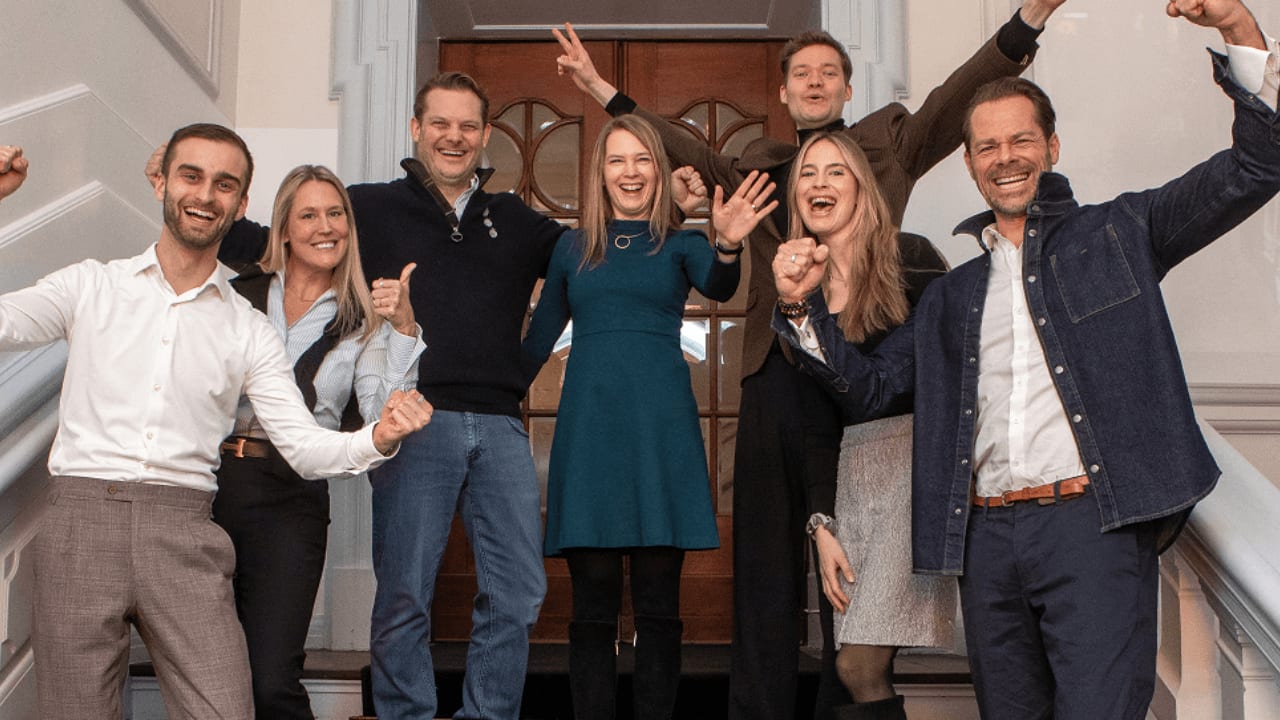
When the engineers' union writes a cheque into a venture fund, something has shifted. Climentum Capital, the Copenhagen‑based firm that invests exclusively in early‑stage climate hardtech companies across Europe, has reached a €60 million first close on its second fund. The three anchor investors are the European Investment Fund, Denmark's state export and investment fund EIFO, and IDA, the Danish Society of Engineers, which represents more than 180,000 engineers, scientists and IT professionals and holds the distinction of being Denmark's largest trade union. IDA has never invested in a venture fund before.
The composition of the investor group tells the most important part of this story. The EIF has committed €40 million, backed by the RCR‑REPowerEU mandate, which is designed to advance the European Union's goal of achieving climate neutrality by 2050 while reducing dependence on imported fossil fuels. EIFO contributed €15 million. IDA committed €5 million. That means €55 million of the €60 million raised so far comes from public or semi‑public institutions. Private capital, the kind that historically defines a fund's commercial credibility, has not yet arrived in meaningful volume for this first close.
Why a Trade Union Decided to Back a Venture Fund
IDA's decision deserves more than a passing mention. Trade unions almost never act as institutional investors in venture capital funds anywhere in the world, let alone in an asset class as capital‑intensive and illiquid as climate hardtech. The decision came from the top of the organisation. IDA president Laura Klitgaard described the investment as a choice to act rather than talk, saying Europe needs more competitive technology companies and that Denmark has the ideas, talent, and research to build them. She acknowledged the unusual nature of the move directly, noting that it is not typical for a trade union to become an investor and expressing hope that IDA's participation might encourage other institutions to follow.
The rationale is not purely financial. IDA represents the professional community whose members would actually build and work inside the companies Climentum backs. Engineers and scientists working in heat pumps, advanced manufacturing, sustainable agriculture technology, and industrial process decarbonisation are precisely the people IDA organises, and the fund's portfolio is a map of where those members are most likely to find meaningful work in a decarbonising European economy. Investing in Climentum is, in that reading, an investment in the relevance and employability of IDA's own membership over the next decade.
In 2026, IDA was recognised as Denmark's best trade union by the Loyalty Group for the fifth consecutive year, which gives the organisation enough institutional standing to make unconventional moves without credibility risk. Still, the step is genuinely novel in European institutional investing and may prove to be the most widely discussed part of this announcement as the story travels outside Scandinavia.
Climentum Capital: Who They Are and What They Back
The firm was founded in Copenhagen in 2022 by Morten Halborg, Dörte Hirschberg, Stefan Maard, and Malin Carlström, with offices now also in Berlin and Stockholm. The founding idea originated partly during Halborg's work at Oxford University on impact investing structures, specifically his exploration of dual carry models that tie GP returns to verified climate impact rather than purely to financial performance. Climentum operates as an Article 9 fund under the EU's sustainable finance classification, meaning every investment must meet stringent environmental criteria. The fund carries a fixed portfolio‑level impact target of one million tonnes of CO2‑equivalent in annual emissions reductions, a hard benchmark auditable against established standards rather than a narrative commitment.
The focus is deliberately narrow. Rather than spreading capital across software and services alongside hardware, Climentum invests exclusively in companies building physical products, whether that means advanced heat pumps, composite recycling technology, next‑generation materials for manufacturing, or precision components that reduce energy loss in industrial systems. The thesis is that software alone cannot solve climate change at the pace or scale the physical economy requires.
Fund II will invest primarily at Seed and Series A stages, leading rounds in European B2B hardtech startups with initial ticket sizes of €1 million to €5 million and follow‑on capacity up to €10 million per company. The geographic focus covers Denmark, Sweden, Germany, Austria, and Switzerland, with the Nordic region functioning as a climate innovation hub and the DACH countries as Europe's industrial heartland. The fund plans around 20 investments in total, reserving half of its capital for follow‑on rounds into its strongest performers.
The Fund I Track Record That Justified Fund II
Climentum launched its first fund at €60 million in 2022, backed by anchor limited partners including Vaekstfonden and Arbejdernes Landsbank. Fund II's first close of €60 million matches the entire size of that debut fund, reached at a moment when the firm can point to a realised exit as evidence that the thesis is commercially viable rather than purely theoretical.
The exit came through Studsvik, the nuclear services company, which acquired Climentum portfolio company KNXT less than three years after Climentum's initial investment. The KNXT deal is significant beyond the financial return: it demonstrated that a strategic industrial buyer will pay to acquire climate hardtech capability, which is the exit pathway that defines whether a climate hardtech VC fund can generate the returns that attract private capital in subsequent fundraises. Portfolio companies from Fund I also include Nature Robots, one.five, Qvantum, which works on advanced urban heat pump systems and thermal mini‑grid solutions, and Continuum Composite Recycling, which received an impact award from Aktive Ejere recognising its green job creation and carbon reduction potential.
A Funding Environment That Makes This Close Hard
Halborg has been unusually direct about the difficulty of raising Fund II. In his own characterisation, the fundraising environment for early‑stage climate hardtech has not been easy. Investors are more selective, timelines are longer, and the proof bar is higher than it was when Fund I launched in 2022. That honesty is worth taking seriously. Climate hardtech has faced a significant retreat from generalist private venture capital over the past two years, driven by higher interest rates that inflate the hurdle rates these capital‑intensive businesses need to clear, a slower exit market that makes fund managers cautious about holding illiquid positions longer than expected, and a broader economic environment in which institutional allocators are moving toward shorter‑cycle, more liquid asset classes.
The consequence is visible in the LP mix of Fund II's first close. EIF Deputy Chief Executive Merete Clausen framed the EIF's rationale in terms of filling a genuine financing gap, describing Climentum as addressing the specific market failure where promising climate solutions exist but patient private capital to scale them does not. EIFO's chief investment officer Erik Balck Sørensen described the investment in similar terms, emphasising that the technologies Climentum backs are both essential to reducing industrial carbon emissions and significantly underfunded relative to their potential impact.
The fund is targeting €100 million in total, meaning it has €40 million still to raise to reach that target. Whether the private market participation that has so far been absent from this first close arrives before the final close is the most important open question about the fund's trajectory. The involvement of the EIF, EIFO, and IDA provides credibility and institutional validation, but a Fund II that closes predominantly on public money carries a different signal to the market than one where private family offices, corporates, and pension funds have competed for allocation.
Context: European Climate Hardtech in 2026
The broader European climate hardtech market has continued to attract capital in specific segments despite the general private pullback. Earlier in 2026, Netherlands‑based RIFT raised €113.8 million for industrial heat technology, Germany's Entrix closed €43 million for battery optimisation, Belgian startup D‑CRBN raised €17.5 million for industrial CO2 conversion, and UK‑based Exergy3 secured €11.4 million for clean industrial heat at seed stage. Copenhagen‑based Kvasir Technologies raised €10 million for climate‑neutral marine biofuel. Together these deals, totalling more than €244 million in disclosed funding across the European climate hardtech sector in 2026, suggest that the category is not starved of capital entirely, but that it is increasingly concentrated in deals where revenue traction and a clear industrial buyer landscape are already visible.
Fund II's climate target, approximately 1.5 million tonnes of CO2 reduced annually across its portfolio companies once they reach scale, is equivalent to removing 350,000 petrol cars from the road every year. Whether that ambition is matched by the private capital needed to bring it to full close will become clear in the months ahead.
Stay informed
Startup news in your inbox
Get important funding rounds, founder stories, and startup updates.
No spam - only important startup updates.
Comments
Text only. No links or images.
No comments yet.