DeepSeek Raises $7.4 Billion at $50 Billion Valuation in First-Ever External Funding Round, Backed by Tencent, CATL, and China's National AI Fund
Editorial Team
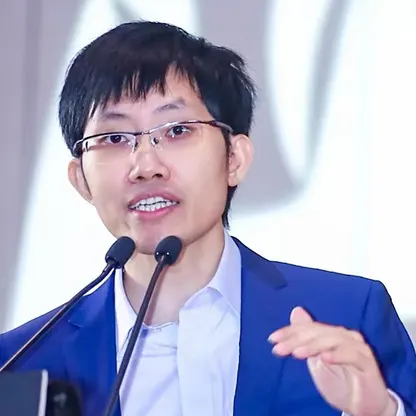
DeepSeek, the Chinese AI lab that rattled Silicon Valley with frontier‑level models built at a fraction of Western training costs, has closed its first‑ever external funding round, raising more than 50 billion yuan, approximately $7.4 billion, at a post‑money valuation exceeding $50 billion. The round marks the end of the lab's fiercely independent, self‑funded chapter and the beginning of a new phase in which DeepSeek competes not just on model quality but on capitalisation.
For a company that built its global reputation on the premise that intelligence does not require billion‑dollar budgets, the size of this raise carries its own significance. DeepSeek made V3 train for approximately $6 million. Now it is raising $7.4 billion. That is not a contradiction. It is a strategic shift, and understanding what changed tells you more about where AI is heading than the number itself.
Who Is In and How Much
Fewer than ten investors participated in the round, a deliberately narrow list that reflects both Liang Wenfeng's desire to maintain control and DeepSeek's leverage in selecting who gets access to what is now China's most valuable AI company.
Liang Wenfeng himself committed 20 billion yuan, approximately $3 billion, of his own personal capital, making him the single largest contributor to a round in which he is simultaneously the founder, chief executive, and primary shareholder. That structure is unusual even by founder‑friendly standards. Liang is not just retaining control through equity protections. He is literally writing the largest cheque. The signal is clear: this round is not about filling a funding gap. It is about capitalising a long‑term research programme on terms that Liang defines.
Tencent, the Chinese technology conglomerate behind WeChat and one of the country's most powerful media and gaming companies, is investing approximately 10 billion yuan, equivalent to roughly $1.5 billion, as the largest external participant. CATL, the world's dominant electric vehicle battery manufacturer, is committing approximately 5 billion yuan, around $740 million. CATL's involvement is strategically interesting: the company has been expanding aggressively into AI data centre power and energy storage infrastructure as AI workloads drive demand for large‑scale, reliable electricity supply. Its presence on DeepSeek's cap table is as much an industrial partnership as a financial investment.
China's National Artificial Intelligence Industry Investment Fund, the state‑backed vehicle commonly called the Big Fund, is also participating. NetEase, the gaming and internet company, and JD.com, one of China's largest e‑commerce platforms, are reported to have been in final stages of talks, alongside Hong Kong‑based IDG Capital and investment firm Monolith Capital.
The Structure Keeps Liang in Charge
The deal structure is as revealing as the investor list. Commercial investors are not receiving direct equity in DeepSeek. Instead, they are channelling capital into a limited partnership managed directly by Liang, an arrangement that strips them of voting rights and locks their capital in for five years. They gain access to DeepSeek's financial information and receive priority rights in future financing rounds, but they have no formal governance role.
The sole exception is the National AI Industry Investment Fund, which was granted direct corporate ownership in DeepSeek and the voting rights that come with it. The state‑backed fund committed one billion yuan and is the only investor with a seat at the governance table.
This structure is an architecture of control. Liang has accepted external capital while making it structurally impossible for any outside investor to influence the company's direction. For investors who still wanted in despite those terms, the message is that the opportunity to be on DeepSeek's cap table at this stage is worth accepting conditions that no Western venture firm would typically sign.
What Made DeepSeek Famous
DeepSeek was founded in July 2023 by Liang Wenfeng, who built the company as a research arm drawing on capital from High‑Flyer, his quantitative hedge fund, and his own private resources. The company operated without any external venture capital until this round. Unlike the AI labs that built their growth on billions of dollars from institutional investors, large cloud providers, and sovereign funds, DeepSeek was a closed system, funded by a quant firm and run by a founder who appeared uninterested in the conventional startup funding cycle.
The moment that changed the global perception of the company came in early 2025, when DeepSeek released its V3 and R1 models publicly as open weights. The models demonstrated frontier‑level performance on reasoning and coding benchmarks at a fraction of the compute and capital that American labs were deploying. The release triggered a sharp sell‑off in AI‑related technology stocks, particularly among semiconductor companies, as investors processed the possibility that the capital intensity of frontier AI development had been overstated. In Silicon Valley, the response was a mixture of admiration and alarm. Engineers at OpenAI, Anthropic, and Google studied the technical reports intensively. The framing that AI supremacy required unlimited capital had suddenly become harder to sustain.
By driving its API costs toward near‑zero margins and publishing its weights freely, DeepSeek repositioned itself not as a commercial model provider but as a strategic infrastructure company, one whose open‑weight models functionally commoditised the model layer and forced the entire market to compete on cost efficiency rather than raw capability. That approach was a direct challenge to the capital‑intensive playbooks of its American competitors.
Why Raise Now
The question that matters most about this round is not how much was raised, but why DeepSeek decided to raise at all. The answer is compute.
The era of doing more with less, of training V3 for $6 million while larger rivals spent hundreds of millions, was a function of algorithmic efficiency that allowed DeepSeek to extract more intelligence per GPU‑hour than anyone else. That advantage is real, but it is not infinite. The next generation of model development, including the agentic, long‑context, and multimodal capabilities that are now the frontier of competition, requires compute at a scale that even High‑Flyer's balance sheet cannot comfortably sustain indefinitely.
The capital will fund research into next‑generation models, recruitment of top engineering talent, and the specialised hardware infrastructure required for a sustained push toward what the company has framed as artificial general intelligence. With CATL on the cap table and its energy storage and power infrastructure expertise now potentially available to DeepSeek's data centre buildout, the round also suggests a vertical integration strategy for the compute stack that mirrors moves being made by US labs in their deals with utilities and energy companies.
Putting the Valuation in Context
At $50 billion, DeepSeek becomes China's most valuable AI startup and one of the most valuable private AI companies in the world. The comparison with its Western peers is instructive but not straightforward. Anthropic has been valued at $965 billion following a $65 billion Series H. OpenAI is valued at $852 billion following a $122 billion funding round. Both operate at scale that DeepSeek, even post‑raise, has not approached in terms of commercial revenue, enterprise penetration, or consumer subscription base.
What separates DeepSeek is the open‑weight strategy. Its models are freely available on Hugging Face and have been downloaded and deployed millions of times by developers globally. That distribution model does not generate the same direct revenue as ChatGPT subscriptions or Claude API fees, but it creates a different kind of leverage. Every developer who builds on DeepSeek's open models generates data, feedback, and fine‑tuning activity that strengthens the model ecosystem without requiring DeepSeek to acquire each relationship commercially.
The raise is the latest in a string of moves that signal China's accelerating effort to build an entirely self‑sufficient AI industrial complex, from model research to the energy and battery infrastructure that powers the data centres that train and serve those models.
Key facts as of the round's close:
- Amount raised: more than 50 billion yuan ($7.4 billion)
- Post‑money valuation: exceeding $50 billion (350 to 400 billion yuan)
- Founder personal contribution: 20 billion yuan ($3 billion), Liang Wenfeng
- Largest external investors: Tencent (~$1.5 billion), CATL (~$740 million)
- State participation: National AI Industry Investment Fund, 1 billion yuan, direct equity with voting rights
- Other participants: NetEase, JD.com, IDG Capital, Monolith Capital (reported)
- Investor structure: limited partnership managed by Liang, no voting rights, five‑year lock‑up
- Founded: July 2023, Hangzhou, China
- Founder background: Liang Wenfeng, also founder of quantitative hedge fund High‑Flyer
DeepSeek's first external round is not a sign of weakness. A company that trained a frontier model for $6 million and sparked a global market sell‑off does not suddenly need billions to stay alive. It is a sign of ambition, a decision to compete on every dimension simultaneously, model quality, compute scale, talent density, and infrastructure depth, while doing it on terms that preserve the independence that defined the company's first two years. Whether the open‑weight strategy can coexist with the capital intensity of the next phase of model development is the defining question the $7.4 billion now exists to answer.
Stay informed
Startup news in your inbox
Get important funding rounds, founder stories, and startup updates.
No spam - only important startup updates.