
GitHits Raises €1.5 Million Pre-Seed to Build the Google of Code Search and End AI Hallucinations in Software Engineering
Editorial Team
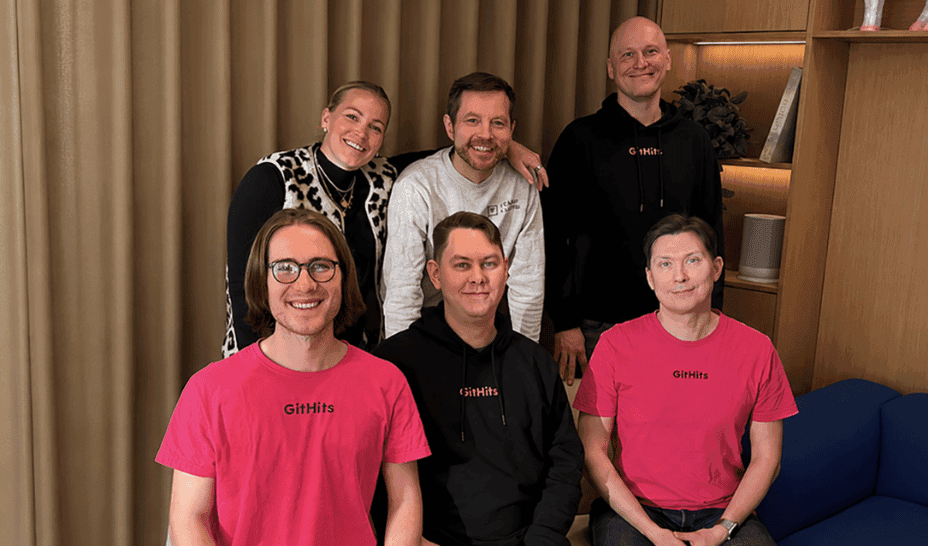
Finland‑based GitHits has raised €1.5 million ($1.75 million) in a pre‑seed funding round to build what it describes as the Google of code search, an AI‑native index of all public open‑source code designed to ground AI coding agents in real, version‑accurate implementations rather than model‑generated guesses. The round was led by Finnish venture capital firm Vendep Capital and Estonian VC Trind, with notable angel participation from Peter Sarlin, founder of Silo AI, Zach Shelby, founder of Edge Impulse, and Jerry Liu, co‑founder of LlamaIndex, the widely used framework for building large language model applications. The announcement came alongside the simultaneous launch of the company's beta product on June 16, 2026.
GitHits was founded in 2025 by CEO Jaakko Timonen, CTO Olli‑Pekka Heinisuo, Nathan Burg, and Juha Litola, and spun out of Softlandia, a Finnish AI consulting company where Heinisuo had spent years confronting a specific, recurring frustration.
The Problem Every AI Coding Agent Has Right Now
AI coding agents hallucinate. This is not an abstract concern. It is a daily operational problem for every software engineering team that uses AI to write, review, or modify production code.
The mechanism is straightforward. When a developer asks Claude Code, Cursor, or GitHub Copilot to implement a function using a specific open‑source library, the model does not look up the actual current source code of that library. It generates an answer based on what it has learned about that library from training data, which has a cutoff date, which may not reflect the current version, and which may simply be wrong about specific API methods, function signatures, parameter names, or available utilities. The agent confidently produces code that looks correct and fails to run because it referenced a method that does not exist in the version the developer is actually using.
Heinisuo encountered this pattern repeatedly while giving colleagues at Softlandia the same tip over and over: here is where to find the actual working implementation of this function in the open‑source codebase. He realised the tip was always the same because the problem was always the same, and that the problem could be solved systematically if someone built the right index.
The solution GitHits is building is a version‑aware index of public open‑source code. Rather than asking an AI model what it knows about a library, an agent using GitHits queries an index of the actual source code, at the specific version being used, and gets back real working examples, accurate dependency information, and identified vulnerabilities. The company describes this as bringing open‑source code as context for agents to end retry loops and reduce token consumption.
Why Jerry Liu's Participation Matters
Jerry Liu is not a passive financial investor. As the co‑founder of LlamaIndex, which is one of the most widely adopted frameworks for building retrieval‑augmented generation applications on top of large language models, he sits inside the AI agent infrastructure stack every day. His decision to back GitHits is a signal from someone who understands at a technical level what is missing from the current generation of AI coding tools.
LlamaIndex solves the retrieval problem for document‑based knowledge: it provides infrastructure for connecting large language models to external data sources. GitHits is solving the equivalent problem specifically for code, building the retrieval infrastructure that allows agents to access real, versioned, live open‑source implementations rather than relying on training data alone. That the person who built one of the foundational retrieval frameworks for AI is backing the team building the code retrieval equivalent is a meaningful endorsement.
Peter Sarlin and Zach Shelby bring complementary credentials. Sarlin founded Silo AI, the European AI research company acquired by AMD in 2024. Shelby founded Edge Impulse, the machine learning platform for embedded systems. Both have built and sold developer infrastructure companies successfully.
Complementing, Not Competing With, the Frontier Labs
GitHits has been deliberate about its market position. CEO Timonen described the company's vision as indexing all public open‑source code. CTO Heinisuo framed the competitive context directly: the frontier AI labs, including OpenAI, Anthropic, and Google, have left a gap in the market. GitHits does not compete with Codex, Claude Code, or Cursor. It complements them by providing the one thing they all lack, a real‑time, version‑accurate index of what public open‑source code actually contains.
That positioning is commercially intelligent. Rather than competing against the distribution power of Anthropic's Claude Code or Microsoft's GitHub Copilot, GitHits is building infrastructure that makes all of them more reliable. If the company executes, the natural outcome is integration partnerships with the same tools it is currently describing as creating the gap it fills.
Timo Felin, Partner at Vendep Capital, explained the investment rationale directly: Olli‑Pekka is a quiet legend in open source and has lived inside this problem for years. At this stage you invest in people, and this was an easy call.
The beta CLI product launches today alongside the funding announcement. A first commercial version is planned for later in 2026.
Key facts:
- Pre‑seed round: €1.5 million ($1.75 million), announced June 16, 2026
- Lead investors: Vendep Capital (Finland), Trind (Estonia)
- Angel investors: Peter Sarlin (Silo AI), Zach Shelby (Edge Impulse), Jerry Liu (LlamaIndex co‑founder)
- Founded: 2025, spun out of Softlandia
- Founders: Jaakko Timonen (CEO), Olli‑Pekka Heinisuo (CTO), Nathan Burg, Juha Litola
- Beta launch: June 16, 2026
- Commercial version: planned for later in 2026
The hallucination problem in AI coding is well understood and widely complained about. GitHits is one of a small number of companies attempting to solve it at the infrastructure layer rather than waiting for foundation models to self‑correct. With €1.5 million, a team with deep open‑source experience, and backing from people who build the tools that the tools are built with, it has the right starting conditions for the problem it is attempting to solve.
Stay informed
Startup news in your inbox
Get important funding rounds, founder stories, and startup updates.
No spam - only important startup updates.