Lightbringer Raises $10 Million Series A to Replace Patent Firms With AI, Targeting US Expansion After 300% Revenue Growth

Malmö-based legal technology startup Lightbringer has raised $10 million (€8.6 million) in a Series A funding round co‑led by London‑based 6 Degrees Capital and Amsterdam‑based Newion, with continued participation from existing investors Luminar Ventures and Alliance VC. The announcement was made on June 16, 2026, and follows a €4.2 million seed round led by Luminar Ventures and Alliance VC in December 2024. Thomas Olszewski, Partner at 6 Degrees Capital, and Dorus Olgers, Partner at Newion, have joined the company's board.
The capital will fund Lightbringer's entry into the United States, the world's largest and most competitive market for intellectual property, alongside continued development of its AI‑native patent platform.
A Different Claim Than Most Legal AI Companies Make
The legal AI sector has attracted substantial capital over the past two years. Harvey raised $200 million in March 2026 at an $11 billion valuation. Luminance raised $75 million in February 2025 for contract analysis and document review. Both are built on a core proposition: AI makes lawyers more productive. That is a valuable claim. It is not Lightbringer's.
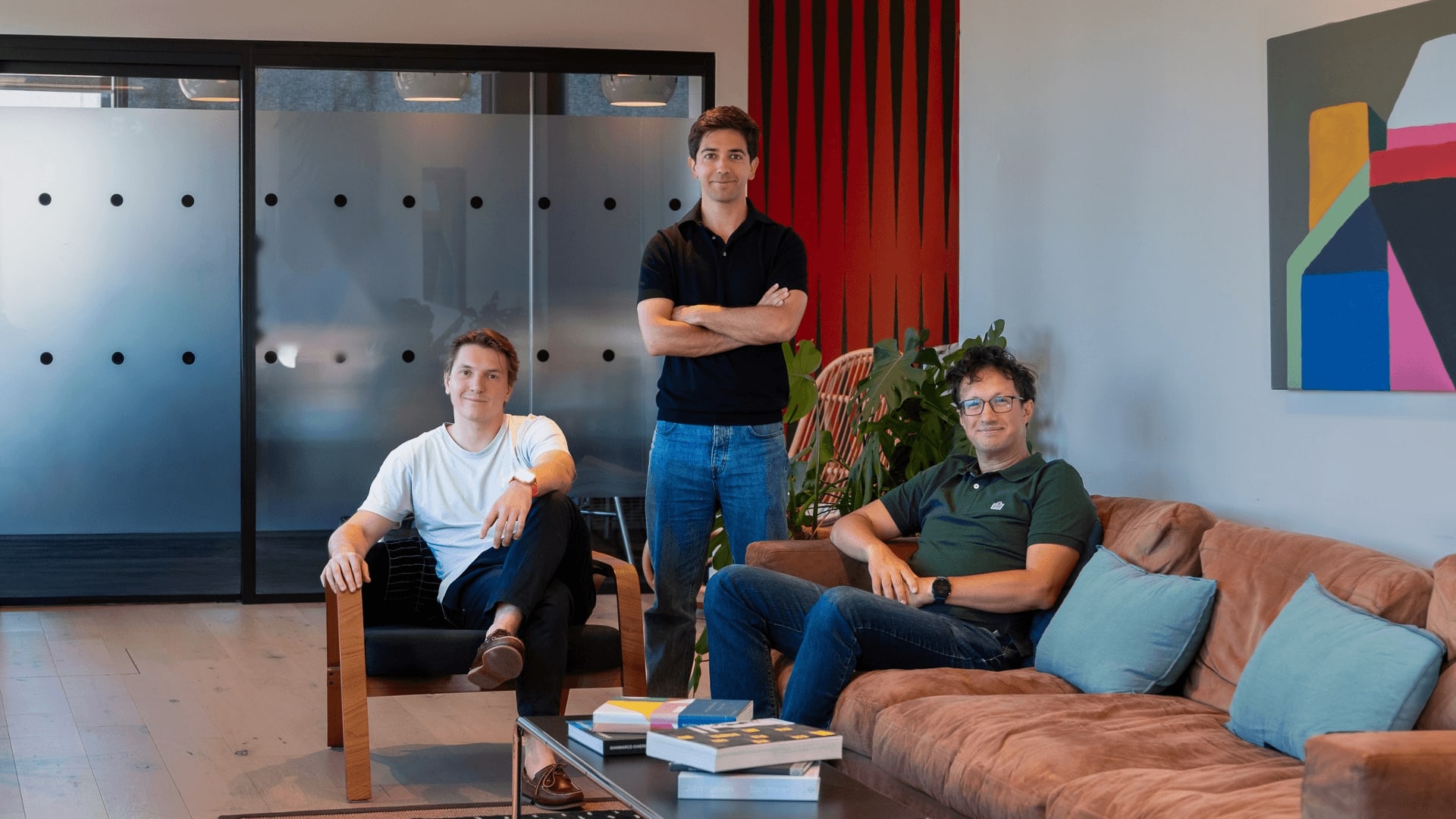
Lightbringer was founded by CEO Dominic Davies and co‑founders with deep experience in the patent industry, not to make patent lawyers more efficient but to make them optional. The company's platform is designed to handle the entire patent lifecycle autonomously, from invention capture and technical drafting to filing, portfolio management, and competitive intelligence, without routing any of that work through a traditional patent firm. Its stated ambition is to take on Big Law directly.
That framing carries a specific commercial logic. For a deep tech startup building AI systems or advanced materials or novel biotechnology, the gap between inventing something and legally protecting it can be the difference between capturing value and losing it. Patent filings take an average of two months from first consultation to submission through a traditional patent firm. They cost tens of thousands of euros in professional fees. And they require a patent attorney who may have limited domain expertise in the specific technical field the inventor is working in, because the supply of specialist patent counsel is constrained.
Lightbringer's AI can be given a technical description and develop deep domain expertise in the relevant field rapidly, producing a draft patent application in days rather than months at roughly half the cost of a traditional filing. Davies has been direct about what is at stake: in a hypercompetitive market, the speed at which an inventor can file a patent application on their innovation can mean the difference between a company's success and its demise.
The Numbers That Earned the Series A
The commercial traction behind the raise reflects a product that is converting its pitch into paying customers at scale. Lightbringer reported 300 percent revenue growth year‑on‑year in the second quarter of 2026. The platform currently serves more than 200 deep tech companies across 17 countries. Those customers span AI, robotics, advanced materials, biotechnology, and semiconductor research, precisely the sectors where speed of IP protection and deep technical precision in patent drafting matter most.
The company's model is positioned as Service as Software, a framing that reflects how the platform bundles IP strategy, patent drafting, filing, and portfolio management into a single subscription offering. Rather than charging separately for each discrete service as a traditional patent firm would, Lightbringer replaces the firm relationship with a software relationship, making the cost structure more predictable and typically lower for the customer.
At 200 customers across 17 countries after a seed round of €4.2 million, and with revenue tripling year‑on‑year, the business has demonstrated a level of commercial efficiency that is rare in legal technology, a sector where long enterprise sales cycles and strong incumbent relationships typically slow adoption significantly.
Why the US Is the Right Next Market
The United States is the largest patent market in the world. The US Patent and Trademark Office receives more than 600,000 patent applications annually. American venture‑backed deep tech companies and research universities collectively produce more patent filings than any comparable ecosystem globally. And the cost and complexity of navigating the US patent system, even for experienced teams, is significant.
Lightbringer's entry into the US is not a land grab for volume. It is targeted at the specific segment of the market that its current European customer base represents: deep tech startups and growth‑stage companies whose founding engineers invented the core technology and whose IP protection strategy is as important to investor confidence as the technology itself. In the US, that segment is vast, spanning the AI, semiconductor, biotechnology, and advanced manufacturing clusters in the Bay Area, Boston, New York, and the Research Triangle.
Thomas Olszewski of 6 Degrees Capital described the company as solving a major structural problem in the global innovation ecosystem, where the IP protection process remains largely unchanged for decades. Dorus Olgers of Newion pointed to the combination of deep legal and technical expertise, exceptional product‑market fit, and rapid customer adoption that convinced the firm to co‑lead the round.
Key facts about the company and round:
- Series A: $10 million (€8.6 million), announced June 16, 2026
- Co‑lead investors: 6 Degrees Capital (London), Newion (Amsterdam)
- Returning investors: Luminar Ventures, Alliance VC
- Previous funding: €4.2 million seed, December 2024
- Revenue growth: 300% year‑on‑year in Q2 2026
- Customers: more than 200 deep tech companies across 17 countries
- Filing time improvement: from two months to a few days
- Cost reduction: approximately 50% versus traditional patent firms
Whether Lightbringer can replicate its European traction in the US, a market with entrenched patent firm relationships, higher regulatory complexity, and a well‑funded existing legal technology ecosystem, is the question the $10 million is now designed to answer. The 300 percent growth rate and the specificity of the target customer base suggest the product has earned the right to find out.
Stay informed
Startup news in your inbox
Get important funding rounds, founder stories, and startup updates.
No spam - only important startup updates.
Comments
Text only. No links or images.
No comments yet.