Mirage Raises $75 Million to Build AI Models That Understand Video the Way Editors Do
Editorial Team

Making a video used to require skill, time, and software that most people never mastered. Making a great video, one that holds attention in the first three seconds, paces itself correctly, lands the audio cleanly, and looks polished on a phone screen, required all of that plus the kind of editorial judgment that experienced video producers develop over years of practice. Mirage, the New York‑based AI company formerly known as Captions, has spent four years trying to encode that editorial judgment into artificial intelligence. On March 24, 2026, it announced $75 million in growth financing from General Catalyst's Customer Value Fund, bringing its total funding to more than $175 million.
The round is structured as growth financing through General Catalyst's CVF, a vehicle that Pranav Singhvi, the fund's managing director, has described as designed specifically for companies with demonstrated product‑market fit and efficient, scalable acquisition strategies. CVF provides capital without requiring additional equity dilution, a structure that preserves ownership for the founding team while funding the commercial expansion that Mirage is now executing.
Twenty Million Users and 250 Million Videos
Before any discussion of Mirage's technology or strategy, the commercial traction it has built deserves its own statement. The platform is used by more than 20 million creators, small businesses, and enterprises worldwide. Those users have collectively created more than 250 million videos through the platform. In the past twelve months alone, the app was downloaded more than 3.2 million times, generating $28.4 million in in‑app revenue. Enterprise clients include HubSpot, CoreWeave, and King.
Only 25 percent of Mirage's revenue comes from the United States, a figure that reflects both the global appeal of video content creation tools and the significant international user base that Captions built before the rebrand. The remaining 75 percent of revenue comes from international markets, making Mirage's expansion into high‑growth Asian markets a natural next step rather than a speculative geographic bet.
The company has been recognised on the Forbes AI 50, the annual list of the most promising private AI companies, and is backed by a deep institutional roster including General Catalyst, Index Ventures, Kleiner Perkins, and Andreessen Horowitz alongside the new CVF financing.
From Captions to Mirage: The Rebrand That Signals a Bigger Ambition
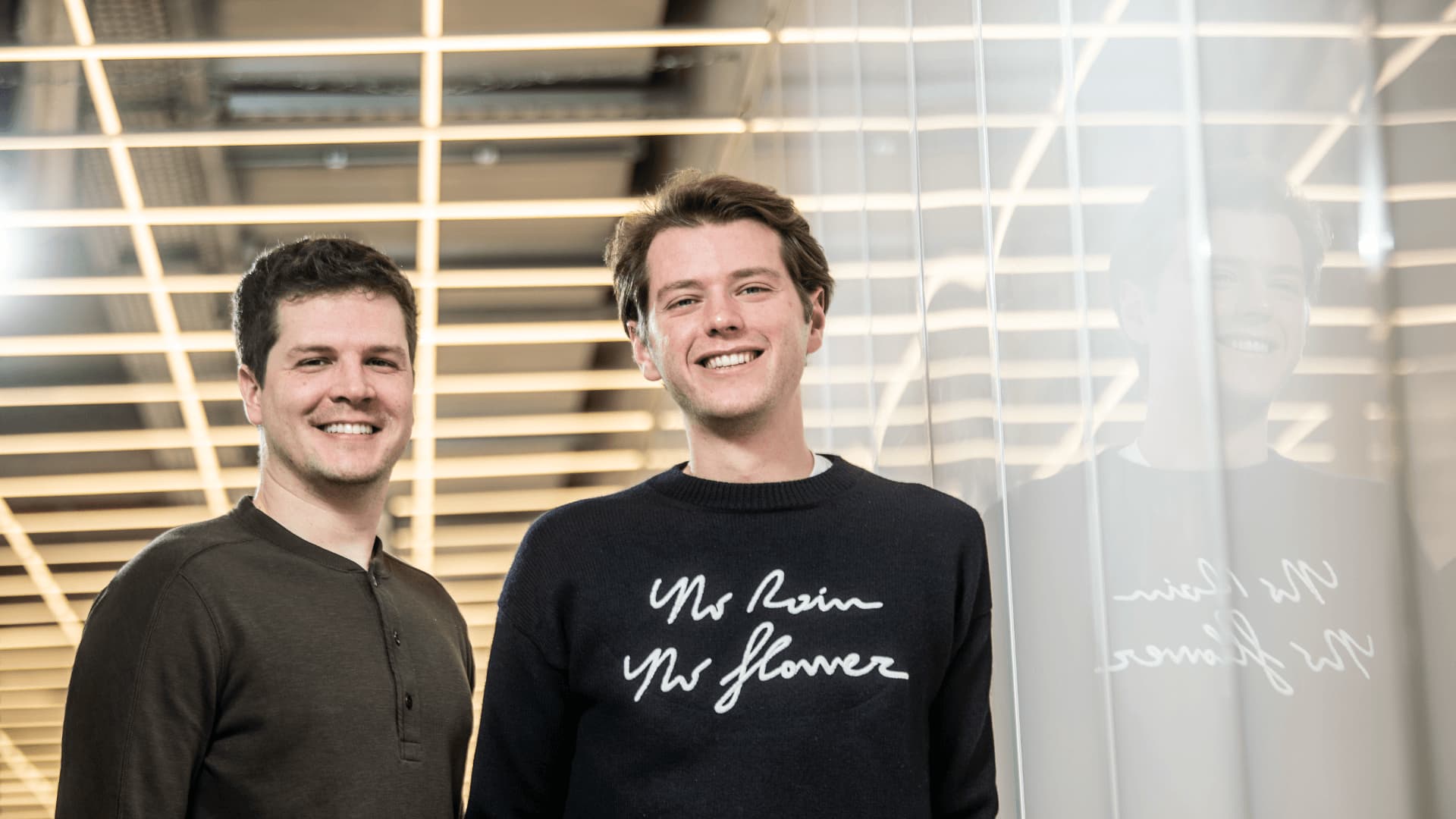
The company launched as Captions, a name that reflected its earliest and most visible feature: AI‑generated subtitles and captions for video content. Auto‑captioning was a genuine workflow improvement for creators who had previously spent hours manually transcribing and timing caption files. The product found real users and real revenue. But co‑founder and CEO Gaurav Misra saw a larger opportunity than one feature could represent.
Over the past year, Mirage executed a deliberate repositioning. The company rebranded from Captions to Mirage specifically to signal that it had evolved from a single‑product mobile application into an AI lab building multiple domain‑specific models for industries including advertising, marketing, and enterprise content production. The name change was not cosmetic. It was a statement of intent about the scope of what the company intends to build.
Alongside the rebrand, Mirage made two significant product decisions. In January 2025, it switched to a freemium model, opening the platform to a broader user base that had previously been behind a paywall. This change was a direct competitive response to ByteDance's CapCut and Meta's Edits, both of which were growing aggressively on free distribution. The freemium shift expanded Mirage's user base significantly while its in‑app revenue continued to grow, suggesting the company found a conversion model that works.
Mirage also launched a web‑based marketing suite alongside its mobile app, creating a video creation and distribution platform specifically designed for companies that need to produce videos in bulk. A small business creating ten product videos per week for social distribution has fundamentally different requirements from an individual creator editing a personal vlog, and the web suite addresses enterprise‑scale production requirements that the mobile app was not designed for.
The Technology: Assembly Intelligence and Models Built for Editing
What makes Mirage technically distinct from the crowded field of AI video tools is its focus on building narrow, highly specialized models rather than deploying general‑purpose AI for every task. Gaurav Misra has described the company's research direction as assembly intelligence, an approach that builds video by combining outputs from multiple specialized models rather than relying on a single generative system.
The models Mirage has built or is developing reflect specific, real editorial problems that existing AI tools solve poorly.
- A pacing, framing, and attention dynamics model is specifically trained on short‑form video content to understand the micro‑decisions that determine whether a viewer stays or scrolls away in the first three seconds. This model does not generate video from scratch. It evaluates and adjusts existing footage at the level of cut timing, framing composition, and narrative pacing.
- An audio model focused on preserving the speaker's original accent when generating or modifying speech addresses a persistent failure mode in AI voiceover tools that default to a generic American accent regardless of the original speaker's voice.
- An assembly model designed to automatically construct a coherent video from disparate clips, images, and media sources is in development, aimed at eliminating the most time‑consuming stage of video production for high‑volume marketing teams.
Captions, Mirage's flagship mobile product, integrates these models into a workflow that handles video creation from generation through editing through refinement using natural language instructions. A user can describe what they want, and Captions executes with what the company describes as the judgment of a video editor, making decisions about pacing, audio, captions, and visual treatment without requiring manual adjustment at each step.
The Competitive Landscape and Why General Catalyst Is Backing This Horse
The AI video editing market in 2026 is genuinely competitive. CapCut, ByteDance's mobile editing app, has hundreds of millions of users globally and enormous distribution advantages through TikTok. Meta's Edits app was released in 2025 and is growing on Instagram's distribution. Canva has introduced marketing creation and tracking tools. HeyGen, D‑ID, and Avataar are all releasing new AI video models and features.
Singhvi's rationale for why Mirage wins in this environment despite the competition was precise: Mirage's business equation is extremely figured out. They know exactly how to spend that dollar and generate a very attractive ROI. Regardless of what other tools are out there, Mirage is clearly ahead of the pack from a unit economics standpoint. Ultimately, it is all a reflection of their product.
The CVF investment structure is itself a signal. General Catalyst's Customer Value Fund does not invest speculatively. It deploys growth capital into companies that have already proven they can acquire users efficiently and convert them to revenue at scale. The fact that Mirage qualified for CVF financing rather than a traditional equity round reflects the quality of its commercial metrics rather than simply the strength of its technology roadmap.
The $75 million will be used to accelerate growth across high‑priority Asian markets where video content consumption is enormous and where Mirage's existing international revenue concentration suggests a natural expansion opportunity. The company also plans to merge its mobile Captions app and its web‑based marketing suite into a unified platform, removing the friction for small businesses that currently need to move between two separate tools to manage their full video production workflow.
For founders and investors watching the AI creative tools market, Mirage's trajectory illustrates the same pattern that has defined the strongest AI application companies of 2026: deep product focus on a specific user workflow, narrow models trained for that workflow rather than general‑purpose AI bolted onto an existing product, and the kind of unit economics that convince investors like General Catalyst to write non‑dilutive growth checks before the company has exhausted its primary market.
Stay informed
Startup news in your inbox
Get important funding rounds, founder stories, and startup updates.
No spam - only important startup updates.