Mumbai-Born Founder Raises $7.5 Million and Launches Moda, the AI Design Agent Built to Kill Generic AI Output
Editorial Team
There is a problem that almost every team building a company in 2026 has experienced. They open ChatGPT or Midjourney to create a pitch deck slide, a social post, or a sales one‑pager. The AI generates something that looks reasonably polished. Then they try to change one thing, move a text box, adjust a color to match the brand, resize an element, and discover that the entire output is a flat image. There is nothing to edit. The design is trapped inside a PNG file. Starting over from scratch costs more time than the AI saved in the first place.
This is the problem that Anvisha Pai has spent the past two years building a solution to. On March 24, 2026, her company Moda emerged from stealth with a $7.5 million seed round and a public launch at moda.app, backed by some of the most credible investors in the current technology market. The launch tweet, in which Pai described Moda's mission as killing AI slop, accumulated 1.6 million views in hours, a signal that the frustration she is addressing is both real and widely shared.
Who Anvisha Pai Is and Why This Story Matters
Anvisha Pai's path to founding Moda is one of the more compelling founder journeys in the current AI startup landscape, and it is worth understanding in full, because the product she has built is a direct extension of the experience she accumulated along the way.
Pai grew up in Mumbai and went on to study at MIT, where she developed a deep interest in the intersection of design, technology, and how people work. After MIT, she joined Dropbox as a product manager before the company went public, giving her direct exposure to what it means to build a product used by hundreds of millions of people and to the visual and brand standards that a company at that scale demands. At Dropbox, she worked closely with Drew Houston's team during a period when the company was defining what design quality meant for consumer software.
She left Dropbox to co‑found Dover, an AI recruiting platform that Pai built into a business raising $23 million from Y Combinator, Founders Fund, and Tiger Global. Under her leadership as CEO, Dover scaled to $14 million in annual recurring revenue and a $300 million valuation, a rare commercial outcome for an early‑stage recruiting technology company. The Dover experience gave Pai years of direct exposure to the exact problem she is now solving with Moda: every company generating large volumes of content across pitch decks, sales materials, onboarding documents, and marketing assets faces the same brand consistency challenge, and AI tools as they existed made that challenge worse rather than better.
The insight that drove Pai to start Moda rather than simply stay at Dover or join a larger company is personal. She has stated publicly that even when Dover had more than 100 employees, she was still inside design files herself, manually tweaking spacing and fixing brand colors that AI‑generated content had distorted. That experience, of watching the creative substance of a brand erode under the volume pressure of AI‑generated output, is what Moda is built to prevent.
The Co‑Founders Who Make Moda Technically Exceptional
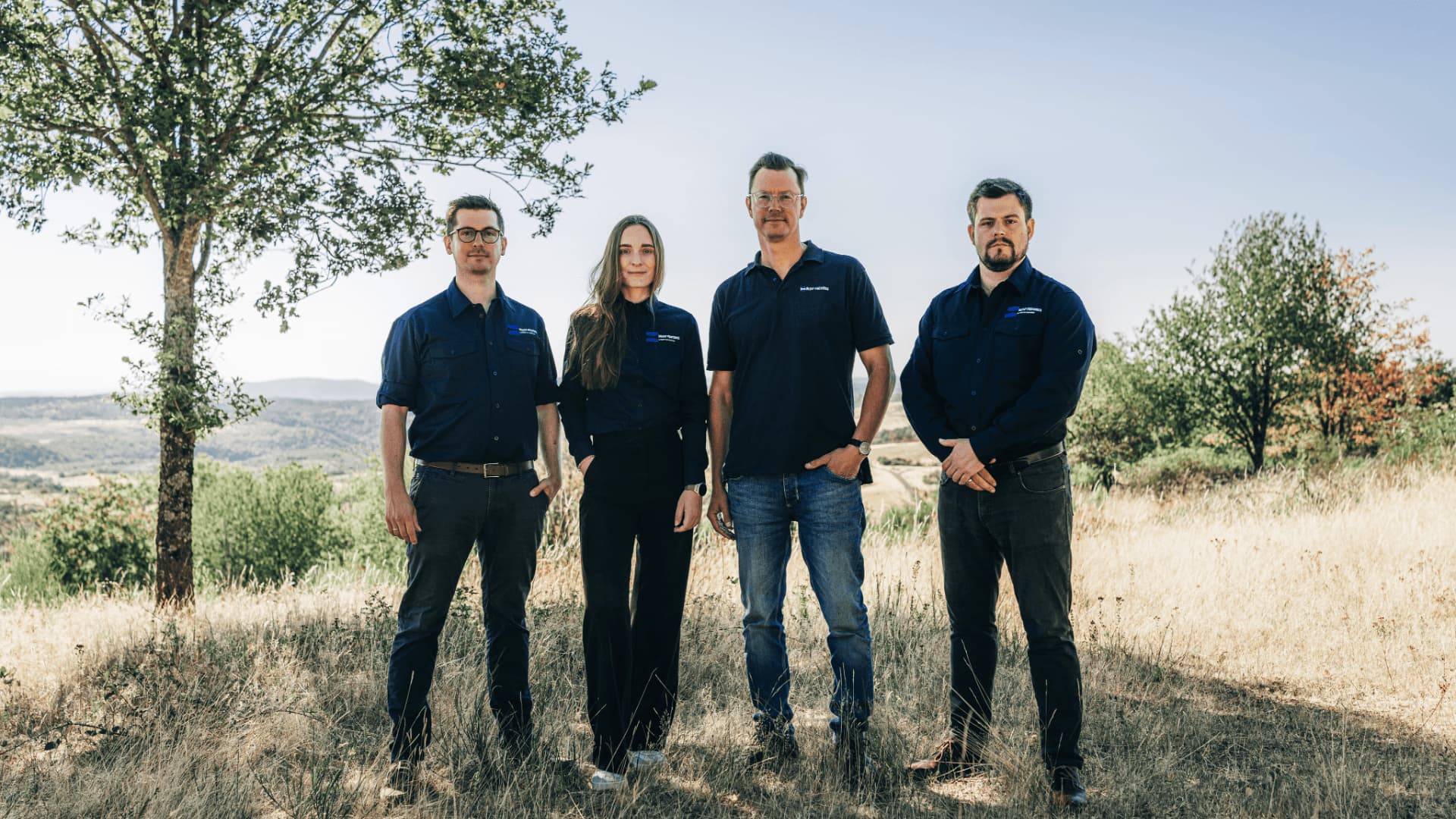
Pai is joined at Moda by two co‑founders whose technical and product credentials are as strong as her commercial track record, and that combination is precisely what makes Moda's execution credible.
Ravi Parikh serves as Chief Operating Officer. Before Moda, Parikh co‑founded two companies that became significant exits in the developer and enterprise software market. The first was Heap, an analytics platform that reached a $960 million valuation before being acquired by Contentsquare, one of the largest digital experience analytics companies in the world. The second was Airplane, a developer operations platform acquired by Airtable, the no‑code database company. Parikh's experience building and scaling two enterprise software products to successful exits brings commercial architecture experience to Moda that most seed‑stage startups do not have access to.
John Holliman serves as Chief Technology Officer. Holliman was employee number one at Dover, meaning he has been building alongside Pai since the beginning of her last company, and he understands her product instincts and execution style deeply. Before Dover, Holliman scaled infrastructure at Expanse, a cybersecurity and network intelligence company that was acquired by Palo Alto Networks. The technical depth required to build what Moda has built, a custom WebGPU canvas from scratch, designed for simultaneous use by humans and AI agents, reflects exactly the kind of infrastructure expertise that Holliman brings.
The founding team at Moda has collectively co‑founded companies that raised over $100 million, scaled to hundreds of millions in valuation, and achieved exits through acquisition by industry leaders. This is an unusually strong execution record for a company announcing its seed round.
The Investor Coalition That Launched with Moda
The $7.5 million seed round is led by General Catalyst, one of the most active and highest‑conviction early‑stage AI investors in the current market. General Catalyst also led Legora's Series D and has been a consistent early investor in enterprise AI applications across categories.
Quentin Clark, Managing Director at General Catalyst, described the investment thesis with precision, noting that while AI makes it easy to generate content, creating work with genuine taste has become harder in the AI era, and that brand judgment is therefore a true moat. The framing, that taste is now a competitive advantage precisely because AI commoditizes tasteless content, is exactly the argument that Moda's product is built around.
Additional investors in the round include:
- Pear VC, the early‑stage firm based in Palo Alto with a strong track record in enterprise software and developer tools.
- WndrCo, the venture firm founded by Jeffrey Katzenberg, the Hollywood producer and DreamWorks Animation co‑founder who built one of the most storied creative careers in the entertainment industry. Katzenberg's participation is not incidental. A firm with roots in visual storytelling and brand‑level creative quality backing an AI design platform is a signal that Moda's aesthetic thesis resonates with people who have spent careers at the highest levels of creative production.
- Founders and executives from Dropbox, Stripe, Segment, Google, and Scale AI participated as angels. The Dropbox connection is direct. Drew Houston's involvement, as the person who built Dropbox into a public company that Pai worked at before it went public, represents a full circle of institutional trust.
What Moda Does Differently From Every Other AI Design Tool
The market for AI‑assisted design is not new. Canva, Adobe Express, Midjourney, DALL‑E, and dozens of other tools have been offering AI‑generated visual content for years. Moda's thesis is that all of them solve the wrong problem.
The wrong problem is image generation: producing a visually appealing output from a text prompt. The right problem is design production: creating brand‑aligned, fully editable, production‑ready visual assets that a team can actually use without hours of cleanup work.
Moda's approach addresses four specific failure modes that every existing AI design tool exhibits.
The first failure mode is flat, uneditable output. Every image generator produces pixels. Moda produces layers. When Moda generates a presentation slide, every element on that slide, the text, the shapes, the images, the layout grid, exists as a separate, editable layer on a collaborative canvas. Text is real text that can be retyped. Colors are actual color values that can be changed globally. Spacing is adjustable. This is the difference between a photograph of a presentation and an actual presentation.
The second failure mode is brand blindness. General‑purpose AI tools generate content that looks generically polished but has no connection to the visual language of any specific brand. Moda is built around a brand learning engine that ingests a company's existing design assets, typography system, color palette, imagery style, and spacing conventions, and uses that information as a constraint on every subsequent generation. The AI does not produce what looks generically good. It produces what looks correct for that specific brand.
The third failure mode is single‑asset limitation. Most AI design tools are optimized for generating one image or one slide at a time. Moda is built for scale. The platform can ingest a CSV file with fifty rows of data and generate fifty fully personalized, brand‑aligned decks simultaneously, each adapting content, imagery, and layout to the specific data in that row. A task that previously required hours of manual PowerPoint work takes minutes. This is the capability that Pai demonstrated in her launch thread, personalizing fifty decks from a CSV in under five minutes, and it is the capability that makes Moda commercially transformative for teams producing large volumes of sales collateral, investor materials, or client‑facing documents.
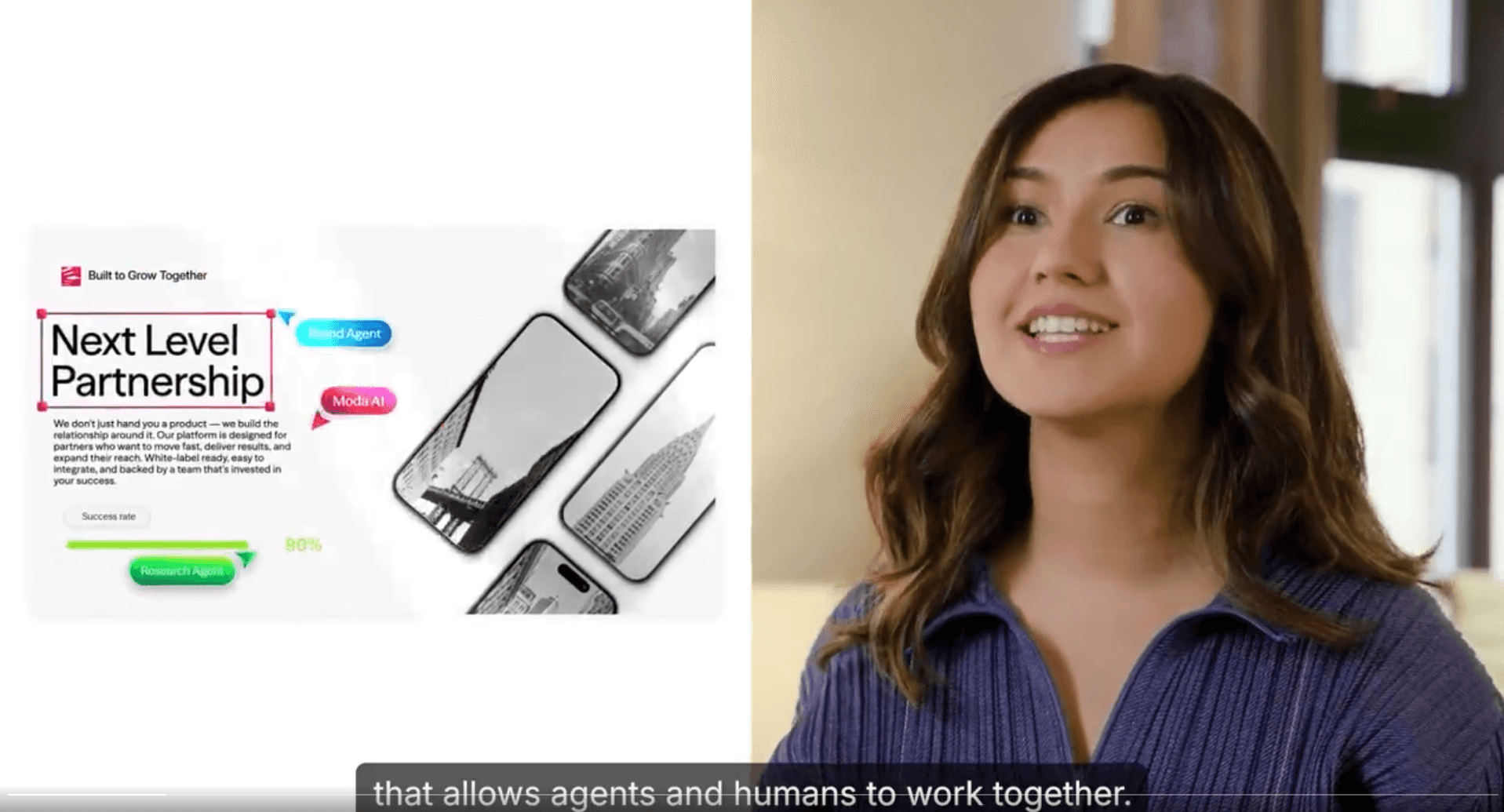
The fourth failure mode is workflow isolation. AI design tools that exist as standalone applications force users to copy outputs back into the actual tools their teams use. Moda exports natively to PowerPoint, Google Slides, and Keynote, eliminating the copy‑export‑reformat loop. More significantly, Moda has built an MCP server, a Model Context Protocol integration that allows Claude and other AI agents to trigger Moda designs directly from agentic workflows. This means that an enterprise automation system built on Claude can kick off a design task inside Moda without any human opening a browser tab. The design agent receives instructions from another agent and returns production‑ready assets. This is not a future roadmap item. It is live at launch.
The 3,000 Users From Google, McKinsey, and Stanford
Before the funding announcement and public launch, Moda operated in a private beta that attracted more than 3,000 users from organizations including Google, McKinsey, and Stanford University. This is not a list of early adopters from the startup community who will try anything new. These are professionals at institutions with rigorous internal brand standards and high volumes of presentation and collateral production who chose to use Moda in that context.
The Stanford connection is worth noting specifically. Academic institutions produce enormous volumes of research presentations, grant proposals, and conference materials, and they do so under the same brand consistency constraints as corporate organizations. The fact that Stanford researchers and faculty are using Moda for professional‑grade work is a different kind of validation than startup adoption.
The Google and McKinsey users represent the enterprise market Moda is building toward. Both organizations have internal design teams and established brand guidelines, and the fact that their employees are choosing Moda as a supplementary tool for speed and scale, rather than waiting for internal design resources, demonstrates the commercial pull that Pai has built before the product even launched publicly.
The Launch Momentum: 1.6 Million Views and 1,000 Free Brands
Pai's launch on X (formerly Twitter) generated 1.6 million views within hours of posting, alongside 3,400 reposts and 1,000 comments. The engagement reflects both the founder's following, built over years of public writing about startups and product, and the resonance of the core message. The framing of "killing AI slop" is specific, provocative, and accurate in a way that abstract product descriptions rarely are. It names the exact frustration that anyone who has tried to use AI for visual content production has experienced.
As part of the launch, Moda announced a giveaway: the next 1,000 brands to be designed for free for anyone who reposts and comments. The offer is both a marketing mechanism and a product demonstration. It forces Moda to produce 1,000 brand design packages under real‑world conditions, across 1,000 different brand contexts, and to do so in a way that meets the quality bar of the announcement. There is no better public stress test of a design AI's brand judgment than a 1,000‑brand open challenge.
What Comes Next for Moda
Moda is currently hiring at its SoHo, New York office, with engineering, design, and go‑to‑market roles open across multiple functions. The company has not disclosed specific revenue targets or growth plans beyond the public launch, but the combination of General Catalyst's conviction, the founding team's track record, and the product's clearly differentiated positioning suggests the next funding milestone is a matter of execution timeline rather than product validation.
For founders watching the AI tools market, Moda's launch illustrates a pattern that is becoming increasingly significant in 2026: the most durable AI application companies are not the ones that generate the most impressive demos. They are the ones that solve a real, recurring workflow problem for professional users who have clear standards, clear brand requirements, and clear commercial stakes in getting the output right. Moda is building for exactly that user, and the 3,000 professionals from Google, McKinsey, and Stanford who used it before it was publicly available confirmed that the product earns that trust in practice, not just in theory.
Stay informed
Startup news in your inbox
Get important funding rounds, founder stories, and startup updates.
No spam - only important startup updates.