Sandstone Raises $30 Million Series A Led by Lightspeed to Build AI Workflow Platform for In-House Legal Teams
Editorial Team

Legal AI startup Sandstone has raised $30 million in a Series A funding round led by Lightspeed Venture Partners, with participation from Sequoia, Mantis VC, SV Angel, Operator Partners, Kearny Jackson, Daybreak Ventures, Litquidity Ventures, and others. The announcement was made on Tuesday, June 9, 2026, and brings the company's total funding to $40 million. The raise follows a $10 million seed round in January 2026, also led by Sequoia, making Sandstone one of the faster‑capitalised companies in the legal technology space over the past twelve months.
The new capital will be directed toward expanding the platform's capabilities and growing Sandstone's customer base among corporate legal departments at small and mid‑sized businesses.
A Different Target Than Harvey or Legora
Legal AI has become one of the most contested verticals in enterprise software. Companies like Harvey and Legora have attracted large rounds by building AI tools for private practice law firms, targeting the document‑intensive, billable‑hour‑driven workflows of litigation support, contract review, and legal research. Both have positioned themselves around legal reasoning and analysis.
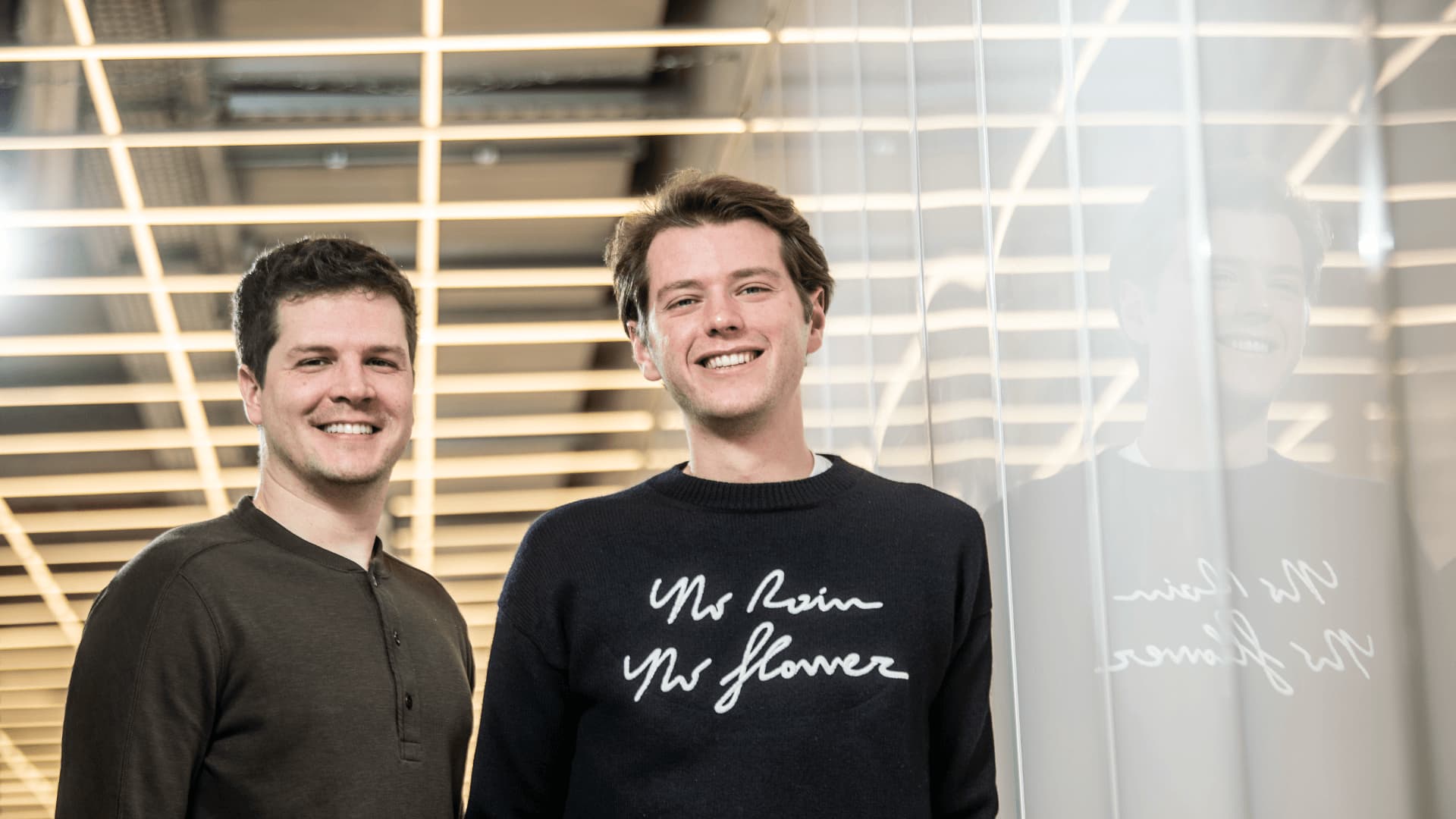
Sandstone's founders, Nick Fleisher (CEO), Jarryd Strydom (COO), and Liam Germain, have taken a deliberately different approach. Their target customer is not a law firm. It is the legal department inside a company, a team that typically operates with fewer resources, faces a higher volume of miscellaneous requests from across the business, and has to manage a tangle of overlapping systems, inboxes, project trackers, and internal stakeholders simultaneously.
Where Harvey is, in Strydom's framing, oriented around legal reasoning, Sandstone is built around relationship management and workflow automation. The distinction matters in practice. An in‑house legal team at a mid‑sized company is not primarily doing litigation or complex M&A research. It is managing intake requests arriving through Slack, email, and Jira, routing them to the right people, tracking obligations, and coordinating between counterparties, stakeholders, contracts, and company history, all at once, across a single working surface. Sandstone connects all of those elements and uses AI to automate the sorting, prioritisation, and execution layer.
The platform allows teams to build custom workflows on top of this infrastructure for specific repeating tasks, including contract drafting and review, legal analysis, and obligation tracking. The goal, as Strydom has put it, is to help in‑house legal teams become genuinely AI‑native departments rather than simply adding AI tools to an existing patchwork of systems.
Early Commercial Traction
The growth metrics attached to this round are striking. Over the 90 days preceding the announcement, the company increased revenue by more than 40 times. During that period it onboarded customers including Wayfair, Grindr, Mercury, Cox Media, and ElevenLabs. The breadth of that customer list, spanning e‑commerce, consumer technology, financial infrastructure, media, and AI‑native companies, suggests the product has traction across multiple industry categories rather than being concentrated in one sector.
That kind of growth rate, compressing from seed to Series A in six months with a 40x revenue increase inside a quarter, is the specific signal that Lightspeed and the other Series A investors were backing. Jarryd Strydom cited Lightspeed's conviction in highly specialised vertical AI as central to the firm's decision to lead the round. The thesis is that AI is most effective when it is built with granular understanding of a specific workflow rather than deployed as a general‑purpose layer on top of legacy processes.
The Competitive Risk on the Horizon
The investor thesis is credible, but so is the competitive pressure. Frontier AI labs are increasingly moving into the legal space. Anthropic has been expanding its Claude for Legal offering, adding tools specifically designed for case law search and deposition preparation in May 2026. As general‑purpose models continue to improve on legal tasks, the question for every vertical AI company becomes whether their specialisation provides durable differentiation or a temporary head start.
Sandstone's answer to that risk is its focus on workflow integration and operational context rather than legal reasoning capability alone. The argument is that knowing the full history of a matter, understanding which stakeholders are involved, tracking obligations over time, and connecting those data points automatically across a company's systems is not something a general‑purpose AI assistant can replicate without deep integration. The value is in the system of record, not just the model.
Whether that moat holds as foundation models improve will be one of the central questions for the legal AI category over the next two to three years.
Key facts about the round and company:
- Series A: $30 million, led by Lightspeed Venture Partners
- Total funding: $40 million
- Seed round: $10 million in January 2026, led by Sequoia
- Co‑founders: Nick Fleisher (CEO), Jarryd Strydom (COO), Liam Germain
- Revenue growth: over 40x in the 90 days preceding announcement
- Notable customers: Wayfair, Grindr, Mercury, Cox Media, ElevenLabs
- Initial target market: legal departments at small and mid‑sized businesses
The $40 million in total funding raised in under a year is a significant vote of confidence from two of venture capital's most selective firms. Whether Sandstone can sustain its early growth rate and establish durable customer relationships before the legal AI market consolidates around a smaller number of dominant platforms will determine whether its vertical focus translates into a lasting category position.
Stay informed
Startup news in your inbox
Get important funding rounds, founder stories, and startup updates.
No spam - only important startup updates.