Meet Talp: The AI Startup With Turkish Roots Betting $20 Million That Surveys Are Broken

Surveys have not fundamentally changed in decades. You ask people what they think, they answer as the version of themselves they wish they were, and a brand makes a multimillion dollar decision based on responses that may have almost nothing to do with what those same people will actually do when a real purchase decision is in front of them. That gap between stated preference and actual behaviour is the problem Talp has set out to solve, and the startup has now closed a pre‑seed round at a $20 million valuation to build the platform it believes can replace the survey as the default tool for predicting consumer behaviour.
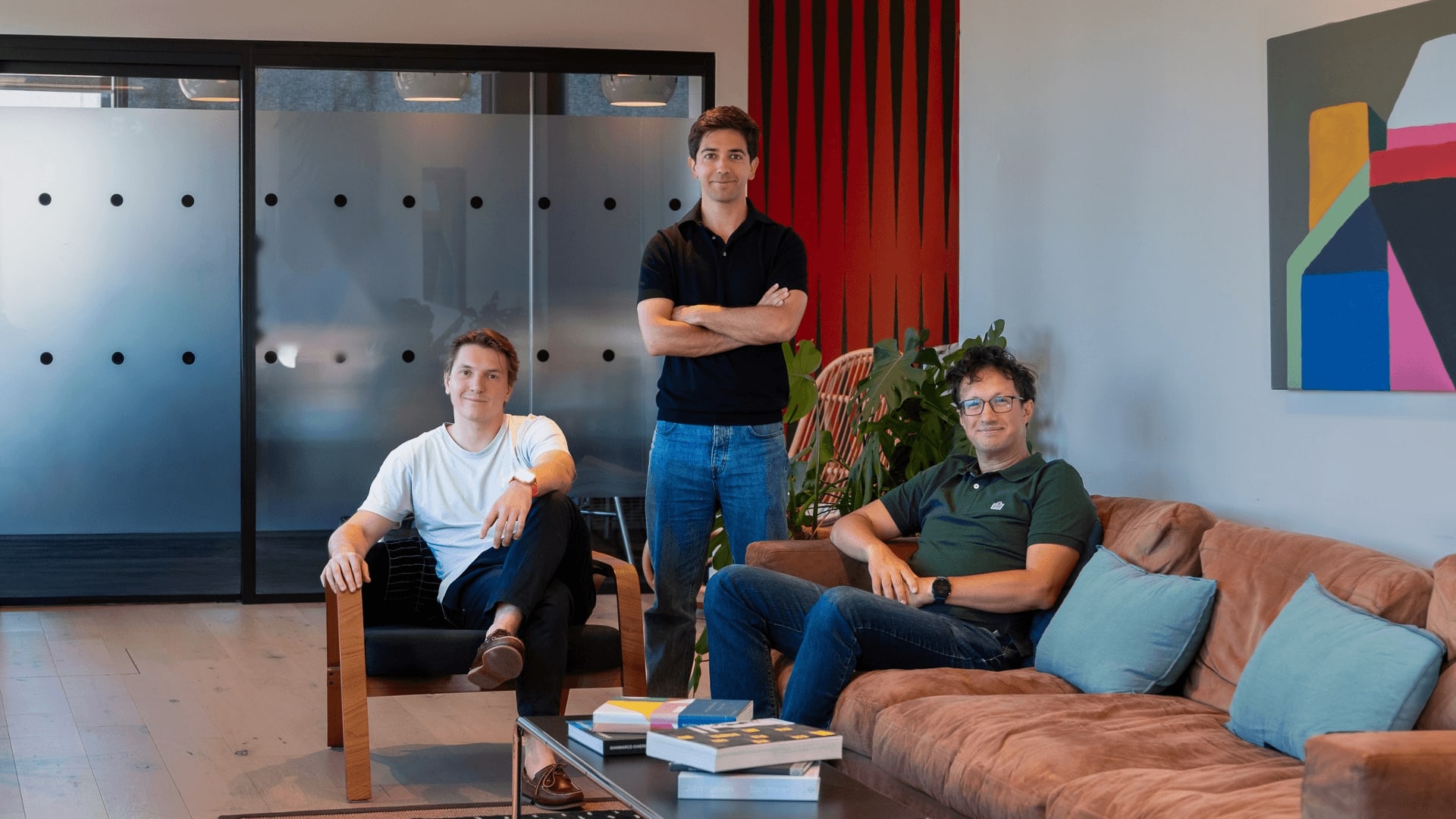
The round was backed by Formus Capital, Sunshine Lake Ventures, Aito Capital, the a16z Scout Fund, and several angel investors. Talp was founded by Baran Ataş, who serves as CEO, and Samet Alan, and the company carries Turkish roots in its founding story while operating in a market that has quickly become one of the more competitive corners of applied AI.
What Talp Builds and Why
The central concept behind Talp is what behavioural researchers have long called the say‑do gap. When asked what they would pay for a product or how they would react to a price change, most consumers answer in terms of who they aspire to be rather than who they demonstrably are. They understate price sensitivity, overstate brand loyalty, and describe purchase intentions that often evaporate when a real checkout page is in front of them. Traditional surveys collect these inflated self‑reports and hand them to marketing and product teams as though they were reliable predictors of actual behaviour.
Talp replaces the survey with simulated customer personas built around behavioural patterns, decision‑making tendencies, and cognitive traits derived from real human behaviour rather than stated preferences. Rather than asking a panel of consumers whether they would buy a product at a given price, Talp runs its personas through the actual experience, pushing a simulated customer through a checkout flow and generating a prediction of where price sensitivity causes cart abandonment, along with the reasoning that produced that prediction.
The output is designed to arrive before a campaign or product launch rather than after it, which is the moment when the information is still actionable. A persona might be run through an advertising concept to flag which elements resonate and which produce confusion, or through a pricing matrix to identify where conversion rates are likely to deteriorate before a single real customer has seen the price. The company claims its platform currently supports around 650 campaigns per month, though that figure comes from the company itself without independent verification.
Ataş framed the company's purpose by pointing to the fundamental nature of business risk: every decision is ultimately a prediction about human behaviour, one that carries risks that past data cannot reliably forecast because market conditions are never static. Talp's argument is that its personas remove at least one layer of that uncertainty by modelling how specific types of customers are likely to respond, not just how they said they would respond on a form.
The Funding and What the a16z Scout Fund Involvement Signals
The investors in this round represent a mix of early‑stage European and global funds, with the inclusion of the a16z Scout Fund drawing the most attention. It is worth being precise about what that involvement represents. The Scout Fund is not a direct investment from Andreessen Horowitz itself. It operates as a network of founders, operators, and investors in the a16z ecosystem who are permitted to write small initial checks into companies they find compelling. The fund gives a16z early visibility into emerging startups without committing formal fund capital, and it gives startups a connection to the broader a16z network without the same due diligence process that accompanies a direct a16z investment.
That distinction matters when reading the headline. Scout Fund involvement is a signal of attention from within the a16z orbit, not a full endorsement from one of the most powerful investment firms in the technology industry. It is still meaningful at a pre‑seed stage, particularly for a company operating with Turkish roots and building in a category that requires both technical credibility and access to the kinds of enterprise buyers who respond to recognizable investor names in a pitch deck.
A Category That Already Has a Billion‑Dollar Benchmark
Talp is not the first company to raise capital on the premise that synthetic customer simulation can outperform traditional research methods. Aaru, a synthetic‑population startup founded in March 2024, closed a Series A above $50 million led by Redpoint Ventures at a headline valuation of one billion dollars, despite annual recurring revenue that sources familiar with the deal describe as still below $10 million. That combination, a ten‑figure valuation paired with single‑digit ARR, is an extraordinary premium that reflects how much investor appetite exists for this category in theory versus how much commercial validation currently exists in practice.
Aaru has identified its own competitive set as including CulturePulse, Simile, Listen Labs, Keplar, and Outset, alongside legacy market research platforms Qualtrics and SurveyMonkey. Talp enters that same landscape at a much earlier stage and a much lower valuation, with the pre‑seed positioning implying that the company is still establishing its product‑market fit rather than scaling a proven revenue model.
The differentiation Talp cites is the combination of behavioural prediction with the reasoning behind it, rather than relying on surface‑level demographic profiling as a proxy for likely customer behaviour. That distinction matters to sophisticated buyers who have been burned by oversimplified segmentation models before, but it is also the kind of claim that is easy to make and hard to validate until the predictions are tested against real campaign outcomes at scale.
The broader market context is favourable. The AI agents category grew from roughly $5.25 billion in 2024 to approximately $7.84 billion in 2025, with projections reaching $52 billion by 2030. Synthetic customer research occupies a narrow slice of that larger category, but it is one where both the theoretical value and the investor appetite have outpaced the available evidence of commercial durability. Talp is building at the frontier of that gap, and the pre‑seed capital gives it the runway to generate the kind of real‑world accuracy data that will determine whether it can scale into a credible competitor in a category where a billion‑dollar benchmark already exists.
What Comes Next
Talp has indicated it will use the capital to expand its simulation engine and push into new industry verticals, though no specific sectors or product milestones have been publicly committed. The question that will define its next raise is whether the platform's behavioural predictions hold up against measured real‑world outcomes across a meaningful volume of campaigns. Synthetic personas are only as useful as they are accurate, and accuracy under genuine commercial pressure is the one claim that no amount of pre‑seed funding can substitute for.
At $20 million in pre‑seed valuation, Talp has enough credibility to attract enterprise pilots and enough funding to build the product infrastructure those pilots require. Whether it can generate the kind of verifiable accuracy track record that justifies a much larger round in a category where the lead competitor is already chasing billion‑dollar territory is the test the next twelve to eighteen months will run.
Stay informed
Startup news in your inbox
Get important funding rounds, founder stories, and startup updates.
No spam - only important startup updates.
Comments
Text only. No links or images.
No comments yet.