Halter Raises $220 Million at $2 Billion Valuation: The AI Livestock Collar Startup That Peter Thiel Is Betting On
Editorial Team
A cow wearing a solar‑powered GPS collar is not what most people picture when they think about artificial intelligence. But for over 2,000 ranchers and farmers across New Zealand, Australia, and the United States, that collar has replaced kilometres of wire fencing, weeks of manual herding labour, and the guesswork of monitoring herd health across thousands of acres. On March 24, 2026, the company behind that collar, Auckland‑based Halter, announced it had raised $220 million in a Series E round, one of the largest agtech raises ever recorded globally, at a valuation of $2 billion.
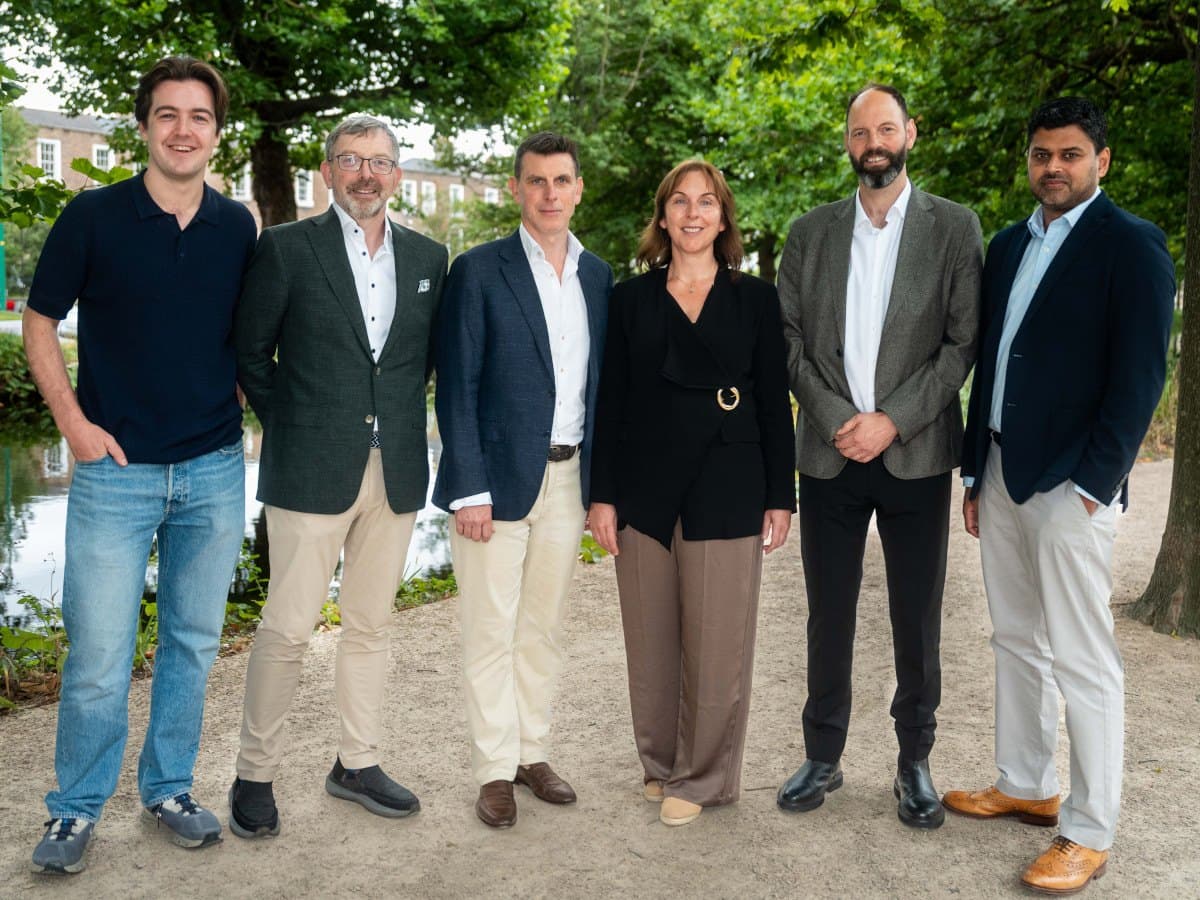
The round was led by Founders Fund, Peter Thiel's venture capital firm, which first backed Halter at its Series A in 2017 and has now returned nearly a decade later with conviction at a dramatically higher scale. Participating investors include Blackbird, DCVC, Bond, Bessemer Venture Partners, NewView, Ubiquity, Promus, and Icehouse Ventures, a mix of global and New Zealand‑based institutional capital that reflects Halter's rare position as a deep tech company that achieved genuine commercial scale outside a major technology hub.
What Halter Has Built and Why It Works
Halter's product is deceptively simple to describe and genuinely complex to build. Each collar is solar‑powered and GPS‑enabled, connecting to a farmer's smartphone through a dedicated app. When a farmer wants to move their herd, they draw a new boundary on a satellite map of their land. The collar then guides each animal toward the new boundary using a sequence of directional audio cues and gentle vibrations. If an animal approaches the edge of a virtual fence, the collar delivers a tone. If it persists, a mild vibration follows. As a last resort, a low‑energy pulse, approximately one‑tenth the strength of a conventional electric fence, redirects the animal.
The collars track individual animal location and health indicators in real time, giving farmers a continuously updated view of every animal in the herd directly from a phone. The system learns individual animal behavior patterns over time, with machine learning models building a behavioral profile for each cow that makes guidance progressively more accurate and effective. Farmers pay between $5 and $8 per animal per month for the service on a subscription basis, a pricing model that converts a traditional capital expenditure in physical fencing into a recurring operating expense.
The commercial results are striking. Farms using Halter report:
- Labour savings equivalent to one full‑time employee per 400 head of cattle.
- Pasture utilisation improvements of 15 to 20 percent through precision grazing management.
- A 92 percent reduction in time spent on herd movement tasks.
- Measurable improvements in land and environmental outcomes through controlled rotational grazing.
Halter has now sold one million solar‑powered collars, a milestone that was not a marketing benchmark but an operational one. One million collars represents one million daily data streams flowing into Halter's machine learning models, creating a training data advantage that competitors without similar scale cannot replicate.
The Journey to $2 Billion: From New Zealand Dairy Farm to Global Agtech Unicorn
Craig Piggott, Halter's founder and CEO, grew up on a dairy farm in New Zealand and studied mechanical engineering at the University of Auckland. The company he built reflects both of those origins: a product that solves an intensely practical farming problem and a hardware system engineered with precision to operate in outdoor environments across multiple seasons, climates, and cattle breeds.
Halter launched commercial operations in New Zealand before expanding to Australia, then entered the United States in 2024 with operations headquartered in Boulder, Colorado. The US expansion has accelerated faster than initial projections. In November 2025, Halter reported that American ranchers had created 11,000 miles of virtual fencing through the platform. By March 2026, that figure had grown to 60,000 miles, a fivefold increase in under six months that reflects both the pace of US adoption and the scale of American cattle operations relative to those in New Zealand and Australia.
In June 2025, Halter raised $100 million in a Series D led by Bond at a $1 billion valuation, becoming one of the rare deep tech companies to achieve unicorn status outside a major global technology hub. Nine months later, that valuation has doubled. The pace of appreciation reflects not speculative re‑rating but demonstrated commercial acceleration across three geographies simultaneously.
Founders Fund partner Amin Mirzadegan captured the investment rationale directly: agriculture is a multi‑trillion dollar industry that feeds the world yet remains one of the least digitised sectors on earth. Halter is changing that by bringing software, sensors, and AI directly into livestock operations in a way that farmers actually adopt. That final phrase matters. The agtech sector has been littered with technically sound products that farmers did not use. Halter's adoption metrics demonstrate it has solved the trust problem that has historically limited technology penetration in agriculture.
Where the $220 Million Is Going
The Series E capital is being deployed across four areas, each representing a distinct phase of Halter's global expansion strategy.
First, the company is deepening operations in its three existing markets of New Zealand, Australia, and the United States, supporting the ranchers already using the system with stronger field teams, product improvements, and customer success infrastructure.
Second, Halter is expanding into Ireland and the United Kingdom before the end of 2026, with early ranch deployments already underway in both countries. These markets are particularly well‑suited to Halter's product because of their grass‑based, pasture‑intensive farming systems and the severe labour shortages affecting agricultural operations across the British Isles.
Third, early expansion is being explored across Canada and further into North and South America, where cattle operations are among the largest in the world and the labour cost dynamics that make Halter economically compelling are equally present.
Fourth, Halter is undertaking its largest‑ever hiring push, with more than 200 new roles focused on product, engineering, and customer‑facing positions at its Auckland headquarters. The company's model of embedding field teams alongside customers to drive adoption is labour‑intensive by design, and the hiring push reflects Halter's commitment to maintaining that model as it scales across six or more countries.
On the product side, Halter is investing in animal health monitoring and pasture management capabilities that extend beyond the core virtual fencing system, building toward a broader operating layer for livestock operations that could eventually support everything from breeding cycle tracking to automated feeding recommendations.
What This Round Means for Global Agtech
Halter's $220 million raise comes against a backdrop of broader agtech investment that has struggled to find its footing after the excesses of 2021. Many agtech companies that raised large rounds during that period targeted indoor farming, food delivery logistics, and biotech approaches that later proved difficult to scale commercially. Virtual fencing is different in character. It solves an immediate, tangible problem: replacing physical infrastructure that is expensive to install, costly to maintain, and incapable of being repositioned remotely. The value proposition is measurable in dollars saved and hours recovered per week.
The competitive landscape in virtual fencing is still developing. Vence in the United States and eShepherd in Australia offer comparable technology, but Halter's one million collar milestone gives it a training data and operational experience advantage that is difficult to close quickly. Norwegian competitor Nofence recently completed Europe's largest agtech raise of 2025 in a Series B, confirming that virtual fencing is attracting capital globally, not just in the Southern Hemisphere markets where Halter began.
Piggott's statement at the announcement was rooted entirely in the farmers using the product rather than the financial milestone: our ranchers need tools that work, and the fact that they are using Halter tells us our technology has earned their trust. This raise lets us bring it to far more of them, and faster. In an industry that has historically treated technology adoption as a generational process, that framing is both the company's commercial strategy and the clearest signal that Halter has crossed the threshold from agtech experiment to operational infrastructure.
Stay informed
Startup news in your inbox
Get important funding rounds, founder stories, and startup updates.
No spam - only important startup updates.