Inertia Enterprises Raises $450 Million: The Twilio Co-Founder's Bet That Fusion Power Can Reach the Grid by 2035
Editorial Team

There are two ways to understand why a startup co‑founded by the man who built Twilio into a $16 billion public company just raised $450 million to build a nuclear fusion reactor. The first is as a story about one entrepreneur's ambition to solve the most consequential problem in energy. The second is as a story about why the moment for fusion power has arrived in a way it never has before.
Both readings are accurate. And together they explain why Inertia Enterprises, announced on February 11, 2026 with $450 million in Series A funding, represents one of the most significant energy technology investments in the current innovation cycle.
The round was led by Bessemer Venture Partners, the 116‑year‑old venture firm that has backed Shopify, LinkedIn, Twilio, Yelp, and Pinterest. Bessemer's participation alongside Alphabet's GV, Modern Capital, and Threshold Ventures reflects a level of institutional conviction in commercial fusion power that would have seemed speculative even three years ago.
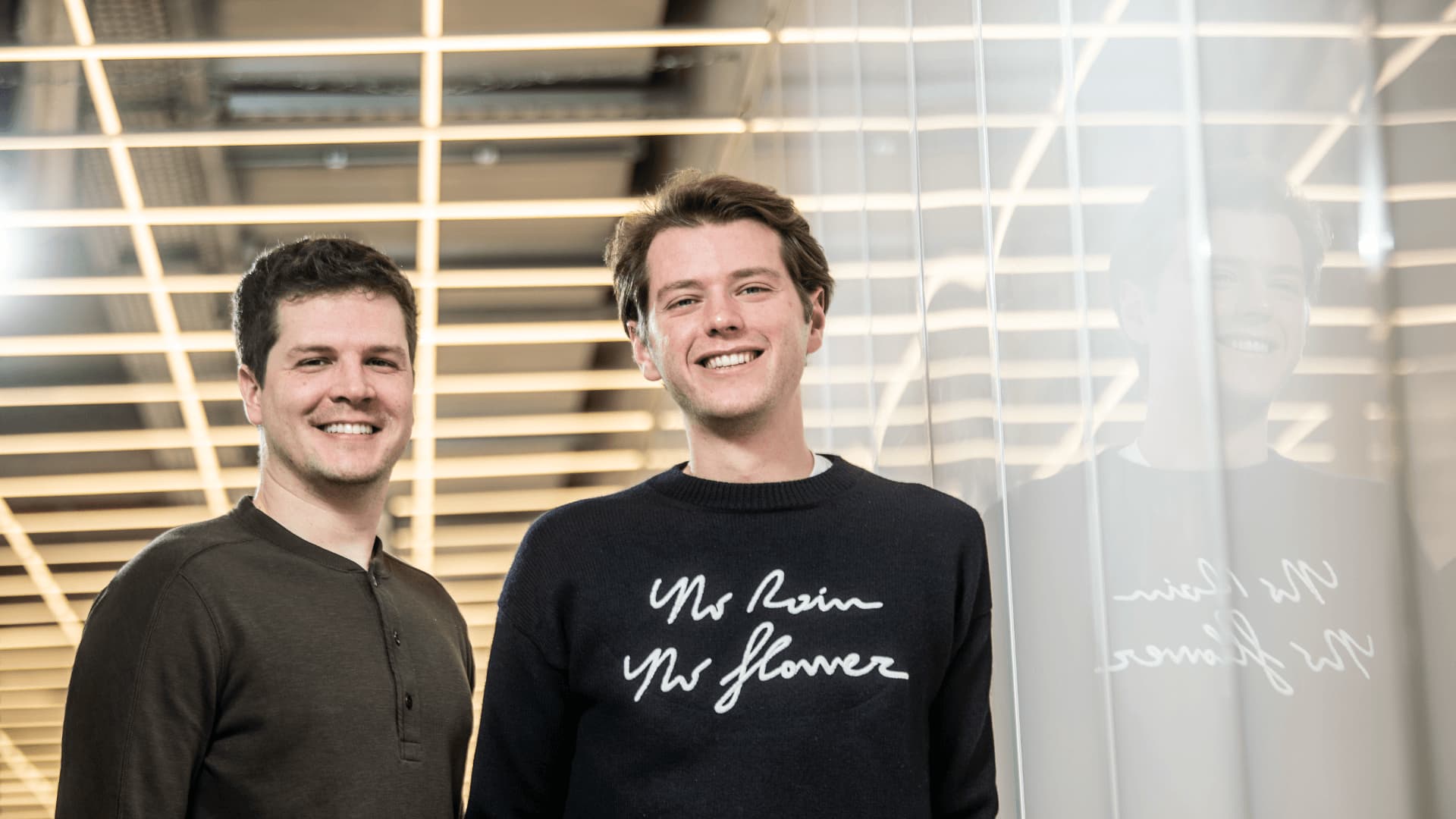
Who Founded Inertia and What Makes This Team Unprecedented
Most fusion startups are founded by physicists. Inertia is different in a way that matters commercially.
Jeff Lawson co‑founded Twilio in 2008 and spent 15 years building it from a San Francisco startup into the global cloud communications platform that powers calling, messaging, and identity verification for companies including Airbnb, Netflix, Uber, and thousands of others. He took Twilio public in 2016, navigated a decade of hypergrowth, and stepped down as CEO in 2023. He did not retire. He started thinking about what comes next.
The problem that captured his attention was energy. Specifically, the gap between humanity's energy demands and its available clean energy supply. Lawson is direct about the context: AI data centers are consuming energy at a pace that existing renewable infrastructure cannot keep up with. Every major AI company is searching for power. Fusion, if it can be made commercial, eliminates that constraint permanently.
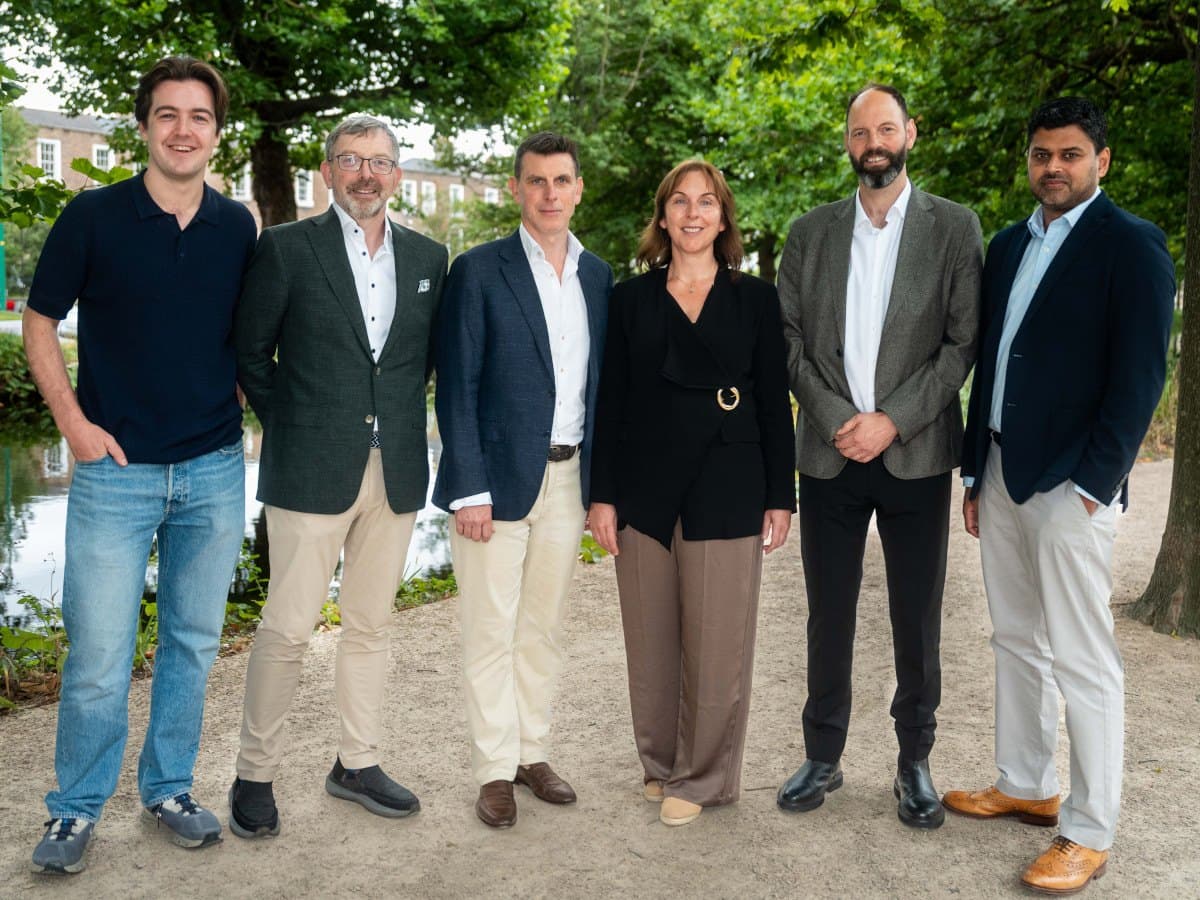
Lawson is joined by two co‑founders whose scientific credentials are as exceptional as his commercial track record.
Annie Kritcher is a physicist at Lawrence Livermore National Laboratory who led the team responsible for the most important experiment in the history of fusion research. On December 5, 2022, the National Ignition Facility achieved scientific breakeven for the first time in history: a fusion reaction that produced more energy than the laser energy delivered to the fuel target. This was not a near‑miss or a marginal result. It was a definitive experimental proof that inertial confinement fusion works. Kritcher has remained at Lawrence Livermore while co‑founding Inertia, a dual commitment that reflects the depth of the collaboration between the national laboratory and the company.
Mike Dunne is a professor at Stanford and former head of the LCLS X‑ray research facility, one of the world's most sophisticated scientific instruments. Dunne helped Lawrence Livermore develop the power plant design concept derived from the NIF's experimental approach, making him the engineer most knowledgeable about translating the NIF's physics results into the architecture of a commercial power plant.
Byron Deeter, partner at Bessemer Venture Partners, captured the investment rationale precisely: "This is our first investment into the direct fusion market because it is the first company we have seen with a clear roadmap to commercial energy that has compelled us to act. The combination of frontier physics expertise and proven company‑building experience makes Inertia unique."
What Inertia Is Actually Building
Inertia's technical approach is inertial confinement fusion, the same method used at the National Ignition Facility. The physics of this approach are distinct from tokamak‑based fusion pursued by Commonwealth Fusion Systems and ITER, and from other alternative approaches taken by companies like TAE Technologies and Helion.
In inertial confinement fusion, high‑powered laser beams are directed at a small fuel target, typically a capsule containing deuterium and tritium, hydrogen isotopes. The lasers compress and heat the fuel simultaneously until the pressure and temperature inside the capsule reach the conditions required for hydrogen nuclei to fuse. The fusion releases energy as heat, which can then drive turbines and generate electricity.
The NIF demonstrated this works. What Inertia must now do is make it commercial. That requires solving two distinct engineering challenges that laboratory experiments do not address.
The first challenge is laser power and repetition rate. The NIF fires its laser once per day. A commercial fusion power plant must fire its laser ten times per second, delivering 10 kilojoules per pulse at that rate. Inertia's primary engineering mission is to build a laser system called Thunderwall, which the company describes as the world's highest‑average‑power laser. Thunderwall is not an incremental upgrade to existing laser technology. It is a new class of laser that does not currently exist anywhere in the world.
The second challenge is fuel target manufacturing. Each fusion shot requires a precisely manufactured fuel target, a small capsule with tolerances measured in nanometers. The NIF produces these by hand, in a process that takes days per target. A commercial plant running at 10 shots per second needs hundreds of thousands of targets per day. Inertia's second engineering track is building the first automated fusion target assembly line, an industrial manufacturing capability with no precedent.
The $450 million from this Series A funds both engineering tracks simultaneously.
The Commercial Roadmap to 2035
Inertia has published a phased commercialization roadmap built around three milestones.
- The first milestone is Thunderwall development and demonstration, proving that the laser system can achieve the required power and repetition rate in a controlled environment. This work begins immediately with the Series A capital.
- The second milestone is construction of a fusion pilot plant, which Inertia has indicated is targeted to begin in 2030. The pilot plant will not deliver power at commercial scale, but it will prove the full integrated system, laser, target manufacturing, reactor chamber, and heat‑to‑electricity conversion, in an operational configuration.
- The third milestone is the first gigawatt utility‑scale fusion power plant delivering electricity to the grid, targeting the mid‑2030s.
Lawson's statement at the announcement was characteristically direct: "Our plan is clear. Build on proven science to develop the technology and supply chain required to deliver the world's highest average power laser, the first fusion target assembly plant, and the first gigawatt utility‑scale fusion power plant to the grid. Inertia is building the team, partnerships, and capabilities to make this real within the next decade."
Why This Raise Signals Something Larger Than One Startup
The timing of Inertia's $450 million raise is not coincidental. Energy has become the most critical infrastructure constraint in the AI economy. Hyperscalers are projected to spend $650 billion on AI infrastructure in 2026, and a growing fraction of that spend is directed at power: securing energy supply agreements, investing in nuclear facilities, and in some cases building dedicated power generation assets specifically to run AI data centers.
Against this backdrop, fusion is not just a climate story anymore. It is an AI infrastructure story. A fusion power plant producing gigawatts of clean, continuous electricity with no fuel supply constraints and no carbon output addresses the most urgent bottleneck in the global AI buildout simultaneously with the most urgent challenge in the global energy transition.
Key considerations that frame why institutional investors are backing fusion now in ways they were not previously include:
- The NIF's breakeven result has been replicated multiple times since the December 2022 landmark, with target gain increasing with each successive experiment. The science is no longer speculative.
- The global fusion startup ecosystem raised approximately $6 billion in 2024, a record that reflected growing institutional acceptance that commercial fusion is a tractable engineering problem rather than an endless research project.
- The AI energy demand crisis is creating customers for fusion power before the technology is commercial, as major technology companies sign long‑term power purchase agreements and invest directly in clean energy infrastructure.
- Bessemer's participation is particularly significant as the firm's first direct fusion investment after decades of watching the market. Bessemer does not make this category of first investment without extensive diligence, which their partner's statement about seeing a "clear roadmap" reflects.
For founders and investors tracking the intersection of climate technology and AI infrastructure, Inertia's $450 million raise is one of the clearest signals yet that the boundary between those two categories is dissolving. Energy, computation, and climate are no longer separate investment theses. They are a single infrastructure challenge, and the startups addressing all three dimensions simultaneously are attracting the largest and most sophisticated capital in the current market.
Stay informed
Startup news in your inbox
Get important funding rounds, founder stories, and startup updates.
No spam - only important startup updates.