
Chift Raises €10.5M Series A To Scale Financial Connectivity Across Europe
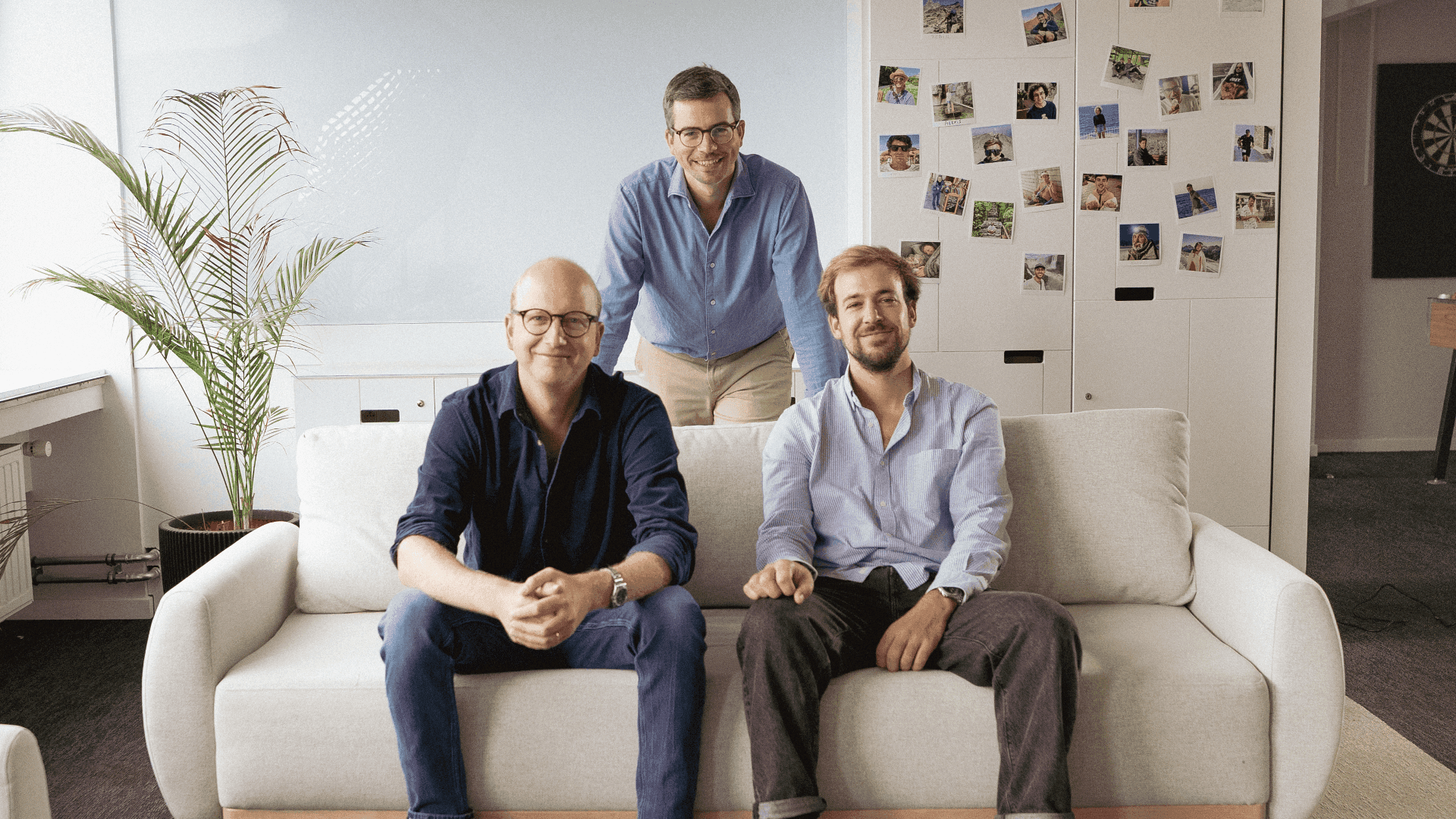
Chift founder Gauthier Henroz , Henry Hertoghe, and Matthieu Hertoghe
Image credit: Chift
Chift, a Brussels based fintech company, has raised 10.5 million euros in a Series A funding round to scale the financial software connectivity platform it has built for software companies across Europe and to push further into AI.
The round was led by BlackFin Capital Partners, a European fintech specialist investor managing more than 4 billion euros in assets, with existing backers Entourage, Shapers, Seeder Fund and Wallonie Entreprendre also increasing their positions. The raise takes Chift's total funding to around 12.8 million euros since the company closed a 2.3 million euro seed round in 2024, meaning the new round is roughly five times the size of that earlier raise.
Chift was founded in 2022 in Brussels by Gauthier Henroz, Henry Hertoghe and Matthieu Hertoghe, three co‑founders who started the company after months of conversations with developers frustrated that European business software products did not talk to each other well. That fragmentation is the core problem Chift's infrastructure addresses. Businesses increasingly run their finances across multiple specialised tools, but connecting those systems typically requires a software provider to build and maintain separate integrations for each platform and, given how differently financial software is regulated and structured across the continent, for each national market as well.
Chift's answer is a single unified API that lets a software company integrate once and reach more than 120 financial systems across six categories, spanning accounting, invoicing, point of sale, e‑commerce, payments and property management. Rather than a software provider building and maintaining dozens of point to point integrations, Chift's infrastructure sits underneath as the connective layer, similar in concept to how Plaid built a single connectivity layer for bank account access in the United States, applied here to a broader set of financial software categories across Europe's more fragmented regulatory landscape.
The company has grown quickly on the back of that model. Chift says its revenue has increased more than tenfold since its 2024 seed round, and the platform now serves more than 50,000 SMEs across more than 10 European countries through upwards of 150 software partners that have integrated Chift into their own products. That growth has come inside a market the company's founders argue is structurally harder to build in than most, since financial data in Europe sits across dozens of local systems spread over 27 countries that were never designed to interoperate.
Chift's co‑founder and chief executive Gauthier Henroz has pointed to two forces reshaping the market at the same time, artificial intelligence and the rollout of e‑invoicing requirements across European jurisdictions, arguing that both are effectively rebuilding the financial software landscape from the ground up. AI based financial products depend on being able to reach data that currently sits locked inside separate business systems, while wider adoption of electronic invoicing is pushing more financial processes onto digital platforms in the first place. Henroz has described interoperability as the defining problem in European small business finance precisely because of that fragmentation across markets.
Pauline Brunel, investment director at BlackFin Capital Partners, framed the firm's decision to lead the round around the same underlying difficulty, noting that financial data connectivity is genuinely hard to build in Europe given how many local systems were never designed to talk to one another, and arguing that AI raises the stakes further since AI agents are only ever as capable as the data they can actually access. Brunel previously led BlackFin's Series A investment into climate investing platform Carbon Equity, and BlackFin's fintech focused fund recently completed a 180 million euro closing, giving the firm capacity to back Chift with follow‑on capital if the company continues to execute at its current pace.
The new funding will go toward two main priorities. The first is geographic expansion, with Chift targeting entry into Spain, the UK, the Nordics, Germany and Italy as it works toward what the company describes as an ambition to become Europe's go‑to provider of financial connectivity by 2028. The second is deepening what Chift calls its agentic layer, building integrations that configure themselves automatically within minutes rather than requiring manual setup for each customer, and infrastructure that allows AI agents to act on financial data directly, with appropriate controls in place. The company is hiring for 15 roles across Europe through the second half of 2026 to support that expansion.
The scale of the opportunity Chift and its investors are pointing to is substantial, with Europe and the UK home to roughly 30 million SMEs and an accounting services market that remains largely manual by comparison with more consolidated markets elsewhere. As B2B software increasingly embeds financial functionality directly into products rather than treating it as a separate category, and as AI tools become more central to how businesses manage their finances, the underlying connectivity problem Chift is built to solve looks likely to grow rather than shrink. Whether Chift can convert that structural tailwind into the durable, category defining infrastructure position its investors are backing will depend heavily on execution across the five new markets it is now entering at once.
Topics
Stay informed
Startup news in your inbox
Get important funding rounds, founder stories, and startup updates.
No spam - only important startup updates.