SCI Semiconductor Raises £5M as Its Memory-Safe Chip Goes From Concept to 'Overwhelming Demand'

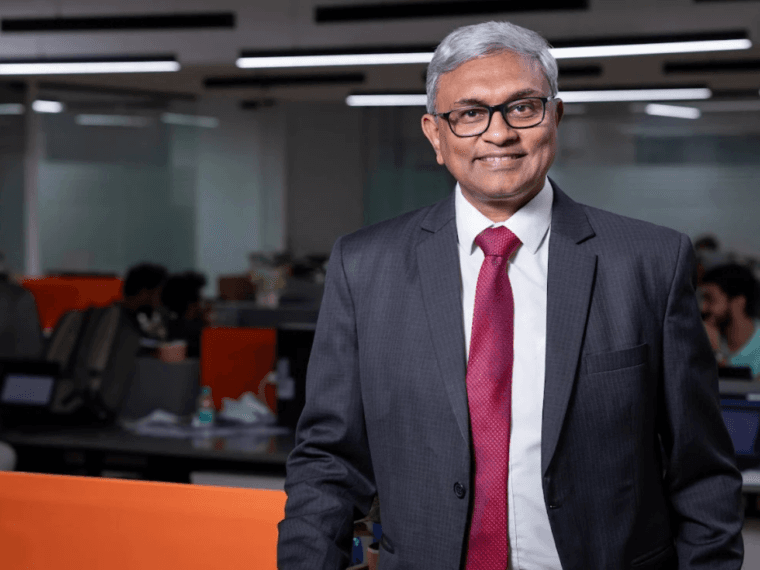
SCI Semiconductor founder Haydn Povey(CEO), Krishna Anne, and David Chisnall
Image credit: SCI Semiconductor
SCI Semiconductor, the Sheffield headquartered company behind what it describes as the world's first memory‑safe computer chip, has raised £5 million to accelerate production in response to what it calls overwhelming demand.
The heavily oversubscribed round was led by two Northern Powerhouse Investment Fund II fund managers, PXN Ventures and Mercia Ventures, responsible respectively for NPIF II - PXN Equity Finance and NPIF II - Mercia Equity Finance. Specialist cybersecurity seed investor Osney Capital, US based Black Opal Ventures, and a number of private investors also participated. The round follows a £2.5 million investment led by the same NPIF II fund managers roughly a year earlier.
SCI Semiconductor was founded in 2022 by industry veteran Haydn Povey, Silicon Valley executive Krishna Anne, and Dr David Chisnall, a leading Microsoft Research specialist, joined by academics from the Universities of Cambridge and Manchester. The company's technology builds on CHERI, short for Capability Hardware Enhanced RISC Instructions, a framework developed at Cambridge University and backed by both UK and US governments as a way to fundamentally redesign how computer memory is accessed at the hardware level, rather than continuing to patch vulnerabilities in software after they are discovered.
The problem SCI is targeting is both large and persistent. Memory safety flaws are the key factor behind roughly 70 percent of cyberattacks, according to the company. Traditional software architecture allows memory to be accessed relatively freely, a design choice that gives developers flexibility but also creates the exact vulnerabilities hackers most commonly exploit, and one that can bring down an entire system when something goes wrong, as happened during the widely reported 2024 CrowdStrike outage. The UK's National Cyber Security Centre has explicitly warned that software patching alone may no longer provide sufficient protection, and is urging companies to adopt memory‑safe technology directly rather than continuing to rely on reactive fixes.
Povey, SCI's chief executive, framed the shift in urgency around how AI has changed the threat landscape. "The problem of memory safety is finally being taken seriously," he said. "As AI is identifying hundreds of critical vulnerabilities, it is clear that huge swathes of technology are open to attack. Additionally with so much code generated by AI, the question is how much of it is fit for purpose and what risk that could pose to systems." He added that demand has surged specifically since the company unveiled its ICENI chip range earlier this year: "Memory safe technology helps overcome these challenges. Since unveiling our ICENI chip earlier this year, demand has been overwhelming. The funding will enable us to step up production and develop a new generation of chips here in the UK."
SCI's ICENI chips are designed and packaged in the UK, with fabrication carried out in Germany. The company has already fabricated its first devices and secured orders worth more than £2 million, alongside government contracts totalling £7.7 million and partnerships agreed with Google Research and Microsoft, a level of commercial and institutional validation that is relatively advanced for a semiconductor startup only three years removed from its founding.
The timing of the raise lines up directly with regulatory pressure building across Europe. SCI's chip is designed to help customers meet many of the reporting requirements under the EU's Cyber Resilience Act, which comes into force this month and introduces mandatory cybersecurity requirements for products with digital elements sold within the European Union. That regulatory tailwind gives SCI's memory‑safe positioning a concrete, near‑term compliance driver on top of the broader, ongoing push toward hardware‑level security across the industry.
Mercia Ventures investment director Will Schaffer pointed to the strength of SCI's founding team as central to the firm's continued backing. "SCI Semiconductor brings together some of the leading minds in the industry," Schaffer said. "They have developed an elegant solution to a trillion‑dollar problem, one that has so far eluded other players, and the business has quickly gained traction."
With the new capital, SCI plans to substantially expand its core engineering and operational teams, aiming to smooth its production cycles and speed up distribution timelines as it works to meet demand that has already outpaced its current manufacturing capacity. The company is a founding member of the broader CHERI Alliance, giving it access to collaborative development work across the wider CHERI ecosystem while maintaining its own commercial differentiation through specific chip implementations and direct customer relationships. Whether SCI can scale production quickly enough to convert its existing order book, government contracts, and Cyber Resilience Act‑driven demand into a durable, self‑sustaining semiconductor business, rather than remaining a promising but capacity‑constrained early mover, will likely determine how much of the "trillion‑dollar problem" it has identified the company is ultimately able to capture.
Topics
Stay informed
Startup news in your inbox
Get important funding rounds, founder stories, and startup updates.
No spam - only important startup updates.