Clay Wanted to Teach People to Code. Eight Years Later, That Pivot Is Worth $7.1B
Editorial Team

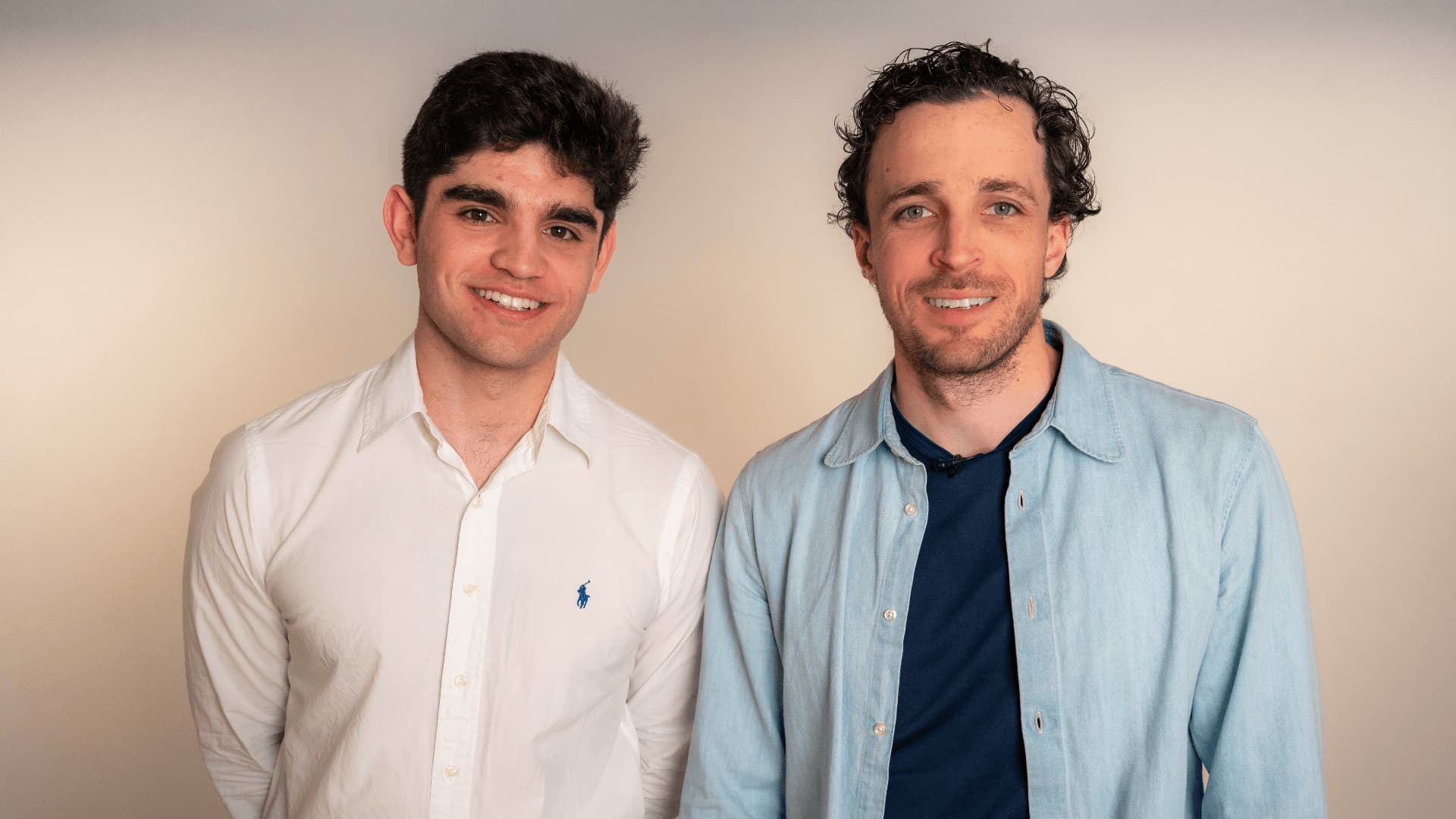
Clay founder Kareem Amin(CEO) and Varun Anand
Image credit: Clay
Clay, the New York based go‑to‑market platform, has raised 115 million dollars in Series D funding led by Wellington Management, pushing its valuation to 7.1 billion dollars, more than double the 3.1 billion dollars it was worth just over a year ago.
Existing backers Sequoia Capital, StepStone, Andreessen Horowitz's Perennial strategy, Meritech, DST, Alphabet's growth‑stage fund CapitalG, BoxGroup, Boldstart, Bloomberg Beta, and Evolution Equity Partners all returned to participate in the round. The valuation trajectory has been unusually rapid even by current AI‑era standards: Clay closed its 100 million dollar Series C at 3.1 billion dollars in August 2025, saw a 5 billion dollar employee tender offer in January 2026, and has now more than doubled that tender‑offer mark again just eight months later.
Clay was founded by chief executive Kareem Amin and chief technology officer Nicolae Rusan, who met at McGill University and later worked together at Microsoft. According to Tech Funding News, the pair did not originally set out to build a sales tool at all. When they founded the company in 2017, their goal was to make programming accessible to people who couldn't code, an idea that went through several pivots over eight years before arriving at its current, considerably narrower and more commercially successful form.
That current form centers on giving business‑to‑business sales and marketing teams a unified data and automation layer. Amin described the company's evolution in stages: "We started by aggregating the best data for B2B companies. Then we built the infrastructure to run any personalized campaign on top of it. Now we're building agents that can help grow your company for you." The company frames its newest generation of AI agents as a self‑learning revenue engine, one designed to determine the best go‑to‑market strategy for a given company and then actually execute that strategy, learning from every campaign it runs, predicting the next best action, and improving over time rather than executing a static, pre‑set playbook. Clay has coined the term GTME, short for go‑to‑market engineer, to describe the emerging professional role built around directing these systems, and says thousands of people now identify with that title, gathering at nearly 100 Clay Clubs held in cities from Bangalore to Boston and Lahore to Lisbon.
Clay's customer base has scaled substantially alongside its valuation. The company says more than 17,000 teams now build on its platform, including 80 percent of the Forbes AI 50, alongside high‑profile customers such as Anthropic, OpenAI, Google, Stripe, Visa, UPS, ElevenLabs, Workday, and Siemens. The New York Times has reported that Clay's annualized revenue is growing quickly, though the company has not disclosed the specific figure publicly.
The round places Clay within an increasingly crowded and fast‑scaling category of AI‑driven sales and go‑to‑market startups. Regie.ai raised a 30 million dollar Series B in February, bringing its total funding past 50 million dollars, while 11x, which builds fully autonomous digital workers rather than a workflow layer sitting on top of a company's existing sales stack, has raised roughly 76 million dollars since its Benchmark‑led Series A. Established data providers Apollo.io and ZoomInfo remain active competitors in the underlying data layer as well. Clay has positioned its ambitions more broadly than any single one of these rivals, arguing it isn't trying to replace a specific sales role but to become the infrastructure sitting underneath the entire go‑to‑market function, spanning data, campaign execution, and now autonomous agents, rather than competing narrowly against outbound‑focused AI sales development tools.
That broad framing is also where some of the sharper scrutiny of the round has focused. As one outlet observed, Clay's valuation has more than doubled twice within thirteen months without a matching public revenue disclosure to independently verify the growth underpinning those jumps, and the shift toward autonomous agents that plan and execute campaigns rather than simply supplying data pushes Clay into more direct competition with established sales‑engagement suites, customer‑data platforms, and workflow automation tools, a considerably more crowded and contested part of the enterprise software stack than the data‑enrichment niche the company originally built its business around.
The broader market backdrop helps explain investor willingness to underwrite that valuation despite the disclosure gaps. The global AI‑in‑sales market was valued at an estimated 50.8 billion dollars in 2026 and is projected to reach 383 billion dollars by 2034, according to Global Market Insights, a scale of projected growth large enough to support multiple well‑capitalized competitors simultaneously rather than a single winner‑take‑all outcome. Clay plans to direct the new funding toward continued product development ahead of its second annual user conference, Sculpt, scheduled for October 8 in San Francisco. Whether Clay's bet on becoming broad, foundational go‑to‑market infrastructure, rather than a narrower and more easily defensible point solution, proves durable as competition intensifies across data, execution, and now autonomous agents simultaneously will likely be the clearest test of whether this valuation reflects genuine, sustainable market leadership or simply the current peak of investor enthusiasm for anything labeled an AI agent.
Topics
Stay informed
Startup news in your inbox
Get important funding rounds, founder stories, and startup updates.
No spam - only important startup updates.