Rebaba, a Stockholm based energy technology company, has raised 4.6 million dollars
Editorial Team
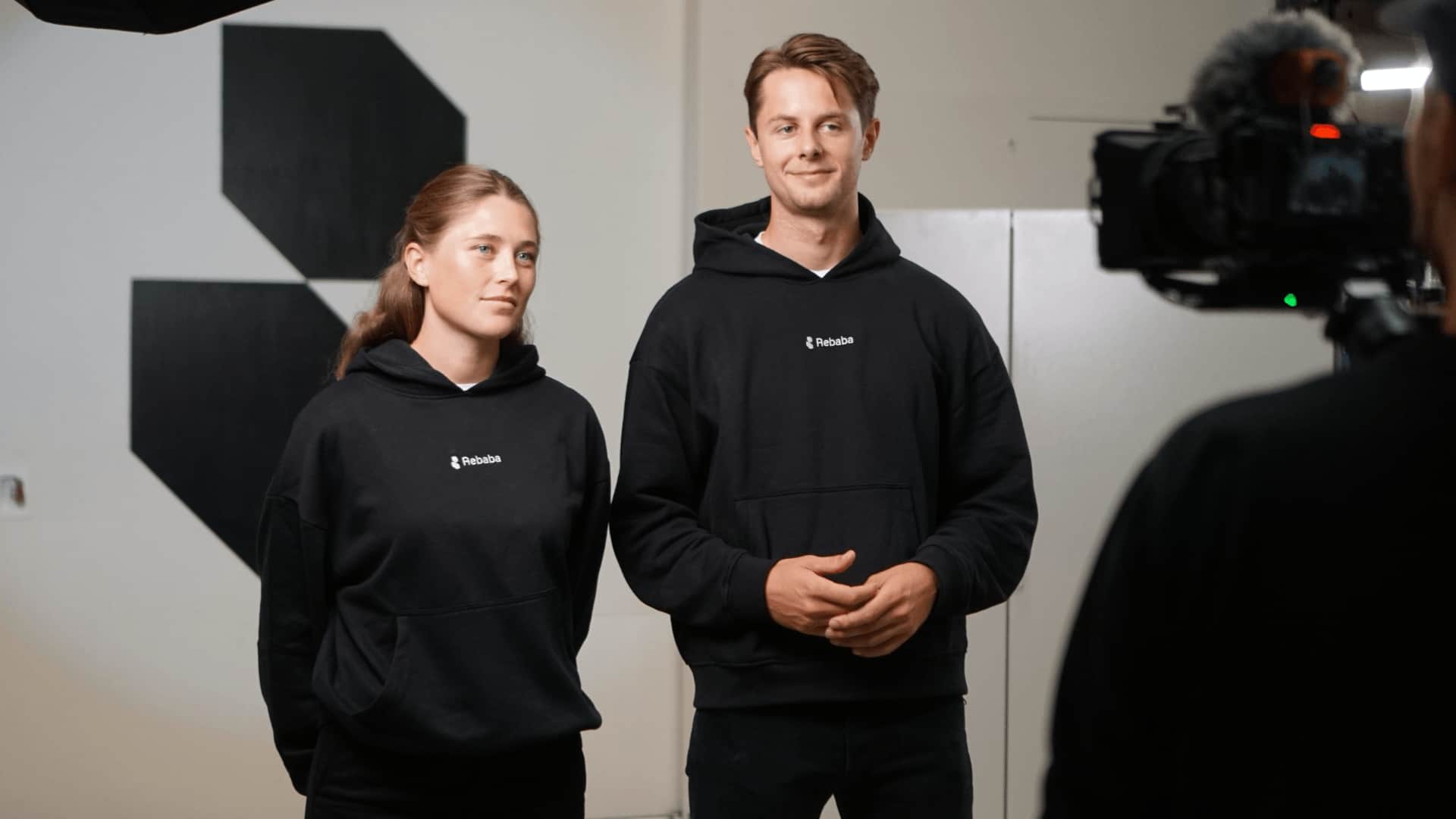
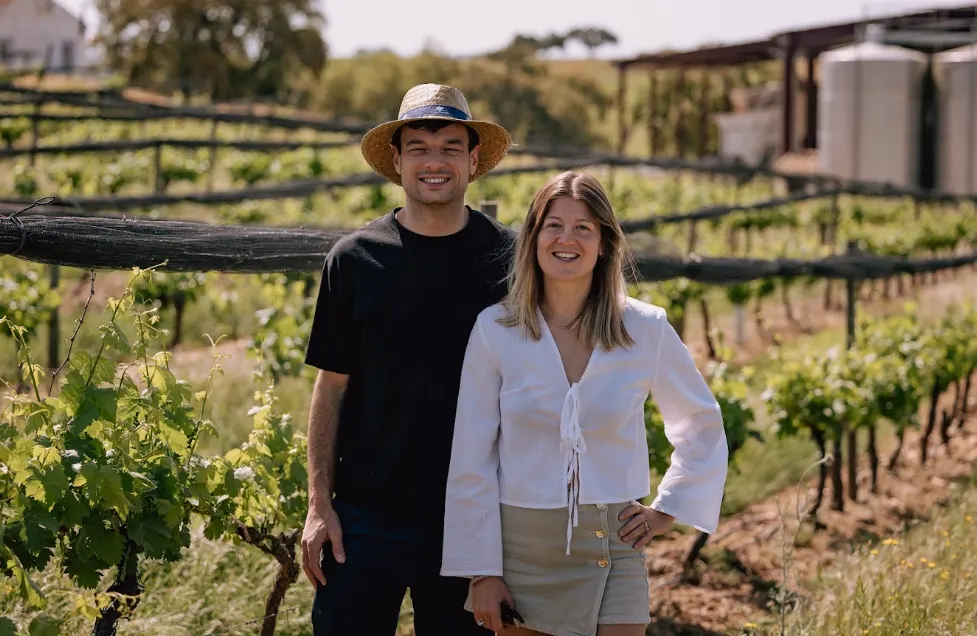
Rebaba founder Paula Runsten (CEO) and Felix Kruse (CTO)
Image credit: Rebaba
Rebaba, a Stockholm based energy technology company, has raised 4.6 million dollars, SEK 44.1 million, in an oversubscribed seed funding round to expand its stationary energy storage systems built from repurposed electric vehicle batteries.
The round was led by Sistafund, a French venture capital firm, alongside EIT Urban Mobility, with participation from existing shareholders Rockstart and The Blue Minds Company, as well as new European investors. Rebaba was founded in 2023 by chief executive Paula Runsten and chief technology officer Felix Kruse.
Runsten's background gives the company's positioning a pointed edge. She spent years at Northvolt, the Swedish battery manufacturer that became one of Europe's most closely watched clean energy companies before accumulating 5.8 billion dollars in debt tied to its capital‑intensive gigafactory model, a structure that ultimately contributed to the company's well documented financial collapse. Rebaba's own unofficial motto runs directly counter to that approach: "We don't need gigafactories."
Rather than manufacturing new battery cells from raw materials, an approach requiring enormous upfront capital investment in dedicated production facilities, Rebaba combines electric vehicle batteries recovered from the market with its own patent‑pending technology to build stationary storage systems for residential, commercial, and industrial customers. The underlying economics rest on a simple observation: EV batteries are typically retired from vehicles well before they reach the true end of their usable life, often retaining an estimated 70 to 80 percent of their original capacity when removed from a car. For stationary applications, where the weight and physical size constraints that matter enormously in a moving vehicle become largely irrelevant, that remaining capacity still has substantial commercial value.
Runsten pointed to rising electricity demand, accelerating electrification, and continued renewable energy deployment as the forces driving increased need for storage capacity, arguing that repurposing existing EV batteries can help meet that demand while reducing reliance on batteries manufactured specifically and only for stationary storage use cases. Rebaba's systems are designed to help customers store locally generated energy, shift electricity consumption to different times of day, reduce peak demand charges, and participate in grid‑balancing services that pay for flexible, dispatchable capacity.
The company currently offers two products. Companion is a compact, cabinet‑based system with 40 kilowatt‑hours of capacity, aimed at residential and smaller commercial applications. Containerised is built for larger commercial and industrial installations requiring substantially more storage capacity. Kruse, Rebaba's co‑founder and CTO, described the technical philosophy underpinning both products: "The company's platform has been designed to work with different types of electric vehicle batteries while using standard components for other parts of the storage system. By keeping the complexity within our core technology, we can assemble the rest of the Rebaba system from standard, locally available components." That approach lets Rebaba source battery modules from a variety of EV manufacturers rather than depending on a single supplier, while still assembling systems using widely available components for everything outside its proprietary battery integration technology.
Rebaba shifted to its current production facility, which it calls its CircularHub, in Stockholm at the beginning of 2025 and now handles all of its manufacturing in‑house. According to the company, every system it has installed to date is already profitable, and demand is currently outpacing what the 16‑person team can supply, a dynamic that directly motivated this funding round. Rebaba positions itself within a broader European battery storage sector that includes companies such as Berlin based FION Energy and Paris based ZE Energy, but the company argues its specific focus on reusing existing batteries rather than manufacturing new ones is what differentiates it from most of that competitive set.
With the new capital, Rebaba plans to lift its Stockholm CircularHub production capacity to 40 megawatt‑hours annually, hire four additional employees, and take its first steps toward opening additional production hubs elsewhere in Europe as it moves beyond its current Swedish commercial deployments. Independent analysis of the round has noted that while Rebaba's modular approach, potentially allowing individual components to be replaced without retiring an entire installation, could meaningfully strengthen the long‑term economics of its systems if proven at scale, the company has not yet published detailed data on how it balances battery modules of different ages within a single system, or how warranty responsibility is divided between the battery supplier, system integrator, and site operator. Publishing that kind of fleet performance data as more systems come online would help move Rebaba's pitch from a compelling circular economy narrative toward a fully underwritten infrastructure procurement decision for larger commercial and industrial customers, a transition that will likely determine how far beyond Sweden the company's second‑life battery model can realistically scale.
Topics
Stay informed
Startup news in your inbox
Get important funding rounds, founder stories, and startup updates.
No spam - only important startup updates.