Limetax Raises €36M To Build An AI Powered Roll-Up Of Germany's Tax Firms


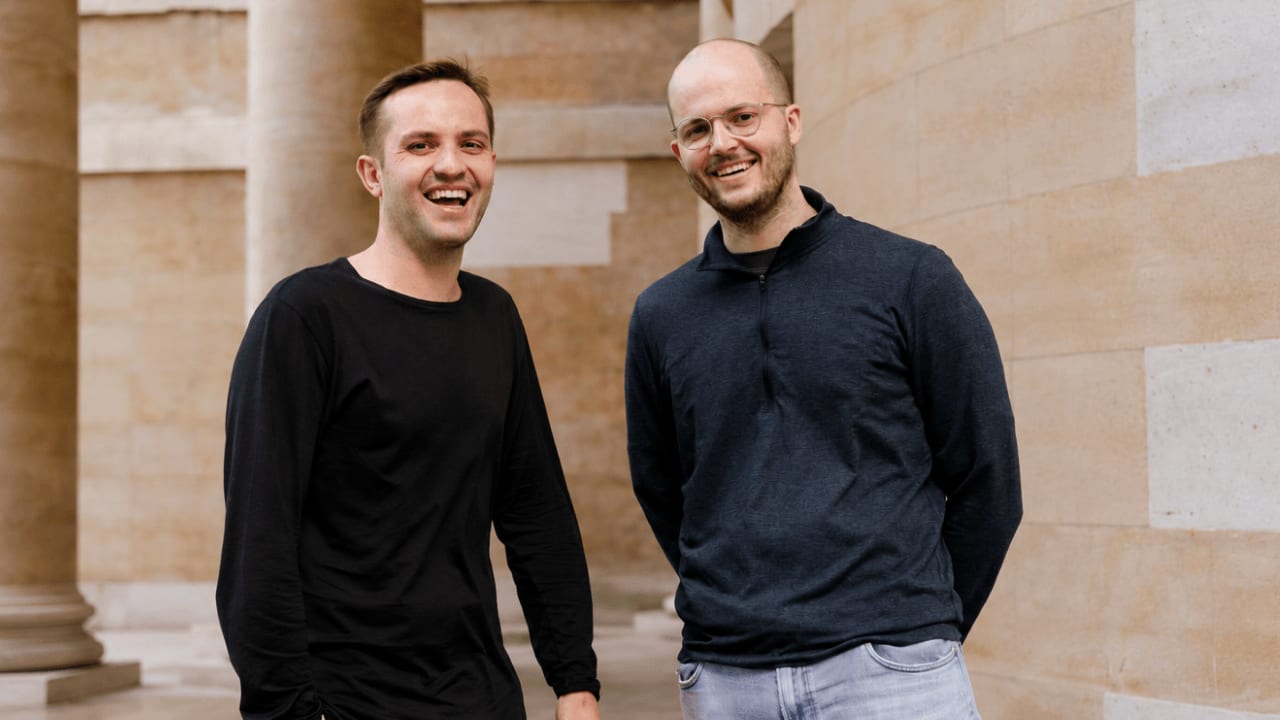
Limetax founder Christoph Gamon, Maximilian Meyer, and Christoph Dansard
Image credit: Limetax
Limetax, a Berlin startup building an AI powered group of German tax and accounting firms, has raised 36 million euros in a package structured as 6 million euros in pre‑seed equity alongside a 30 million euro bank loan.
The equity portion was led by Motive Partners, a New York based investor focused on financial and professional services technology. The debt facility gives Limetax capital specifically earmarked for acquiring existing tax practices, a detail that separates its funding structure from a typical software startup raise.
The company was founded by Christoph Gamon, Maximilian Meyer and Christoph Dansard, three founders whose backgrounds sit at the intersection of operations, finance and engineering. Gamon co‑founded and served as chief financial officer of Razor Group, the Amazon aggregator that scaled toward roughly 500 million dollars in revenue, and previously worked at Rocket Internet and in investment banking at UBS in London. Meyer was also on the founding team at Razor Group, where he led an operations division that grew past 100 employees, and worked earlier at Lazard and N26. Dansard brings a stronger technical background, having been a founding engineer at Augustus, the fintech company formerly known as Ivy. The wider Berlin team includes people who previously worked at Taxfix, McKinsey, EY, Buena, Raisin and ETL.
The problem Limetax is targeting is a structural one inside Germany's tax advisory profession. Firms are struggling to recruit enough qualified staff even as tax regulation grows more complex, and a large share of the time advisers do have goes into repetitive administrative work such as data collection, bookkeeping and deadline tracking, leaving less capacity for higher value advisory conversations with clients. Rather than selling software into that market and hoping individual firms adopt it on their own, Limetax's approach is to bring established firms together under a single group structure and embed its proprietary platform directly into how those firms already operate.
That platform runs on top of DATEV, the software system that underpins the workflows of most of Germany's roughly 60,000 tax advisers, and coordinates a set of AI agents across bookkeeping, payroll processing and the preparation of financial statements. The company has been explicit that a human adviser remains required to check the output of those agents, since legal responsibility for filings and advice stays with the licensed professional rather than the software.
The roll‑up strategy behind Limetax mirrors an approach Motive Partners has already backed elsewhere in German professional services, having also funded LawX, a similar consolidation play built around notaries. That pattern suggests Motive Partners sees the broader professional services sector in Germany, much of it dependent on aging software infrastructure and facing a real shortage of qualified staff, as fertile ground for AI native roll‑ups more generally, rather than viewing Limetax as an isolated bet.
Whether that combination of firm consolidation and embedded AI tooling succeeds in a heavily regulated profession like tax advisory remains an open question, and one that will likely become clearer at the company's next funding round. Razor Group itself, where two of the three founders built their operating experience, ran into difficulties after rapid, acquisition driven growth in the Amazon aggregator space, and some of the same execution risks around integrating many small acquired businesses into one coherent operating model apply here as well. The tax advisory sector carries additional constraints that Amazon aggregation did not, including licensing requirements, client confidentiality obligations and a profession that has historically been slow to change its core software stack away from DATEV.
Limetax enters a German tax technology market that has already seen several AI focused entrants this year. Munich based Skalar raised 12 million euros to build an AI first tax advisory practice from scratch rather than through acquisition, while smaller pre‑seed stage AnyTax raised 1 million euros earlier to modernise tax infrastructure aimed at younger consumers. Limetax's roll‑up model, buying up existing firms and their client relationships rather than building a client base from zero, represents a distinct bet within that same wave, one that trades slower organic growth for immediate scale and an established base of paying clients from the moment each acquisition closes. The 30 million euro debt facility underscores how central that acquisition strategy is to the company's plan, giving it capital specifically to keep buying firms as it works to prove the AI layer can meaningfully change how those firms operate once absorbed into the group.
Topics
Stay informed
Startup news in your inbox
Get important funding rounds, founder stories, and startup updates.
No spam - only important startup updates.
Comments
Text only. No links or images.
No comments yet.