
Monaco AI Launches with $35 Million: The Startup That Wants to Be the Cursor for Sales
Editorial Team
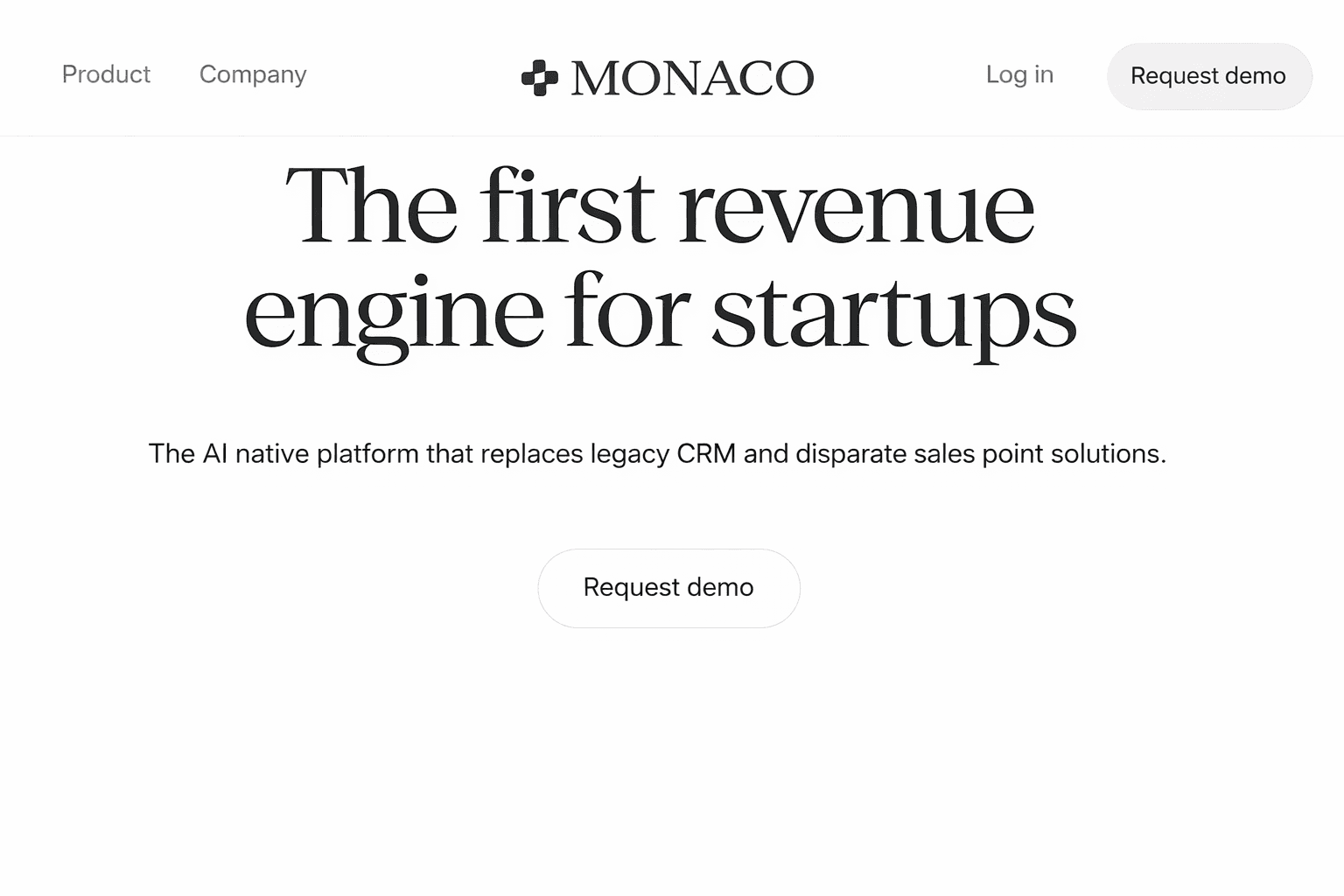
The sales technology market has needed a reckoning for years. Salesforce, which was revolutionary when Marc Benioff built it in 1999, is a product designed for an era when software's job was to record what humans did, not to do things autonomously. HubSpot, which positioned itself as the more accessible alternative, follows the same paradigm. Both platforms are fundamentally reactive: they wait for a salesperson to log a call, update a record, or manually trigger a workflow. Neither was designed for a world where AI agents can initiate outreach, qualify prospects, draft follow‑ups, and update records without a human touching a keyboard.
That gap is exactly what Monaco is targeting. On February 11, 2026, the San Francisco‑based startup emerged from stealth with $35 million in funding and a product that CEO Sam Blond described using a specific analogy: "There definitely is not the Cursor for sales. But there will be." Monaco intends to be that product.
Who Built Monaco and Why It Matters
The founding team at Monaco is one of the most commercially credible in the current AI startup landscape, and not in the way that most AI founding teams are credible. These are not researchers who built a large language model and then asked what to do with it. These are operators who have spent their careers in the hardest part of building a technology company: getting customers to pay.
Sam Blond served as Chief Revenue Officer at Brex, the corporate card and fintech startup that reached a multi‑billion dollar valuation in under five years. After Brex, Blond joined Founders Fund as a partner, spending 18 months on the investment side before deciding that building was more suited to him than backing. He left Founders Fund and immediately started Monaco, drawing on everything he had observed about why early‑stage startups fail at sales.
His co‑founders are equally well‑matched to the problem.
- Brian Blond, Sam's brother, is a partner at Human Capital and was previously at Sutter Hill Ventures. Like Sam, he spent years in sales operations before moving to the investor side, giving Monaco two co‑founders who have experienced the sales problem from inside companies and from the portfolio view.
- Abishek Viswanathan previously served as Chief Product Officer at both Apollo.io, one of the most widely used sales intelligence platforms in the world, and Qualtrics, the enterprise experience management company. He understands the product landscape that Monaco is entering at a depth that most founders cannot match.
- Malay Desai was Senior Vice President of Engineering at Clari, the revenue intelligence platform used by enterprise sales teams globally. The infrastructure expertise required to build a reliable, production‑grade sales platform at scale is built into Monaco's engineering leadership.
Peter Thiel, partner at Founders Fund, delivered the most concise endorsement in the funding announcement: "No product sells itself, though Monaco comes close."
The Investor Coalition That Validates the Thesis
Monaco raised $35 million across two rounds: a $10 million seed and a $25 million Series A, both led by Founders Fund, with Human Capital participating. The institutional backing is strong. The angel backing is extraordinary.
- Patrick and John Collison, the brothers who founded Stripe and built it from a two‑person startup into a company valued at over $90 billion, invested personally. The Collisons' investment in a B2B sales platform for early‑stage startups is not coincidental. They have watched thousands of Stripe‑integrated companies struggle and sometimes fail because they could not build repeatable revenue. Monaco is a direct solution to a problem they have observed at massive scale.
- Garry Tan, President and CEO of Y Combinator, invested personally. Tan oversees an organization that has funded thousands of startups and has seen which ones succeed in their first year of commercial activity. His investment signals that Monaco's approach is aligned with what YC believes early‑stage companies actually need.
- Neil Mehta, founder of Greenoaks Capital, one of the most selective and highest‑returning venture capital firms of the past decade, also backed the round.
- Additional angel investors include participants from Alt Cap, Mantis, and Saga VC.
The combination of Founders Fund as institutional lead, Stripe's founders, YC's president, and Greenoaks as personal backers describes a funding coalition that has collectively seen thousands of B2B companies succeed and fail. Their alignment behind Monaco is a meaningful signal.
What Monaco Actually Does
Monaco's product is built around a central insight that Blond has articulated clearly: early‑stage startups waste enormous amounts of time assembling a sales stack, learning how to use it, generating outbound sequences, and managing the administrative overhead of sales operations. That time is time not spent on product development, customer conversations, or anything else that creates value. Monaco is designed to eliminate that overhead.
The platform provides four core capabilities.
First, automated TAM construction and scoring. Monaco ingests a startup's description and automatically builds a total addressable market ranked by fit, incorporating signals including existing connections, hiring activity, web behavior, and funding stage to produce a prioritized list of target accounts. This process, which previously required a senior revenue operations hire and weeks of work, takes two days in Monaco's public beta.
Second, buyer identification and outreach generation. The platform identifies the specific individuals at target accounts most likely to be decision‑makers or champions for the startup's product, then generates personalized outreach sequences based on embedded go‑to‑market methodology. The sequences are executed by AI agents, monitored and guided by Monaco's human sales experts.
Third, and most critically, human‑in‑the‑loop expert oversight. Monaco does not attempt to replace salespeople with AI. This is a deliberate philosophical choice that separates it from the wave of AI SDR tools, including 11x, Artisan, and 1mind, that have marketed themselves as full human replacements. Blond has watched enough AI sales tools deployed across Founders Fund's portfolio companies to know that fully autonomous AI outreach produces hallucinations, fails at complex qualification, and damages relationships when it goes wrong. Monaco's model keeps experienced sales professionals embedded in every customer relationship, monitoring AI outputs, correcting errors, and handling all actual customer meetings personally.
Fourth, meeting logistics and CRM record management. The platform handles note‑taking during customer meetings, drafts follow‑up communications, and keeps the CRM record current automatically. This eliminates the administrative burden that consumes a significant portion of most salespeople's time.
The Market Monaco Is Entering and Why Now Is the Right Moment
The AI sales technology market in early 2026 is extraordinarily crowded. Y Combinator alone has graduated hundreds of sales‑focused startups in the past two years. Attio, Clay, and Conversion are well‑funded competitors. The incumbents, Salesforce, HubSpot, Zoho, and ZoomInfo, are all building their own AI and agentic capabilities.
Blond's argument for why this crowded market is still winnable is direct. Every incumbent was designed for a different era of software. Salesforce and HubSpot were built when software's job was to be a system of record, a database where humans logged their activity. AI‑native design starts from a different premise: the software takes action autonomously and records what it did, rather than waiting to be told what happened. None of the incumbents can rebuild their core architecture around this premise without destroying the product that their existing customers use. Monaco is building the right product from scratch at the exact moment when the technology makes this approach viable.
The public beta pricing is a flat fee, currently discounted, with broader rollout and pricing transparency expected when the product exits beta. Monaco is currently targeting seed and Series A companies specifically, a segment of the market where Blond and his team have direct operational experience and where the need for affordable, effective sales infrastructure is most acute.
Stay informed
Startup news in your inbox
Get important funding rounds, founder stories, and startup updates.
No spam - only important startup updates.