TaiSan Raises £4.65 Million to Build Sodium-Ion Batteries That Need No Lithium, Cobalt, or Copper

Every mainstream battery on the market today depends on a handful of minerals whose supply chains are concentrated in a small number of countries, priced by geopolitical risk as much as by chemistry, and subject to the kind of disruption that can strand entire industries overnight. Cambridge and London‑based TaiSan was founded specifically to build around that dependency, and the startup has now closed an oversubscribed £4.65 million seed round to bring its quasi‑solid‑state sodium‑ion battery platform to the point of manufacturer pilot testing.
The round was co‑led by Eos Advisory and the Midlands Engine Investment Fund II, the latter investing via Mercia Ventures. New investors joining the syndicate include AFI Ventures, EverQuest Capital Partners, Adeline Arts & Science, Techmind, and angel investor François Badelon. Returning backers EIT InnoEnergy, TSP Ventures, Exergon, and Heartfelt VC all participated again, reflecting confidence from the earliest institutional supporters. The round also includes a £700,000 grant from Innovate UK's Investor Partnerships Programme, adding non‑dilutive capital from a body that has supported the company's technical development at multiple stages since its founding in 2022.
The fresh capital will fund the expansion of TaiSan's Cambridge laboratory, the opening of a new engineering site in Coventry, and the launch of formal manufacturer pilot testing, the phase that takes the company from demonstrated material science to production‑ready validation.
The Founder Behind the Technology
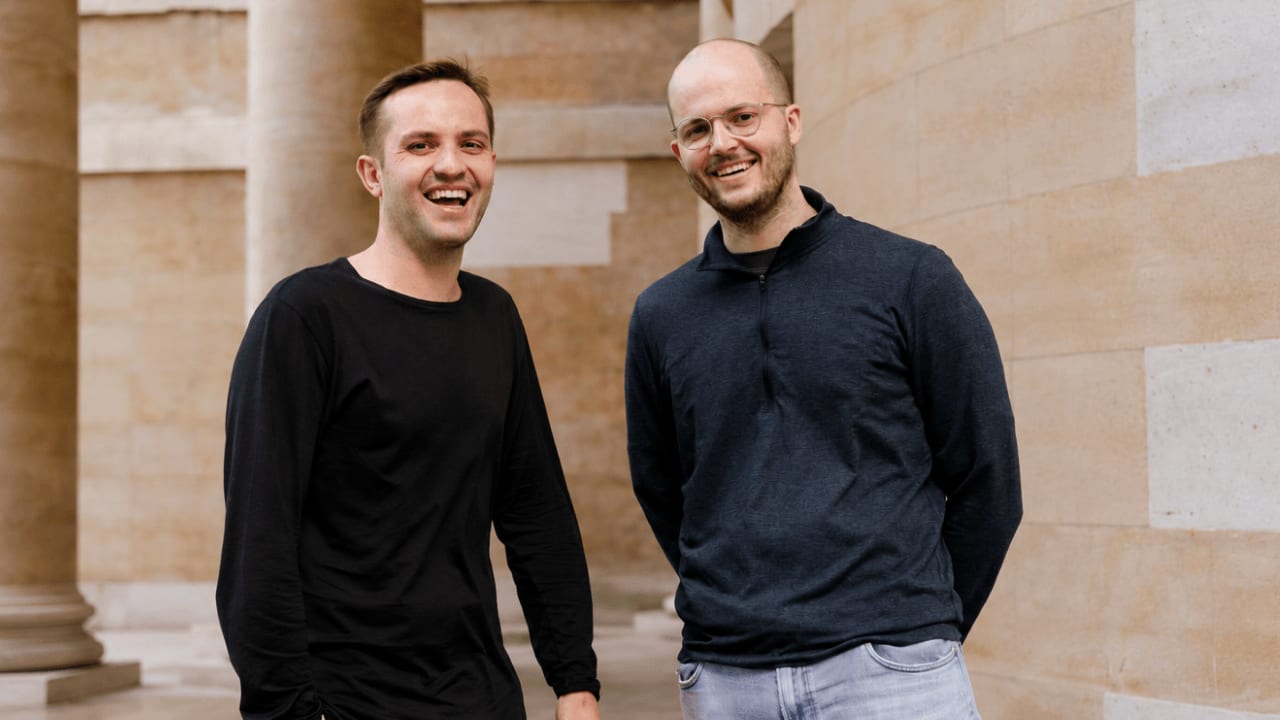
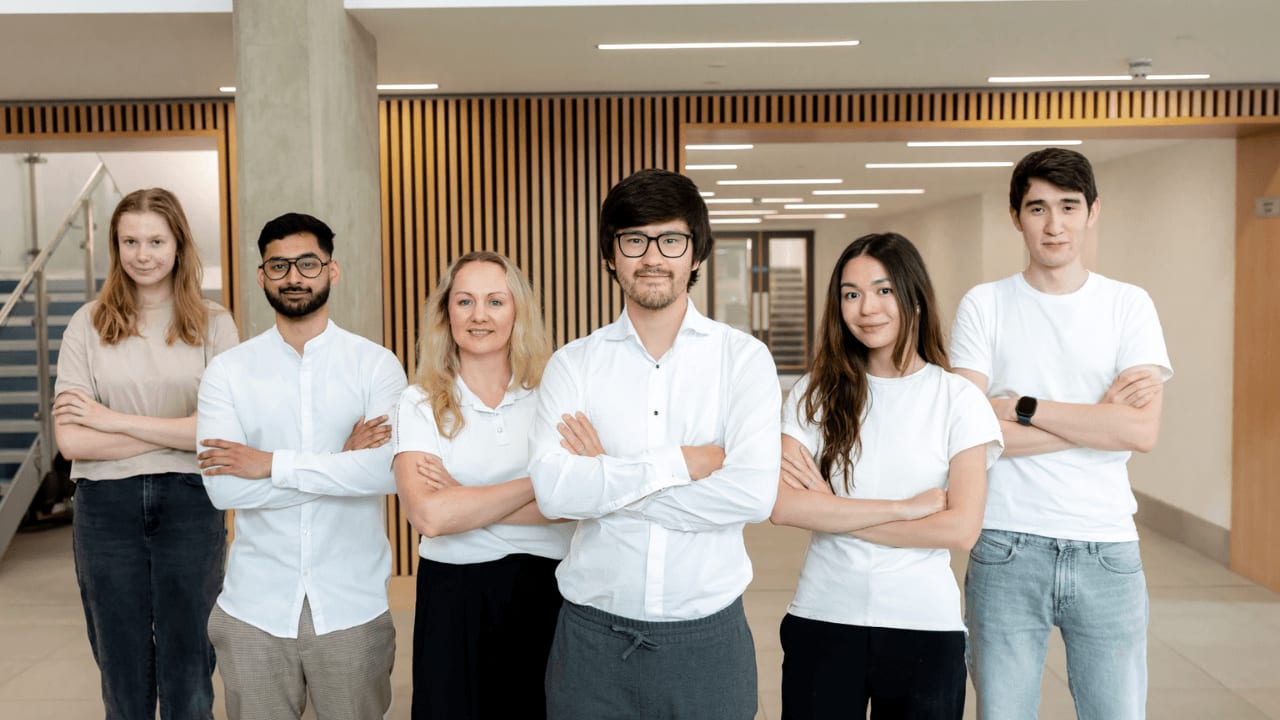
Sanzhar Taizhan, who serves as CEO, brings an unusual combination of credentials to the battery materials category. A former engineer at Jaguar Land Rover, where he built hands‑on expertise in the constraints of automotive powertrain design, Taizhan is also a Forbes 30 Under 30 honouree, a Royal Academy of Engineering Enterprise Fellow, and a former competitive chess champion from Kazakhstan. He founded TaiSan at Cambridge with a team of battery scientists and electrochemists drawn from MIT, Carnegie Mellon, Imperial College London, JLR, and The Faraday Institution, assembling depth in both electrochemistry and manufacturing process design that is uncommon at a company this early in its commercial journey.
Taizhan's time at JLR gave him a direct understanding of where lithium‑ion chemistry creates the most friction in automotive development: cost exposure to commodity lithium prices, supply chain fragility around cobalt and nickel, and safety requirements that add mass and complexity to battery system design. Building a company to address those constraints from the materials level up, rather than optimising around them, is the founding thesis TaiSan has pursued since launch.
What Quasi‑Solid‑State Sodium‑Ion Actually Means
The battery chemistry TaiSan has developed sits in a design space that most manufacturers have not reached yet. Conventional sodium‑ion batteries are real and commercially available, most prominently from CATL in China, but they use liquid electrolytes that impose familiar limitations: thermal management requirements, leakage risk, and energy density ceilings that currently sit below the automotive performance threshold.
Fully solid‑state batteries represent the theoretical ideal, eliminating liquid entirely, but manufacturing them at scale without defects or delamination remains an unsolved problem even for the most well‑funded programmes globally. TaiSan's quasi‑solid‑state architecture occupies a deliberate middle ground. It uses a proprietary gel polymer electrolyte that incorporates only a small proportion of liquid, typically less than five percent, within a predominantly solid matrix. This allows the company to capture most of the safety and density benefits of a fully solid design while sidestepping the manufacturing challenges that have prevented fully solid‑state cells from reaching production.
Paired with that electrolyte is a metal anode, specifically a sodium‑potassium formulation, that uses none of the materials currently creating the most acute supply chain risk in battery manufacturing. No lithium. No nickel. No cobalt. No copper. The battery is built entirely from earth‑abundant elements whose global distribution is not concentrated in the same geopolitically sensitive locations as the minerals underpinning lithium‑ion chemistry.
The performance targets TaiSan has published are ambitious. The company claims its Gen 1.0 chemistry achieves comparable volumetric and gravimetric energy density to an automotive lithium‑ion cell, which if validated in pilot testing would make it the first sodium‑ion technology to meet that bar at both the weight and volume level simultaneously. The projected cost saving at gigawatt‑hour production scale is approximately 20 percent over the most common lithium‑ion chemistries. Additional advantages include industry‑standard ionic conductivity for fast charging, mechanical resistance to dendrite growth that typically limits cell cycle life, and the elimination of leakage risk that removes the fire hazard inherent in conventional liquid electrolyte cells.
The cell architecture has also been designed specifically to be manufacturable on existing lithium‑ion production equipment. Rather than requiring entirely new capital equipment investment from prospective manufacturing partners, TaiSan intends to license its electrolyte and anode materials as a drop‑in solution that can be integrated into established production lines. That compatibility reduces the barrier to adoption for battery manufacturers and automotive tier‑one suppliers and accelerates the path from pilot testing to volume production.
Focus on Micromobility and Light Vehicles
The seed round announcement has crystallised TaiSan's near‑term commercial focus around e‑bikes, scooters, power tools, and light vehicles rather than the full automotive battery electric vehicle market it addressed in earlier communications. This reflects a practical staging of the commercialisation roadmap. Micromobility applications tolerate smaller cell formats, operate at lower voltages, and have shorter development validation timelines than passenger car battery systems, which require years of thermal cycling, crash performance, and warranty durability testing before they reach series production.
E‑bikes and electric scooters are also a genuinely large and growing market. The combination of urban congestion, rising last‑mile delivery demand, and regulatory pressure to reduce two‑wheeler emissions has created commercial urgency that was less visible three years ago. For a battery platform that offers lighter weight, a smaller form factor, and inherent fire safety, the micromobility segment is both an achievable first market and a commercially meaningful one in its own right.
The new Coventry engineering site is directly relevant to longer‑term automotive ambitions. Coventry sits at the centre of the UK's automotive manufacturing ecosystem, home to Jaguar Land Rover's primary operations and surrounded by the tier‑one supply chain that feeds British vehicle production. Establishing an engineering presence there puts TaiSan inside the conversations happening between OEMs and materials suppliers about what chemistry the next generation of British‑built batteries will use.
The Context: A Market Under Stress and a Strategic Moment
The sodium‑ion battery market was valued at approximately $546 million in 2026 and is projected to reach $1.19 billion by 2031, growing at nearly 17 percent annually according to Mordor Intelligence. Those headline numbers are still modest relative to the overall lithium‑ion battery market, but the direction of travel is not in doubt as more manufacturers look for ways to reduce their exposure to lithium price volatility and supply chain concentration risk.
The week before TaiSan's announcement, Natron Energy, a well‑funded US sodium‑ion battery startup, collapsed after failing to resolve manufacturing and performance challenges at scale. That failure matters for context. It illustrates that the path from demonstrated sodium‑ion chemistry to reliable volume production is longer and harder than investor timelines in the category have sometimes assumed, and it raises the proof bar for every other company making claims in the space.
For TaiSan specifically, the Natron collapse is not irrelevant, but the failure mode was different from what TaiSan is building toward. Natron's technology was optimised for data centre backup power, a stationary application with different cycle life and discharge profile requirements than micromobility. The manufacturing challenge that ended Natron's programme involved the specific demands of that format and use case. TaiSan's drop‑in manufacturing compatibility thesis, if validated, directly addresses the most common point of failure for battery hardware startups by avoiding the need to build bespoke production infrastructure from scratch.
Shubham Jaipuria, investment manager at Mercia Ventures, described the commercial alignment this way: manufacturers are actively seeking alternative technologies with more reliable supply chains, and TaiSan is well placed to address that demand. The observation reflects a structural shift in how battery and automotive purchasing teams are thinking about sourcing. The past three years of lithium price volatility, cobalt supply disruptions, and trade policy risk have moved supply chain resilience from a secondary consideration to a primary one in procurement decisions at every major automotive and mobility manufacturer.
What the Innovate UK Grant Signals
The £700,000 Innovate UK Investor Partnerships Programme grant is not the first government funding TaiSan has received. The company accumulated close to £500,000 in prior non‑dilutive funding from the Department for Transport, The Faraday Institution, Innovate UK, the Advanced Propulsion Centre, the Royal Academy of Engineering, and Catapult Connected Places since its 2022 founding. That track record of government grant success is itself a form of technical validation, since programmes like the Faraday Institution and the Advanced Propulsion Centre apply independent expert assessment before awarding funding.
The Innovate UK Investor Partnerships Programme specifically is designed to co‑invest alongside venture capital rounds rather than to fund pre‑commercial research in isolation, which means the grant arriving at this stage is consistent with TaiSan having reached a level of technical maturity that justifies blending public and private capital for the transition to manufacturer pilot testing.
That transition is the genuinely difficult phase for battery hardware startups. Demonstrating a chemistry in a laboratory environment and demonstrating it in a cell format that performs consistently at the cycle counts, temperatures, and discharge rates that a commercial product demands are two different problems. The Cambridge lab expansion and the Coventry engineering site funded by this round are being pointed directly at that gap. What the manufacturer pilots produce over the next 12 to 18 months will determine whether TaiSan's chemistry holds up under real production conditions and whether the 20 percent cost saving projection survives contact with actual gigawatt‑hour scale manufacturing economics.
Taizhan has indicated that the company's most significant technical breakthroughs remain undisclosed, a statement that leaves room for material announcements during the pilot period. Whether those breakthroughs address energy density improvements beyond the Gen 1.0 benchmark, cycle life performance at automotive‑relevant duty cycles, or manufacturing yield at larger cell formats is not yet public. What is clear is that TaiSan has secured the capital, the laboratory infrastructure, and the engineering footprint to find out.
Stay informed
Startup news in your inbox
Get important funding rounds, founder stories, and startup updates.
No spam - only important startup updates.
Comments
Text only. No links or images.
No comments yet.