Spotify Founder Daniel Ek Raises $700M for Neko Health Ahead of US Body-Scan Clinic Launch

The preventive health startup founded by Spotify's Daniel Ek has raised one of the largest funding rounds in the digital health space this year, backed by a roster of investors that includes one of the tech industry's most recognizable billionaires.
Neko Health has closed a 700 million dollar Series C round co‑led by Lightspeed Venture Partners and O.G. Venture Partners, the fund run by billionaire Eyal Ofer. The round attracted an unusually broad mix of backers, including Meta chief executive Mark Zuckerberg and his wife Priscilla Chan, who invested as individuals rather than through Meta or a venture fund. Other participants include tennis champion Maria Sharapova, footballer Thierry Henry, author Tim Ferriss, musician will.i.am, supermodel Claudia Schiffer, director Matthew Vaughn, Hollywood executive Ari Emanuel, and music executive Jimmy Iovine, alongside returning investors Atomico, General Catalyst, and Lakestar.
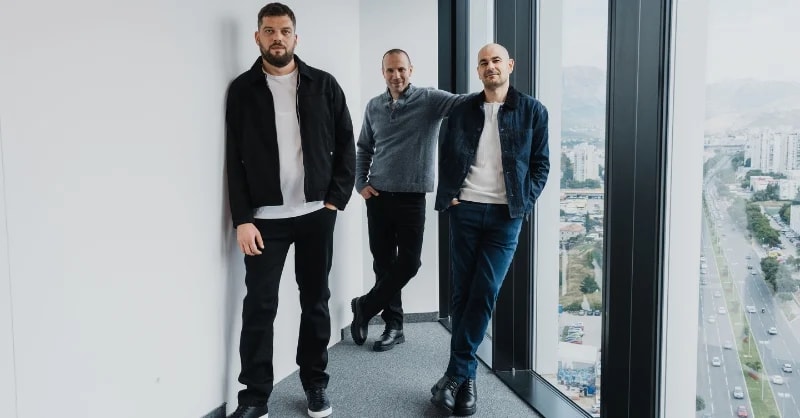
The company, co‑founded by Ek and Hjalmar Nilsonne in 2018, offers a non‑invasive, radiation‑free full‑body scan that the company says captures millions of health data points in roughly 60 minutes. Rather than relying on traditional MRI machines the way competitors such as Prenuvo and Ezra do, Neko builds its own proprietary sensors in‑house to assess skin health, including moles and other markers linked to skin cancer, along with biomarkers connected to pre‑diabetes risk, blood abnormalities, and factors associated with metabolic syndrome, stroke, and heart attack.
The new funding follows a 260 million dollar Series B round the company closed in January of last year, and it comes as Neko prepares to take its clinic model outside Europe for the first time. The company currently operates in Sweden and the United Kingdom, with locations including Manchester, Birmingham, and several sites across London, and says it has completed more than 100,000 scans across its clinics to date. With the new capital, Neko plans to open its first United States clinic in New York City later this year, with additional cities to follow as part of a broader American rollout.
Pricing for the scan currently sits at 299 pounds in the UK and 2,750 Swedish kronor in Sweden, positioned as a more accessible alternative to a full‑body MRI. The company reports a 75 percent rebooking rate among people who complete an initial scan, along with a waitlist that has grown to more than 350,000 people globally. Nilsonne, who serves as chief executive, said the vast majority of returning members show measurable improvement in their health markers between visits, a pattern the company is using as its central pitch to investors and prospective American customers alike.
Ek, who stepped down as Spotify's chief executive earlier this year, has described the US expansion as a far bigger challenge than the company's earlier move from Sweden into the UK, acknowledging that scaling a hardware‑and‑clinic‑based healthcare business across the American market introduces a different level of regulatory and operational complexity. Neko has already secured Food and Drug Administration clearance for several of its core products, a step the company sees as critical to operating legally across US states with varying healthcare regulations.
The round underscores growing investor appetite for consumer‑facing preventive health technology, a category that has expanded rapidly as companies compete to offer early disease detection outside the traditional insurance‑driven healthcare system. Prenuvo, one of Neko's closest competitors, raised 120 million dollars in 2025 and now operates 29 clinics, most of them in the United States, with additional locations in Vancouver, London, and Melbourne. Function Health, another major player in the space, acquired rival Ezra in May of last year and closed a 300 million dollar Series B round in November to expand its own AI‑powered scanning and lab‑testing platform.
Neko Health did not disclose its new valuation following the round, though the company was last valued at 1.7 billion dollars in early 2025, and some reports suggest the new financing could value the business at close to 7 billion dollars. Whichever figure proves accurate, the size of the round and the profile of its backers signal that investors are treating preventive, consumer‑facing health scanning as one of the more durable growth categories to emerge from the broader digital health boom, betting that Ek can apply the same playbook that turned Spotify into a global consumer platform to a business built around clinics, hardware, and recurring health checkups rather than software alone.
Stay informed
Startup news in your inbox
Get important funding rounds, founder stories, and startup updates.
No spam - only important startup updates.
Comments
Text only. No links or images.
No comments yet.