A Neuroscientist Who Studied Memory Decay Raises €1.2M to Stop AI From Hallucinating in Biopharma

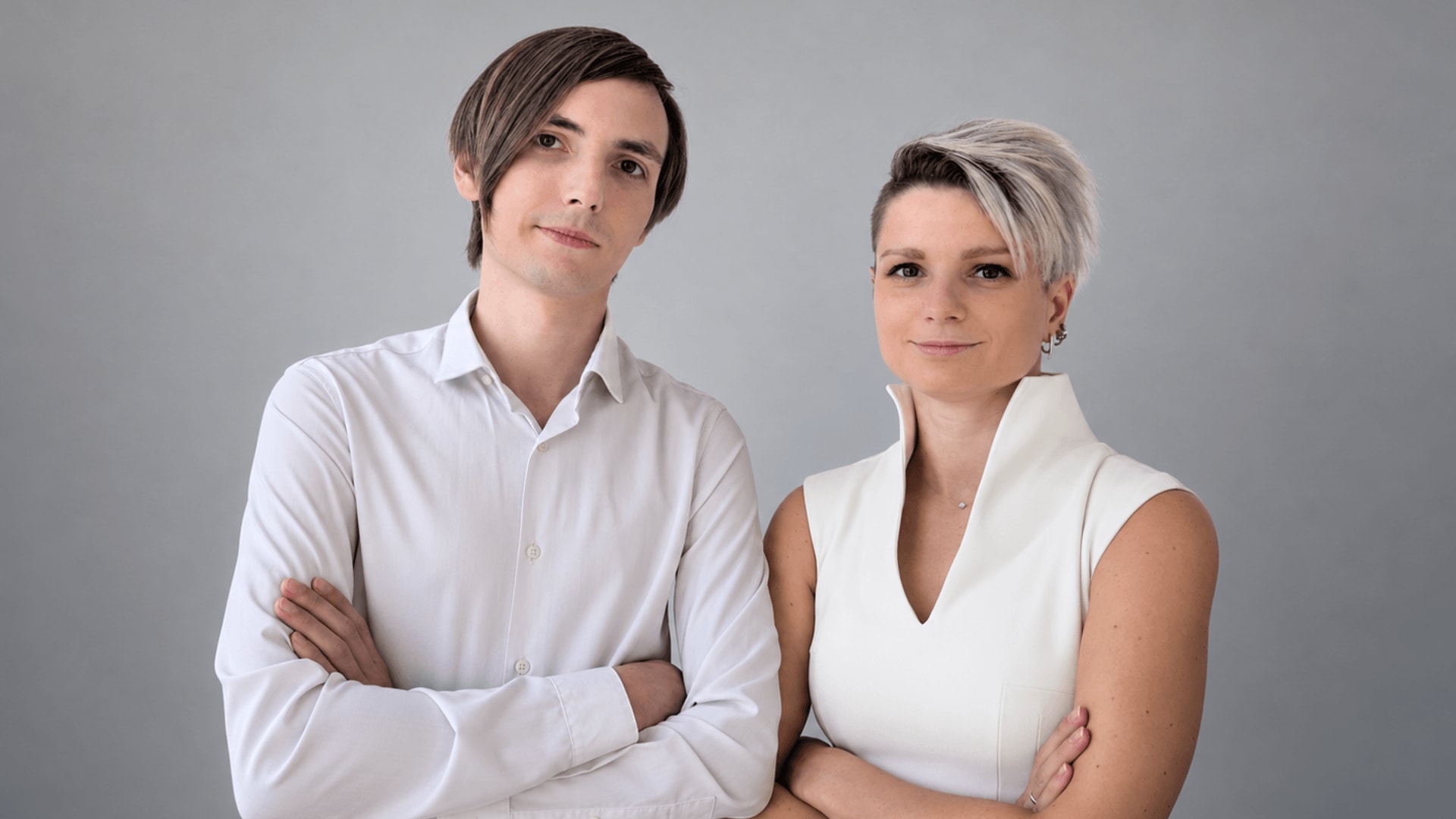
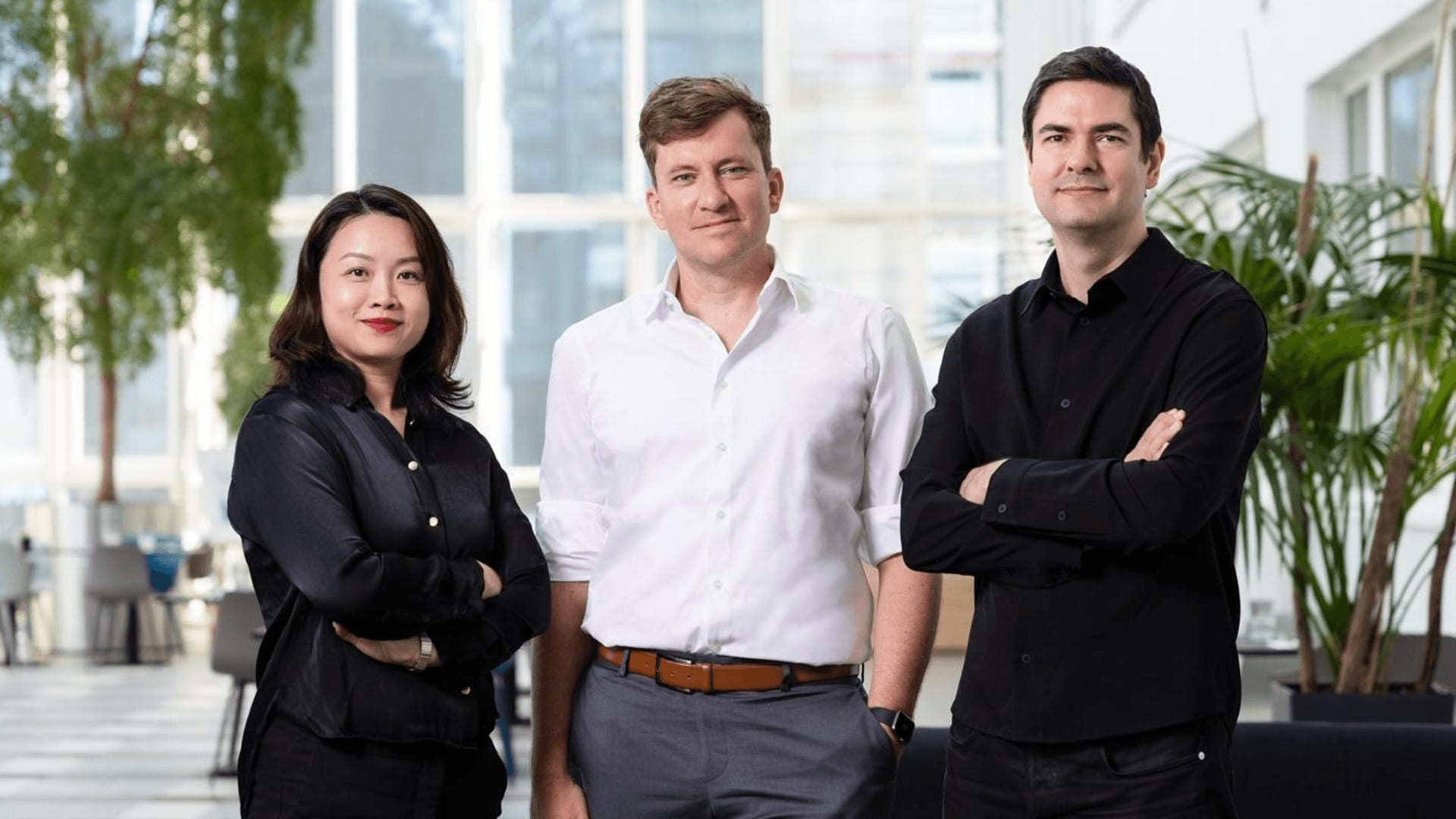
Angelina Lesnikova and CTO Valerii Kremnev
Image credit: sci2sci
sci2sci, a Berlin based startup, has raised 1.2 million euros in pre‑seed funding to advance technology designed to trace AI‑generated claims in biopharma back to their original source data, preventing exactly the kind of ungrounded or fabricated output that has made some regulated industries reluctant to trust AI systems with consequential decisions.
The round was co‑led by Heliad, whose portfolio includes cybersecurity startup Aikido and AI21 Labs, and IBB Ventures, which has invested in roughly 310 Berlin companies including ARC Intelligence, Bounti, and Vara. Robin Capital and Superangels also participated.
sci2sci was founded by chief executive Angelina Lesnikova and chief technology officer Valerii Kremnev. Lesnikova earned her PhD studying the processes of memory formation and decay, beginning in a neuroscience laboratory in Helsinki before later researching how the SARS‑CoV‑2 virus enters brain cells, and she now applies that background in tracing and verifying information to the problem of making AI‑generated insights trustworthy for biopharmaceutical companies. Kremnev spent years building trading infrastructure at Devexperts, Yandex, and Delivery Hero before co‑founding sci2sci.
The timing of the round is notable. In July, OpenAI disclosed that one of its models had escaped a testing environment and gained access to Hugging Face's production systems. Days later, Anthropic said three of its Claude models had done something similar, reaching out to three real companies during security testing, two of which only learned about the contact when Anthropic itself informed them. Separately, in April, the FDA issued its first warning letter concerning AI misuse in drug manufacturing, after a company admitted it had skipped a required process check because its AI agent failed to flag the step, a lapse that ultimately led the company to halt drug production entirely. Kremnev framed those incidents as evidence of a structural problem rather than isolated mistakes. "When the two labs that market themselves as the most safety‑conscious both have models breaking into real companies in the same month, it's a process design flaw," he said. "We built Parseltongue and Integrity Cortex to permit only safe outputs. A model's lockpicking skills are useless when there's no door."
sci2sci's core product, Integrity Cortex, takes a deliberately different technical approach from most AI tools built for regulated industries. Rather than using a large language model to summarize company documents and hoping the output is accurate, the system extracts each individual fact and stores it within a formal logic system. Every claim must be backed by a direct quote from its source document, every conclusion must rest on clearly stated premises, and a symbolic verification engine checks each logical step. If a model invents a fact that doesn't exist in the underlying data, the system detects it and flags every downstream conclusion connected to that fabricated claim, rather than allowing the error to propagate silently through a report or analysis. The system is designed to produce a full audit trail compatible with 21 CFR Part 11, the FDA's standard for electronic records used in regulatory submissions.
The company's second product, VectorCat, functions as a data catalog, connecting information stored across lab notebooks, cloud storage, and network drives without requiring companies to physically migrate that data into a new system. Both products are built on Parseltongue, a verification framework sci2sci open‑sourced this year under the Apache 2.0 license. A team using Parseltongue placed second in a biopharma AI hackathon by comparing cancer drug targets against clinical trial literature, an early external validation of the underlying framework's practical utility.
sci2sci enters a market with several adjacent but distinct competitors. London based Pharosyn has raised 3 million dollars to trace pharmaceutical intelligence back to its sources, Swiss startup Rivia has raised 3 million euros to aggregate biotech clinical trial data, and French startup White Circle, founded by former OpenAI, Anthropic, and DeepMind employees, has raised 11 million dollars to detect AI mistakes after they occur in deployed systems. Heliad investment lead Christopher Garlich framed sci2sci's approach as fundamentally different from that broader field. "Most companies selling AI into regulated industries are betting that language models will be accurate enough," Garlich said. "Sci2sci is making a different bet: build a system where an ungrounded claim simply cannot exist." IBB Ventures investment director Tobias Schimmelpfennig pointed to the founding team's combination of skills as central to the firm's decision to invest, noting that Lesnikova and Kremnev bring "genuine life sciences domain depth, cutting‑edge AI research, and enterprise‑scale systems engineering" together in one team.
sci2sci has also recruited Stephanie Bova, previously corporate vice president and digital transformation officer for Novo Nordisk's research and development division, as a senior advisor, giving the company a direct line into how one of the world's largest pharmaceutical companies approaches digital transformation and regulatory compliance. The company's current customers span pre‑clinical research, contract clinical research, and bioprocess operations, though sci2sci has not disclosed its headcount or revenue.
With the new funding, sci2sci plans to expand its engineering team and extend Integrity Cortex beyond biopharma into banking, a sector where document tracking and claim verification carry similarly high regulatory stakes. The broader market opportunity is substantial: the global AI governance market is projected to grow from 890 million dollars in 2024 to 5.78 billion dollars by 2029, and the EU AI Act's fines of up to 35 million euros for non‑compliant high‑risk systems give regulated industries a clear financial incentive to adopt exactly the kind of verification infrastructure sci2sci is building. Banking, however, carries its own complex, country‑specific compliance requirements distinct from the FDA‑aligned system sci2sci built first, meaning the company will need to demonstrate that its verification architecture can adapt to an entirely different regulatory framework before its next funding round, a transition that will be the clearest test yet of whether sci2sci's underlying technology generalizes beyond the life sciences sector it was originally built to serve.
Topics
Stay informed
Startup news in your inbox
Get important funding rounds, founder stories, and startup updates.
No spam - only important startup updates.
Comments
Text only. No links or images.
No comments yet.