Cato Raises €6M to Crack Open Europe's €2.5 Trillion Public Tender Market With AI

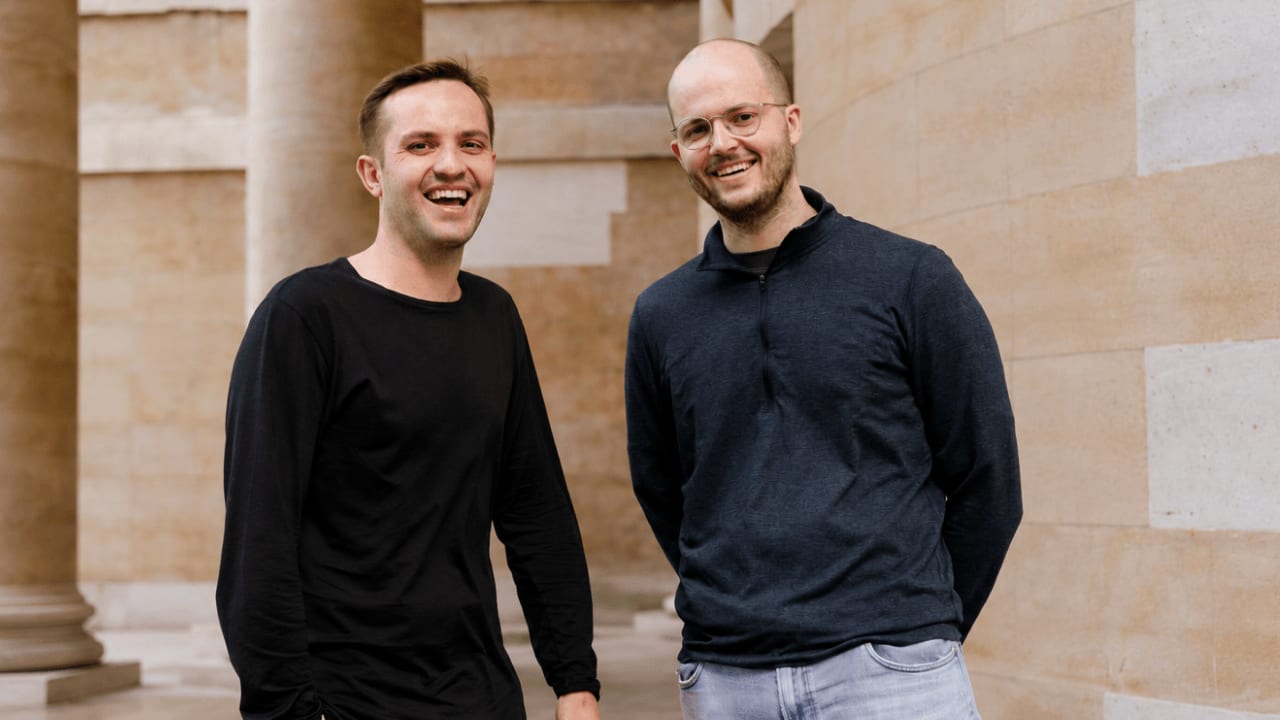
Cato founder Andrea Zorzetto (CEO) and Matteo Bossolini
Image credit: Cato
Cato, a Milan based AI platform that helps companies find, analyse, and win public sector tenders, has raised 6 million euros in a seed round led by Keen Venture Partners, the Amsterdam and London based early‑stage venture firm.
The round drew a large group of returning investors from Cato's earlier funding, including Vento, Heartfelt, Moonstone, BHeroes, Alecla7, and Nova Venture, joined by a fresh cohort of angel investors including the founders of Lexroom, Sibill, and Pillar. The seed round arrives just months after Cato closed a 1.6 million euro pre‑seed round led by Italian Founders Fund, itself notable for how quickly it came together: the company was incorporated in September 2025, secured its first paying client the following month, and closed that pre‑seed round by December, a rapid sequence of milestones for a company barely a year old.
Cato was founded in 2025 by chief executive Andrea Zorzetto, known in the Italian startup scene for bringing Plug and Play to Italy after spending six years abroad, and chief technology officer Matteo Bossolini, described by colleagues as among the earliest adopters of AI‑assisted programming tools. The company positions itself as Italy's first AI‑native platform built specifically for public procurement, targeting a market that remains strikingly under‑digitized relative to its scale. According to Cato, government contracts account for roughly 14 percent of EU GDP, approximately 2.5 trillion euros annually, spread across more than 250,000 separate contracting authorities, yet the process of actually competing for that money has remained largely manual, requiring companies to screen hundreds of tender notices daily, work through lengthy technical documents, and draft bid responses largely by hand.
In Italy specifically, where Cato has concentrated its initial efforts, the company cites data from ANAC, the national anti‑corruption authority, putting public tenders at 309 billion euros in 2025, up 13.9 percent year over year. Cato's platform tracks more than 27,000 sources in real time to surface and rank tenders a given company is realistically positioned to win, extracts requirements and evaluation criteria directly from often dense procurement documents, and pre‑fills the administrative and technical sections of a bid using a company's own existing materials, such as letterhead and standard company information. Every claim the system generates links back to its original source document, and the finished submission remains fully in the client's hands rather than being submitted automatically on their behalf.
Zorzetto framed the platform's early impact directly around what clients have told the company. "In this first phase we have already managed thousands of tenders," he said. "Our greatest satisfaction is hearing from our clients that they see our technology as a true ally: it helps them find the most suitable public tenders, understand the requirements and prepare their bid, increasing their chances of winning and growing." Cato's early client base already spans healthcare, including medical devices and pharmaceuticals, alongside education, IT procurement, and infrastructure, sectors where public contracts tend to be both large in size and recurring in frequency. Named clients include Sol, Ivs, CNS, and Movi, based across both northern and southern Italy.
Ahead of this seed round, Cato also completed an acqui‑hire of Avvista.ai, bringing on founder Riccardo Sabatti and his team along with a self‑service tool built specifically for smaller companies that participate in relatively few tenders and lack a dedicated procurement office. That acquisition extends Cato's reach down‑market, from the large, frequent bidders its core platform was originally built to serve toward the much larger population of small and medium‑sized enterprises that participate in public tenders only occasionally, a segment ANAC data suggests includes the roughly 60 percent of Italian SMEs that currently struggle to compete for public contracts due to the difficulty of finding relevant opportunities and preparing documentation on time.
Keen Venture Partners general partner Briehan Burke framed the firm's investment around the scale of the underlying opportunity Cato is targeting. "Public procurement is one of the last giant unautomated workflows in the European economy: trillions of euros a year, and the supplier side has essentially had no software, let alone AI," Burke said. "Italy is the right market to start precisely because it is the most complex country to bid in."
Cato is not alone in pursuing this category, though its closest well‑funded competitors are based elsewhere in Europe. The UK's Stotles raised a 13 million dollar Series A last year and now serves more than 1,000 public‑sector sales teams, including Amazon and Salesforce, while Netherlands based Altura closed an 8 million euro Series A around the same time for its own AI‑powered bid management platform. Both companies have focused primarily on markets outside Italy, leaving Cato with a relatively clear runway domestically even as competition intensifies at the broader European level.
The raise also lands amid a notable recovery in Italian startup funding more broadly, with Italian companies raising 813 million euros across 145 rounds in the first half of 2026 alone, according to Growth Capital and the Italian Tech Alliance, with AI remaining the single largest category of investment even as Italy continues to rank among Europe's more underfunded venture capital markets on a per‑founder basis. With the new capital, Cato plans to improve its core platform, support continued growth of its client base, and expand its services to more companies bidding on public tenders across additional European markets beyond Italy, extending the model it has spent its first year refining domestically into a market considerably larger and more fragmented than the one it started in.
Topics
Stay informed
Startup news in your inbox
Get important funding rounds, founder stories, and startup updates.
No spam - only important startup updates.
Comments
Text only. No links or images.
No comments yet.