Kestra Closes $25 Million Series A to Become the Orchestration Standard for Enterprise Data and AI Workflows
Editorial Team
Something quiet but consequential has been happening inside some of the world's most complex organizations. At Apple, hundreds of AI engineers are orchestrating large‑scale pipelines across the App Store, Apple Music, and device diagnostics through a single platform. At JPMorgan Chase, teams are coordinating cybersecurity pipelines across a distributed data stack without requiring heavy custom engineering for every change. At Toyota, data and AI workflows that once ran across multiple platforms with no shared visibility now flow through a unified monitoring layer. At BHP, one of the world's largest mining companies, infrastructure automation rebuilt after a VMware departure has become faster, more modular, and measurably less dependent on expensive legacy tooling.
The company making all of this possible is Kestra, and on March 31, 2026, it announced a $25 million Series A led by RTP Global, with continued participation from Alven, ISAI, and Axeleo. The raise brings Kestra's total funding to $36 million and validates what the company has been building since its 2021 founding: a single, unified orchestration control plane that brings together data pipelines, AI workflows, infrastructure automation, and business processes under one roof.
The commercial trajectory that preceded this round is one of the more striking in enterprise software. Since its seed round eighteen months ago, Kestra has grown enterprise revenue 25 times over and executed more than 2 billion workflows in 2025, up 20 times year over year. The platform has accumulated over 26,000 GitHub stars across more than 30,000 organizations worldwide, making it the fastest‑growing open‑source orchestration platform in the industry by that measure.
Named customers beyond those mentioned above include Deutsche Telekom, Bloomberg, SoftBank, L'Oreal, and Crédit Agricole, a client list that spans multiple continents and industries and speaks to the universality of the problem Kestra is solving.
The problem, as Kestra's founders describe it, is that enterprise automation has accumulated too much of itself in too many places at once. Organizations run workflows across cloud and on‑premises infrastructure, AI agents, real‑time data pipelines, and microservices, stitched together with schedulers and scripts that were never designed for today's complexity. Silent failures accumulate. Compliance reviews extend. Business‑critical logic gets buried in undocumented automations that only one person understands and that person has left the company.
A production AI workflow makes this especially vivid. It is rarely just a model call. It includes data retrieval, model versioning, fallback logic, approval gates, retries, policy checks, observability, and actions written back into live systems, often with humans involved at certain decision points. When that gets multiplied across teams, models, environments, and business processes, the absence of a coordination layer is not merely inefficient. It becomes a structural risk.
Kestra's platform is declarative by design, extensible across more than 1,200 plugins, and built to operate in hybrid and air‑gapped environments. It is the kind of infrastructure that engineers adopt because it works in production, and that enterprises standardize on once the value becomes strategic across multiple teams. Emmanuel Darras, CEO and co‑founder, has been direct about the growth model: the company inverted the traditional enterprise software playbook. Engineers adopted Kestra not because of marketing but because they were frustrated with alternatives, and the product solved their actual problem. Everything since has followed from that.
The $25 million will go toward three things: launching Kestra 2.0, a new distributed execution engine built for mission‑critical reliability at scale with native agentic orchestration and real‑time observability; releasing Kestra Cloud, a fully managed SaaS offering with usage‑based pricing for teams that want to move fast without managing infrastructure; and expanding go‑to‑market operations across North America and Europe.
Thomas Cuvelier, Partner at RTP Global, put the investment rationale plainly. As workflows become more distributed and AI‑native, legacy schedulers and fragmented tooling cannot keep up, and the cost of that gap is no longer theoretical. The global AI orchestration market is estimated to reach $30.23 billion by 2030, up from $11.02 billion in 2025.
The competitive landscape Kestra is entering at scale includes Temporal, Apache Airflow, Prefect, and n8n, each of which serves portions of the orchestration problem but none of which offers the same combination of unified scope across data, AI, infrastructure, and business workflows within a single control plane. Kestra's open‑source core gives it a distribution advantage that closed‑source competitors cannot replicate through marketing alone: engineers find it, adopt it in production, and then become the internal advocates who bring it to enterprise procurement.
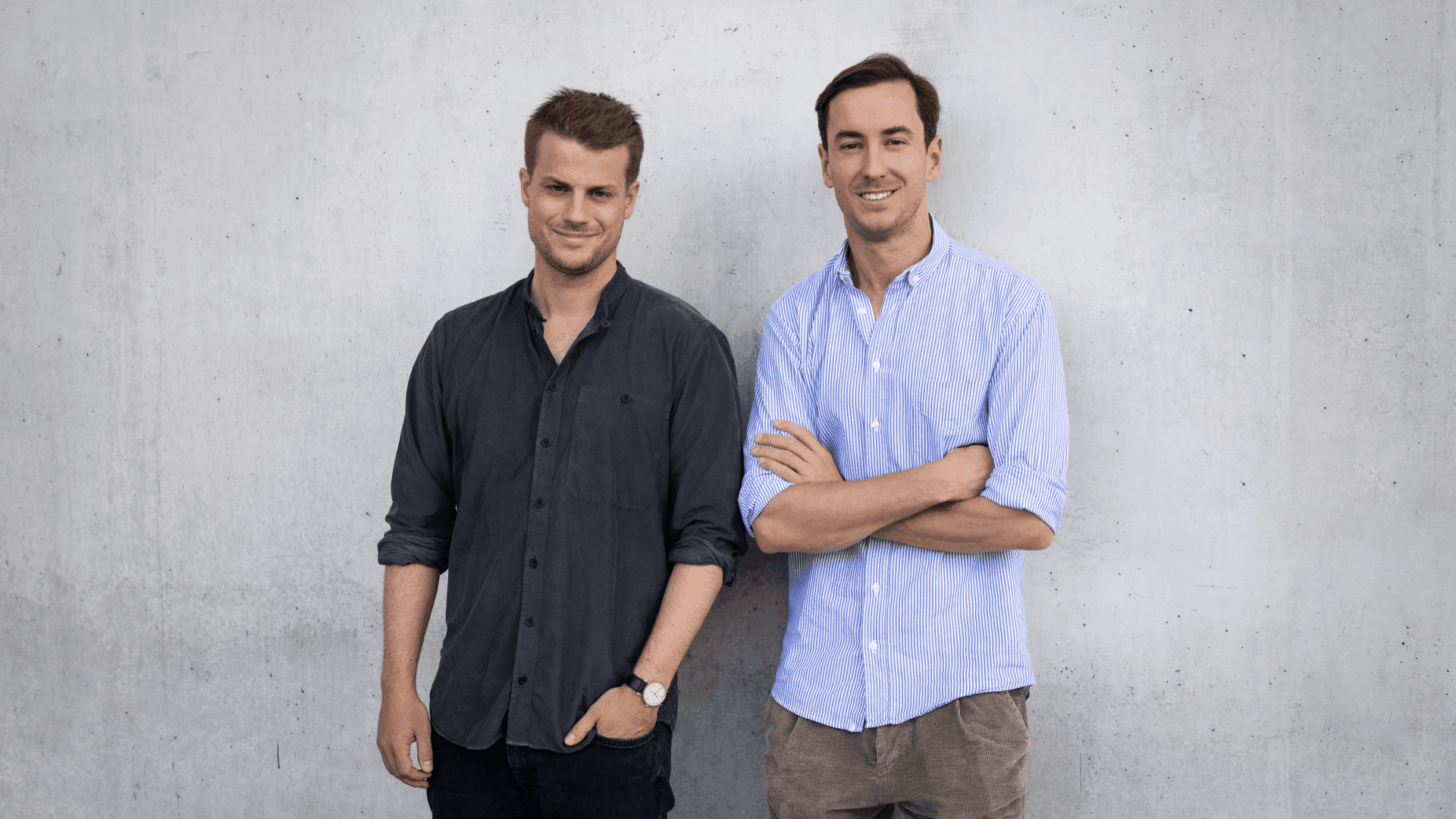
The company was founded by Emmanuel Darras and Ludovic Dehon in 2021 in France, which also makes this one of the more successful recent examples of a European open‑source startup achieving the kind of enterprise traction that has historically been easier to build from the United States. The 30,000‑organization user base across both continents gives Kestra a geographic coverage that will be reinforced by the North America go‑to‑market expansion the Series A funds.
Every decade in enterprise software, one coordination problem becomes large enough that it graduates from a space where every company builds its own solution to one where a platform emerges and becomes the standard. Cloud infrastructure in the early 2010s, container orchestration in the late 2010s, and now AI workflow orchestration in the mid‑2020s each followed that arc. Kestra's $25 million raise and the customer list that preceded it are a strong argument that this decade's coordination platform is already clear to the companies that are building the most complex AI and data systems in the world.
Official Sources: Kestra
Stay informed
Startup news in your inbox
Get important funding rounds, founder stories, and startup updates.
No spam - only important startup updates.