Perceptic Raises $12M Led by Accel to Build the AI Operating System That Follows the Drug, Not the Department
Editorial Team
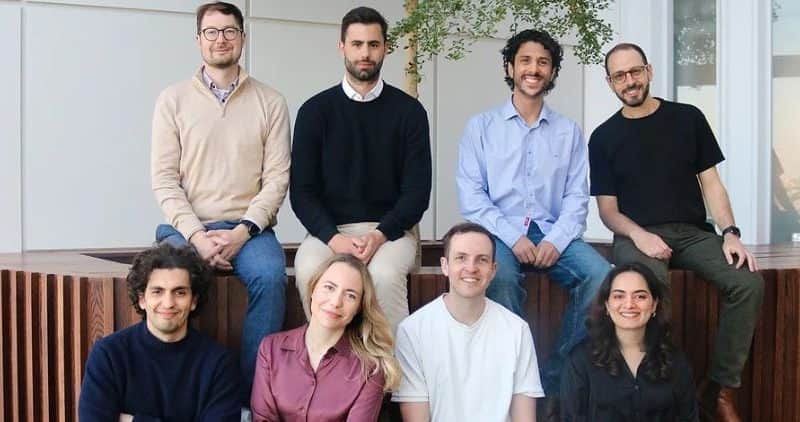
Perceptic, the London and Basel‑based AI startup building an operating system for pharmaceutical drug development, emerged from stealth today with a $12 million seed round led by Accel, alongside Air Street Capital and Elder Gull. The company was founded in 2024 by Tilman Flock, Martin Copes, and Zaki Trache, three engineers who built Palantir's AIP product and were central to shaping its Life Sciences practice before leaving to start Perceptic together.
The company employs around 20 people across London and Basel, and its software is already deployed in production at multiple top‑20 pharmaceutical companies. The only named customer with permission to disclose is CSL, the Australian global biotechnology group with a market capitalisation exceeding $80 billion. The remainder of the customer base is undisclosed by mutual agreement with clients who are sensitive about revealing their AI infrastructure strategy to competitors.
The Problem That Every Big Pharma Company Has But Nobody Has Solved
Developing a single drug from initial discovery to regulatory approval takes an average of 10 to 15 years and costs upward of $2.6 billion including failed candidates, according to research from the Tufts Center for the Study of Drug Development. Despite those stakes, the data and decision‑making infrastructure supporting that process is fragmented across dozens of disconnected tools.
The reality inside most large pharmaceutical companies looks roughly like this: a literature review copilot in one system, a clinical trial design assistant in another, competitive intelligence tools that sit outside the R&D pipeline entirely, and asset evaluation processes that run on spreadsheets and slide decks assembled by analysts who manually pull from multiple databases. Each stage of the drug lifecycle generates knowledge that should inform the next stage but rarely does, because the tools do not talk to each other and the institutional knowledge lives in presentations rather than machine‑readable systems.
Tilman Flock has described the core problem with precision: not a shortage of raw data, but a shortage of connected intelligence. Every department has AI tools. Nobody has an AI system that follows the drug.
That gap is what Perceptic was founded to close.
What the Platform Does
Perceptic is built as a shared intelligence layer that connects the full drug development lifecycle: asset scouting, scientific evaluation, indication selection, hypothesis testing, and clinical data analysis within a single operational system. The platform works by ingesting a pharmaceutical company's internal records alongside published literature, clinical trial databases, patent filings, and competitive intelligence sources, and creating a unified context that persists across the entire drug program rather than resetting with each new project stage or departmental handoff.
The practical effect of that architecture is measurable. In live deployments, the platform has enabled companies to screen thousands of drug assets in minutes, a process that previously required teams of analysts working across weeks. Scientific due diligence timelines that previously stretched across weeks have been compressed into days. Indication selection decisions that required multiple cross‑functional meetings to assemble the relevant evidence can now be initiated, analyzed, and documented within a single platform session.
Nathan Benaich, founder and general partner of Air Street Capital, described the vision in terms that the entire pharma sector should find legible: the next leap in pharmaceutical R&D will not come from a thousand better point tools or from frontier models alone. It will come from an operating system that connects data, decisions, and context across a 15‑year process.
Sonali De Rycker, partner at Accel, tracked the founding team while they were still inside Palantir and invested roughly a year after her first meeting with them, by which point Perceptic had moved well beyond pilots into paid production. Her framing for the bet was precise: Perceptic is the first solution that follows the drug rather than the department. The founders combine genuine life sciences expertise with real experience deploying AI at scale inside complex regulated organizations.
Why the Palantir Background Matters Here
The founding team's origin inside Palantir's AIP and Life Sciences practice is not just a credentialing fact. It shaped the specific architectural choices behind Perceptic in ways that distinguish the product from most pharma AI tools on the market.
Palantir spent years solving the same class of problem across different industries: connecting data that lives in disparate systems, building AI that operates reliably inside regulated environments where mistakes carry real consequences, and deploying platforms that actually get used by non‑technical operators rather than sitting dormant in pilot mode. The AIP product that Flock, Copes, and Trache worked on was specifically designed to make AI deployment accessible to domain experts rather than requiring constant engineering support.
Those lessons are embedded in Perceptic's design. Pharmaceutical scientists, not software engineers, are the primary users of the platform. The system is built to surface the right evidence and the right context for domain experts making drug development decisions, not to produce outputs that require expert interpretation of AI system behavior.
Flock's statement on the company's current position was unambiguous: Perceptic is far beyond product‑market fit. The seed capital is not for building toward commercial viability. It is for scaling out an operation that is already commercially viable.
The bulk of the $12 million will go into engineering and customer base expansion, with US market growth as the priority geographic target, supported by a London engineering hub drawing on Palantir alumni and the broader UK technical talent pool.
Stay informed
Startup news in your inbox
Get important funding rounds, founder stories, and startup updates.
No spam - only important startup updates.