Viktor $75M Series A Accel 2026 | Slack Co-Founders Back AI Coworker Built by Ex-Meta Engineers

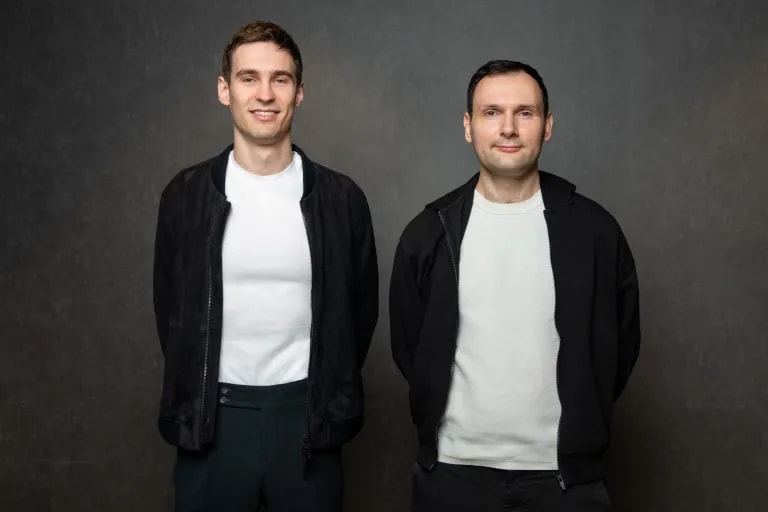
Fryderyk Wiatrowski joined Meta with a specific intention: to find a co‑founder. He found Peter Albert. Together, the two engineers left one of the most resourced technology companies on earth to build an AI product in Warsaw. They built two versions that nobody wanted to test. They kept iterating. They shipped a third version in February 2026 and named it Viktor.
Ten weeks later, Viktor had a $15 million annualised revenue run rate and more than 2,000 organisations as customers.
On May 19, 2026, Accel announced it was leading a $75 million Series A round into Viktor - the largest single funding round ever raised by a Polish‑founded company. The round included participation from Bek Ventures, Kaya VC, Inovo VC, and Tenacity Capital. The angel investor list is the kind that changes how an enterprise product is perceived by every new prospect it speaks to.
Stewart Butterfield and Cal Henderson, the co‑founders of Slack itself, both wrote personal checks into an AI agent that lives inside the product they built. Guillermo Rauch, the founder and CEO of Vercel, participated alongside Victor Riparbelli, the co‑founder and CEO of Synthesia; Koen Bok and Jorn van Dijk, the founders of Framer; Jack Zhang, the co‑founder and CEO of Airwallex; Alex Bouaziz, the co‑founder and CEO of Deel; Max Mullen, the co‑founder of Instacart; and a roster that also includes Shaan Puri, Lenny Rachitsky, Harry Stebbings, and executives from DeepMind, Figma, and Lovable. Existing investors Nat Friedman, former CEO of GitHub, and Daniel Gross, former Head of AI at Apple and Y Combinator, returned.
When the people who built Slack back the AI agent that runs inside Slack, the signal is worth reading carefully. Butterfield and Henderson have watched every generation of Slack integration. They know which ones become habits and which ones become forgotten. Their personal capital going into Viktor after seeing the product and the early traction is not a passive bet. It is an informed one.
What Viktor Actually Does
Most enterprise AI tools make work faster. Viktor's stated goal is to make certain work unnecessary.
Viktor positions itself as a digital co‑worker embedded directly inside Slack and Microsoft Teams rather than a standalone application. The product connects to more than 3,000 workplace tools — Google Drive, Airtable, Notion, Meta Ads, Stripe, NetSuite, Ramp, and dozens more — and executes tasks across them autonomously, on a schedule or when triggered by a message in Slack.
The outputs Viktor delivers are finished work products rather than conversational responses: spreadsheets, presentations, PDFs, deployed applications, automated workflows, marketing reports, competitive analyses, incident summaries, and onboarding sequences. Companies using Viktor describe it as comparable to adding a new employee who understands their tools, follows their processes, and delivers completed work without requiring a prompt each time.
The platform's technical foundation rests on two capabilities that distinguish it from simpler AI tools: long‑running autonomous execution, where Viktor can execute complex multi‑step tasks that span multiple tools and hours without human intervention at each step; and persistent memory, where Viktor maintains context about a company's operations, naming conventions, approval workflows, and recurring tasks across conversations.
Accel partner Seb Johnson, who is joining the Viktor board, described the firm's thesis in terms that reflect their broader conviction about where enterprise AI is heading: "After three and a half years of rapid AI innovation, we believe that we're entering the third wave of AI adoption driven by omnipresent agents. The chat interface launched the first wave. Coding assistants drove the second wave. Until now, the adoption of AI in the workplace has been minimal outside of coding and a few pioneer markets. Viktor is the path to the third wave."
The Founding Story Behind the Product
The honesty with which Wiatrowski has described the company's early years is unusual in the startup world, where founder narratives tend to compress failure into a single learning moment before the successful product arrives. He wrote in the round announcement: "Back then, it was just the two of us, with a very small but dedicated team, iterating for years. Failing multiple times. Showing products that users didn't even want to test. But we never gave up. Our decisions were often wrong. Certainly more often than not. We kept trying."
That iteration history is commercially visible in how Viktor's product is built. Companies that have tried enterprise AI tools before Viktor and been disappointed describe Viktor differently because the product design reflects years of learning about what users actually need from an autonomous agent rather than what they say they need. The specificity of the output formats, the scheduling architecture, and the integration depth all suggest a team that has encountered and solved failure modes that most first‑attempt products have not yet reached.
Viktor plans to use the $75 million to accelerate global expansion, strengthen product capabilities, and scale enterprise adoption. A New York office is already being prepared. The company is hiring across engineering, product, and go‑to‑market functions in Warsaw, Munich, and New York.
More at viktor.com
Stay informed
Startup news in your inbox
Get important funding rounds, founder stories, and startup updates.
No spam - only important startup updates.
Comments
Text only. No links or images.
No comments yet.