Hackuity Banks $19M As AI Tools Fuel A Vulnerability Discovery Tsunami

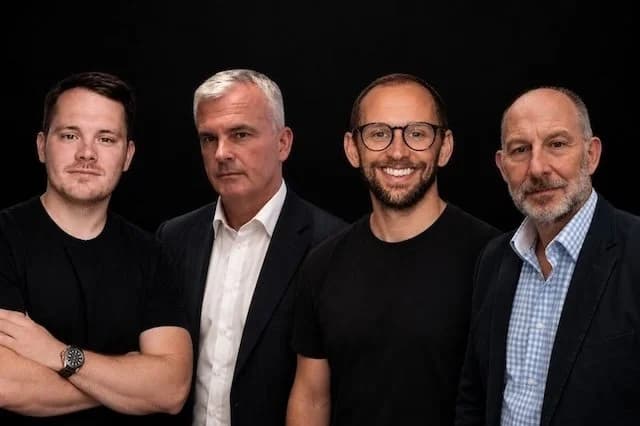
Hackuity founder
Image credit: Hackuity
Hackuity, a Lyon based cybersecurity company, has raised 19 million dollars to scale a platform built to help enterprises decide which security vulnerabilities actually need fixing first, at a moment when AI tools are surfacing new flaws faster than security teams can keep up with them.
The round was led by Forgepoint Capital International, with existing investors Bright Pixel, Bpifrance and Seventure Partners also participating. The raise brings Hackuity's total funding to 38 million dollars, following a seed round of a similar size and a 2022 Series A led by Bright Pixel Capital and Bpifrance.
Hackuity was co‑founded by chief executive Patrick Ragaru and chief revenue officer Pierre Samson, who had both previously served as managing directors at a cybersecurity services company that was later merged into Orange Cyberdefense. Samson has said that while security operations centre services were already mature by the time he worked there in 2016, vulnerability management remained comparatively underdeveloped, an observation that shaped the problem the two founders eventually set out to solve.
That problem has grown considerably more urgent as AI powered tools have made discovering vulnerabilities far easier than fixing them. There are now more than 350,000 known Common Vulnerabilities and Exposures on record, up roughly 20 percent year on year, and security teams already struggling with fragmented data and disconnected workflows are now contending with AI systems capable of finding software flaws at a pace no human review process was designed to match. Hackuity has pointed to a striking recent data point to illustrate that shift, noting that Anthropic's Claude Mythos Preview identified more than 10,000 high or critical severity vulnerabilities in under two months of testing against partner codebases, with 99 percent of those flaws still unpatched. Ragaru has described that finding as validation of Hackuity's founding thesis rather than a surprise, arguing the company was built on the conviction that vulnerability volume would eventually outpace human capacity to respond, and that results like these simply make the scale of that gap harder to ignore.
Hackuity's platform, which it calls a Vulnerability Operations Center, is designed to sit above an enterprise's existing security tooling rather than replace it. It aggregates findings from more than 130 separate security tools and combines that raw data with threat intelligence, asset criticality and business context through a proprietary risk scoring engine, continuously analysing severity, exploitability and potential business impact to help security teams identify which vulnerabilities genuinely require immediate attention rather than treating every finding as equally urgent. The company also works alongside systems integrators, resellers and managed security service providers, extending its reach into organisations that rely on outside partners to deploy and manage this kind of technology rather than building the capability entirely in‑house.
According to figures shared by the company, organisations using Hackuity's platform have cut what the company calls vulnerability noise down to as little as 0.01 percent of raw findings, and have reported savings of up to 1 million dollars as a result of that more focused remediation work. Hackuity counts Fortune 500 enterprises including Engie and BPCE among its customers, alongside managed security service providers such as Orange Cyberdefense, the same company formed from the merger that both co‑founders worked at earlier in their careers.
The new funding will go toward three main priorities, accelerating product innovation, strengthening the AI and machine learning capabilities underpinning the platform's risk scoring engine, and supporting international expansion with a particular focus on Europe and Asia. Hackuity currently employs more than 40 people across operations in Lyon and Singapore, and the company has said it plans to keep growing that international footprint as demand for AI aware vulnerability management extends beyond its existing European customer base.
Hackuity's raise arrives at a moment when the balance of power in vulnerability discovery is shifting quickly, with AI systems increasingly capable of finding flaws in code far faster than human researchers ever could, a development that cuts both ways for the security industry. The same AI capabilities that let defenders like Hackuity build more capable prioritisation tools also lower the barrier for attackers looking to find and exploit weaknesses before a patch is available. That dynamic is what the company's growing customer base and this latest round of funding are ultimately a bet on, that the organisations able to prioritise and coordinate remediation fastest, rather than simply the ones detecting the most vulnerabilities, will be the ones best positioned as AI reshapes both sides of the vulnerability management problem at once.
Topics
Stay informed
Startup news in your inbox
Get important funding rounds, founder stories, and startup updates.
No spam - only important startup updates.