Flam Raises $40M Series B Led By QED Investors To Scale Interactive AI

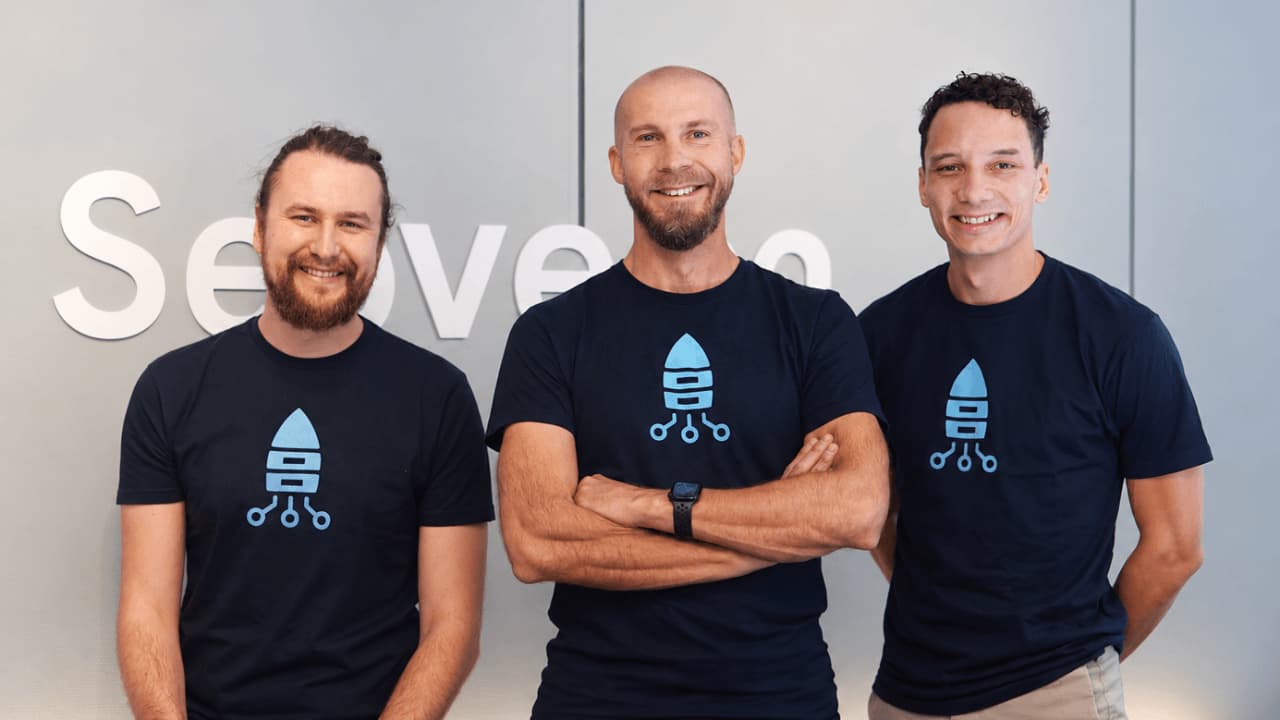
Flam co-founders Amit Gaiki, Shourya Agarwal, Malhar Patil
Image credit: Flam
Flam, an AI interactive content company with roots in Bengaluru and headquarters in San Francisco, has raised 40 million dollars in a Series B funding round to expand the AI models behind its platform and scale enterprise sales globally.
The round was led by QED Investors, with participation from Claypond Capital, Martin Chavez, Datadog chief executive Olivier Pomel, Venky Harinarayan and Bollywood actor Shah Rukh Khan, alongside returning investors RTP Global and Dovetail. The raise comes after what the company describes as a period of largely stealth operation, during which it quietly built up a substantial enterprise customer base before this round brought its work more fully into public view.
Flam was founded in 2021 by BITS Pilani alumni Shourya Agarwal, Malhar Patil and Amit Gaiki. The company is headquartered in San Francisco with additional teams in India and Japan, and has built a proprietary AI infrastructure platform aimed at letting creators generate interactive videos, real time three dimensional experiences and conversational visual agents that respond dynamically rather than playing back as static, pre‑rendered content.
Agarwal has framed the company's thesis around a pattern he sees across the history of internet content, noting that each major shift, from text to images to video, has flowed in a single direction, from creator to viewer, and arguing that interactive content represents the next default format for how content moves across the internet, one where the audience can shape what they see rather than only receive it.
That thesis is expressed through three core content formats. Flicks are interactive videos capable of switching the person, product or scene shown mid‑playback, built using a patented compression algorithm the company developed internally. Forge is an editing model that takes image references and changes only the specific element a creator points to, without regenerating an entire asset from scratch. Airboards deliver high fidelity three dimensional content through a camera based interface, supporting touch and voice interaction along with haptic feedback, and the company says its 3D streaming technology can load an Airboard experience in roughly 300 milliseconds with no separate app required. A newer addition, Visual Agents, are AI driven characters designed to hold real time conversations and take agentic actions, functioning more like a video call than a text based chat window, powered by a combination of models the company has built for facial expression, identity preservation, motion transfer and multilingual voice response.
The company says it has signed more than 100 enterprise customers over the past six quarters, spanning sectors from fast moving consumer goods, where Flam originally built its earliest traction, into entertainment, retail, insurance and other verticals. Named customers across recent coverage of the round include Google, Reliance, Hyundai, State Farm and Diageo. Flam says it now holds more than 15 patents tied to its content formats and underlying AI models, and that the company has been growing between 70 and 80 percent quarter on quarter, with Agarwal saying he expects that pace to continue in the near term. The company has also said it is on a path toward 100 million dollars in annual recurring revenue within the next year.
Nigel Morris, co‑founder and managing partner at QED Investors, has described the broader category Flam operates in as one where past attempts have repeatedly produced compelling demonstrations that never scaled into durable products. What differentiated Flam for QED, according to Morris, was a combination of differentiated AI infrastructure, a platform enterprises can deploy without a heavy engineering lift of their own, and commercial traction substantial enough to back up the pitch rather than rest on demos alone. QED partner Sandeep Patil has pointed to the pace of Flam's AI research and the caliber of partners choosing to build on the platform as further evidence the company's growth rate reflects a genuine shift rather than a temporary spike in interest.
The new capital will go toward continued research and development across Flam's AI models, expansion of its product suite, and scaling its enterprise sales operations into new markets and industries beyond its current base. The company has framed its longer term ambition as building the foundational infrastructure layer that lets any brand create and share interactive content, rather than positioning itself as a tool for a single content format or use case.
Flam's raise arrives as enterprise interest in AI generated and AI enhanced content continues to expand well beyond marketing into areas such as product visualization, training, customer support and direct fan engagement. Whether Flam's proprietary formats become a genuine new default for how brands publish content, rather than one more layer added onto an already crowded content technology stack, will likely depend on how well its interactive formats hold up at the production scale and consistency that enterprise buyers, rather than one‑off campaigns, actually require.
Topics
Stay informed
Startup news in your inbox
Get important funding rounds, founder stories, and startup updates.
No spam - only important startup updates.