Tandem Health Raises $100M as the EU's €5B Scaleup Fund Makes Its First Bet on Healthcare AI

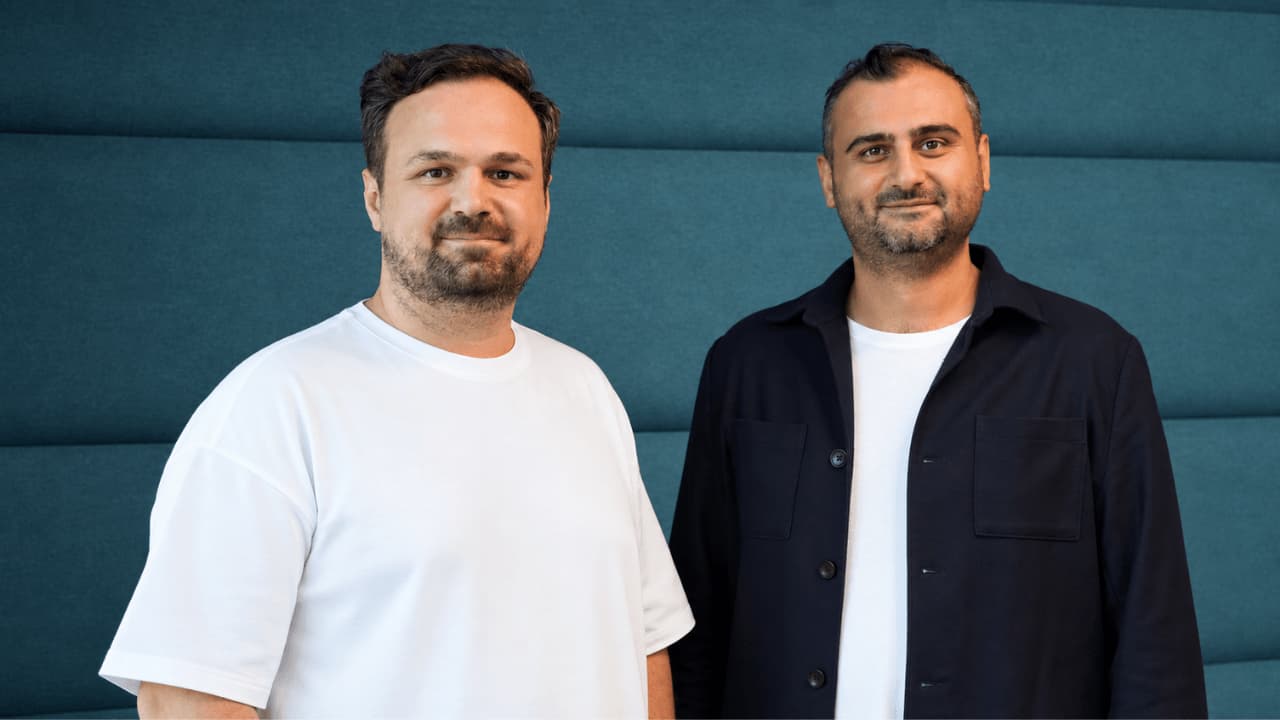
Tandem Health founder Lukas Saari, Oscar Boldt-Christmas & Oliver Åstrand
Image credit: Tandem Health
Tandem Health, a Stockholm based healthtech company, has raised 100 million dollars, roughly 86.5 million euros, in Series B funding led by the Scaleup Europe Fund, marking the fund's first ever investment in healthcare.
The Scaleup Europe Fund, targeting 5 billion euros in total size, was initiated by the European Commission and is managed by EQT, bringing together public and private capital, including from Novo Holdings, CriteriaCaixa, and Santander, to back ambitious European technology companies at scale. Existing Tandem investors Kinnevik, Northzone, Amino Collective, and Visionaries all returned to participate in the round, which follows Tandem's 50 million dollar Series A in 2025 and brings the company's total funding to 160 million dollars. Tandem did not disclose the valuation the round was raised at.
Tandem was founded on the premise that Europe's healthcare systems face a deepening structural crisis that AI is uniquely positioned to help address. The World Health Organization estimates a shortfall of 1.6 million health and social care workers across Europe in 2024, a gap projected to widen to 4 million by 2030, even as the number of Europeans over 65 climbs toward roughly 130 million by 2050, cared for by a workforce Eurostat projects will shrink to fewer than two working‑age adults for every retiree.
Chief executive and co‑founder Lukas Saari framed the company's mission directly around building a distinctly European answer to that pressure, rather than importing a solution built elsewhere. "We started Tandem to provide an alternative," Saari said. "Europe should be setting the standard for how AI enters healthcare, not adopting someone else's. This funding lets us do that, bringing healthcare safely into the AI era, working in tandem with patients, clinicians, systems and nations. That's how we're taking care of healthcare."
Tandem's product began as an AI scribe generating clinical notes during patient consultations, but has since expanded into what the company describes as a full medical assistant covering referral notes and patient communications before, during, and after a visit. The platform now spans an AI scribe that turns clinical conversations into structured documentation, a coding assistant, dictation tools, and clinical decision support, built for use across medicine, mental health, nursing, social services, physiotherapy, and dentistry. Three of those core capabilities, the AI scribe, the coding assistant, and the clinical decision support tool, have been certified as Class IIa medical devices under the EU's Medical Device Regulation, a considerably more rigorous and costly certification process than most competitors in the space have pursued, and one Tandem is positioning as a key point of differentiation and trust with hospital and clinic customers. The company says its platform is now used by 10,000 care organizations across 14 European markets.
EQT managing director Nils Petter Nygaard, who oversees the Scaleup Europe Fund, pointed to the structural complexity of European healthcare as central to why Tandem stood out as the fund's first healthcare bet. He described Europe's healthcare system as composed of a myriad of complexities, including fragmented regulatory regimes and highly varied national systems, a fragmentation that makes building a single, pan‑European clinical AI platform a considerably harder problem than building an equivalent product for a single national market like the United States.
That fragmentation is also central to the competitive dynamics Tandem now faces. According to independent analysis from Healthcare.Digital, Tandem is directly competing with Heidi Health for the same UK primary care market, with Heidi currently holding the largest single regional NHS contract while Tandem holds the largest installed base through its integration with Accurx, a widely used UK clinical communications platform. That analysis suggests Tandem's raise functions in part as a direct response to that competitive pressure, and that Heidi is likely to return to the market for a larger round of its own before long. Paris based Nabla, backed by Cathay Innovation's 1 billion euro AI fund, has raised roughly 120 million dollars including a 70 million dollar Series C in June 2025, but has directed most of its commercial energy toward the United States, landing contracts with health systems including M Health Fairview. Abridge, meanwhile, has concentrated almost entirely on US health systems to date, and given the regulatory, language, and data localization barriers involved in entering Europe organically, Healthcare.Digital suggested an acquisition of an existing European player is Abridge's most likely path into the continent, positioning it as both a potential competitor to Tandem and a possible acquirer of a similar European asset down the line.
Saari and his co‑founders have argued that hospitals and clinics are more likely to trust software built by people with direct experience in healthcare reimbursement and budgeting rather than purely technical backgrounds, a positioning that shapes how Tandem pitches itself against competitors with less operational healthcare pedigree. With the new capital, Tandem plans to evolve its existing AI Medical Assistant into what it calls an AI‑native Clinic Operating System, extending its role from a documentation and decision‑support tool into broader clinic administration and workflow management, while expanding its operational footprint across its 14 active European markets.
The Scaleup Europe Fund's decision to place its first healthcare bet on Tandem, following earlier investments in French AI lab Mistral and Finnish satellite company Iceye, signals that European policymakers now view clinical AI as strategic infrastructure worth backing with public‑private capital at scale, rather than leaving the category to be won by well‑funded American entrants. Whether Tandem can convert that institutional backing and its early European lead into the kind of durable, pan‑European clinical AI platform the fund is explicitly designed to help build, ahead of increasingly well‑capitalized rivals on both sides of the Atlantic, will likely be the clearest test of the Scaleup Europe Fund's broader thesis over the coming year.
Topics
Stay informed
Startup news in your inbox
Get important funding rounds, founder stories, and startup updates.
No spam - only important startup updates.