Barcelona's Mafer AI Raises 2 Million Euros to Build an AI Operating System for Industrial R&D Formulation Teams
Editorial Team
A quiet but significant gap exists between scientific discovery and industrial production in formulation‑driven sectors. Chemists and R&D teams working in specialty chemicals, cosmetics, food science, and pharmaceuticals routinely sit on decades of proprietary formulation data that remains locked in fragmented formats, scattered across ERP systems, laboratory notebooks, and instrument files that cannot talk to each other. Mafer AI, a Barcelona‑based startup, has raised 2 million euros to close that gap.
The funding round marks an early milestone for a company building what it describes as an AI operating system for R&D teams in formulation industries. Rather than offering a point solution, Mafer is developing a centralized intelligence layer that connects directly to a company's existing ERP infrastructure, laboratory hardware, and technical workflows without requiring significant process disruption.
The company is part of the inaugural cohort of the BSC AI Factory, the Barcelona Supercomputing Center's initiative to support AI startups with access to high‑performance compute infrastructure. That affiliation gives Mafer early credibility and access to computational resources that would otherwise be out of reach for a company at this stage.
What Mafer AI Is Building
The core premise is straightforward: scientific advances in formulation industries rarely translate cleanly into scalable industrial operations because the knowledge underpinning product development exists in forms that cannot be queried, reused, or systematized. Mafer's platform captures, normalizes, and structures chemical data into what the company calls model‑ready intelligence, turning historical formulation knowledge into a reusable system that accelerates both new product development and reformulation cycles.
The platform currently offers three specialized modules:
- A Chromatography module focused on data structuring and normalization for analytical instrument outputs
- A Formulation module built on generative models to support new product design and reformulation
- A Regulation module that applies agentic compliance tooling to help R&D teams navigate complex regulatory requirements across geographies
Additional modules covering broader chemical processes are in development. The company integrates directly with enterprise software environments, positioning itself as a connective layer rather than a replacement for existing tools, which lowers the friction of adoption in large industrial organizations.
Mafer operates under enterprise‑grade security and encryption standards, a deliberate design choice given that the proprietary formulation data it handles represents some of the most valuable intellectual property a specialty chemicals or consumer goods company holds.
A Market Built on Fragmentation
The industries Mafer targets, including specialty chemicals, personal care, food ingredients, and agrochemicals, are characterized by high product complexity, long development cycles, and significant regulatory burden. R&D teams in these sectors spend disproportionate time on data retrieval, manual experiment documentation, and navigating compliance requirements rather than on core scientific work.
The global specialty chemicals market alone represents hundreds of billions of dollars in annual output, with formulation R&D serving as the primary competitive differentiator. The fragmentation of R&D data infrastructure in this sector means that most companies are unable to leverage the institutional knowledge embedded in years or decades of laboratory work. Mafer's pitch is that AI can make that knowledge systematically accessible and actionable for the first time.
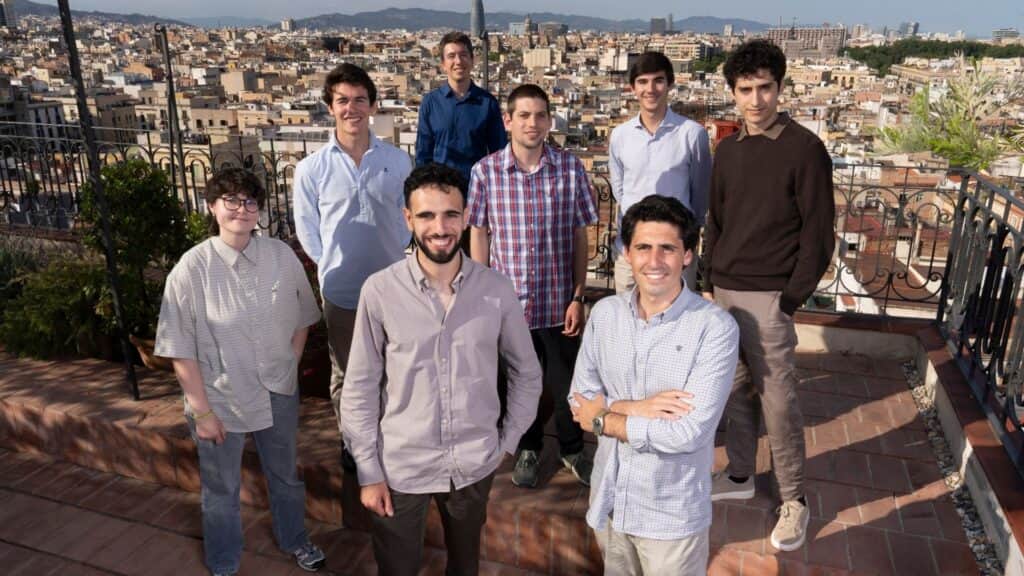
The startup's founding team brings a research‑oriented, technically intensive background, with a stated focus on product development over growth‑at‑any‑cost. That posture is well suited to selling into industrial customers who move deliberately and require deep domain credibility before entrusting core R&D data to a software platform.
Barcelona and the European Industrial AI Wave
The funding comes against a backdrop of growing investor interest in vertical AI applications built for industrial and scientific workflows. Barcelona has developed a meaningful AI startup ecosystem in recent years, with the city hosting multiple cohorts of deeptech and enterprise AI companies backed by European and global capital.
More broadly, European venture funding in AI has accelerated through the first half of 2026, with the continent recording more than 50% of its total startup funding going to AI‑related companies. While much of that capital has concentrated in frontier model labs and infrastructure plays, a growing share is flowing into vertical AI applications that address specific industry workflows, exactly the segment Mafer is targeting.
Mafer AI's official platform can be explored at mafer.ai, where the company offers enterprise demos to prospective customers in formulation‑intensive industries.
The 2 million euro raise is a seed‑stage bet on a thesis that the next wave of industrial competitiveness in formulation sectors will be determined by which companies can best systematize and leverage the institutional scientific knowledge they already possess. For R&D teams in specialty chemicals, cosmetics, and related industries, Mafer is building the infrastructure to make that possible.
Stay informed
Startup news in your inbox
Get important funding rounds, founder stories, and startup updates.
No spam - only important startup updates.